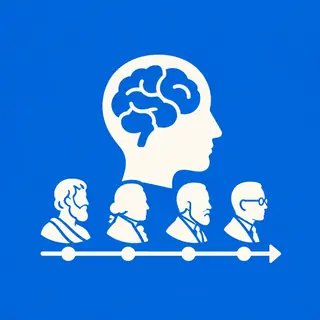
Key Turning Points in Psychology's History: Major Developments
🤔 Explore pivotal moments shaping modern Psychology: from the birth of structuralism and psychoanalysis to the cognitive revolution and beyond. This article…
Read article
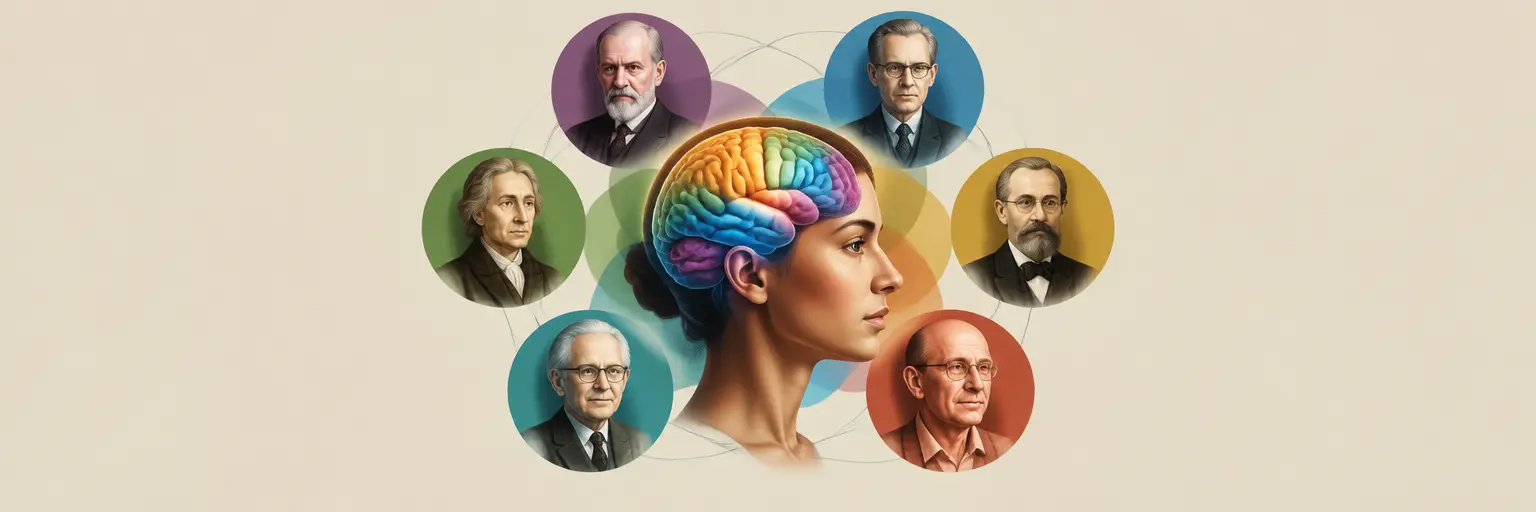
Discover the foundational perspectives that shape how psychologists understand the mind and behavior! From the introspective depths of psychoanalysis to the observable actions of behaviorism, each major school offers a unique lens on human nature. Explore the cognitive revolution’s focus on mental processes, the humanistic emphasis on personal growth, and the biological approach’s connection to brain chemistry. These core frameworks—structuralism, functionalism, Gestalt, and more—aren’t just historical footnotes; they actively influence modern therapy, research, and everyday insights. Whether you’re a student starting your journey or a curious reader, grasping these key psychological perspectives helps you decode why people think, feel, and act as they do. Dive in to compare contrasting theories, appreciate their evolution, and see how they interweave in contemporary practice. Perfect for psychology beginners seeking a clear, engaging overview that builds a solid foundation for deeper study. Unlock the ideas that have shaped the science of the mind!

🤔 Explore pivotal moments shaping modern Psychology: from the birth of structuralism and psychoanalysis to the cognitive revolution and beyond. This article…
Read article
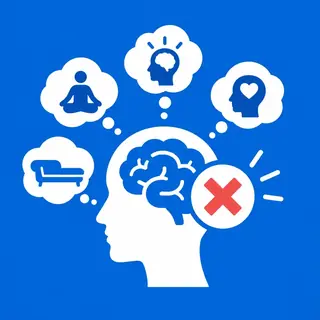
🤔 Uncover how prominent psychology schools—from Psychoanalytic to Cognitive—impact daily decisions. This article translates complex theories into practical, everyday applications, making psychology…
Read article
😊 Explore the exciting future of biological psychology and neuroscience! This article unveils groundbreaking advancements transforming our understanding of the brain-behavior relationship,…
Read articleWelcome to the Major Schools of Thought subcategory, the intellectual bedrock of Psychology Basics. Here, we unpack the diverse lenses through which psychologists have studied the mind and behavior—from Freud’s unconscious drives to modern cognitive science. This page is your SEO-rich map to understanding structuralism, functionalism, behaviorism, psychoanalysis, humanism, and cognitive psychology. By mastering these schools, you’ll grasp how psychology evolved from philosophy into a rigorous science, why therapies differ, and which key thinkers shaped each paradigm. Perfect for students, curious readers, and exam prep, this guide connects theory to real-world applications.
Structuralism, led by Wilhelm Wundt and Edward Titchener, aimed to break consciousness into basic components using introspection—reporting sensations, feelings, and images. Functionalism, championed by William James, countered that by asking “What purpose do mental processes serve?”, focusing on adaptation and practical outcomes. Expect to learn how introspection’s limits (subjectivity) led to functionalism’s embrace of behavior, evolution, and individual differences. This foundation shapes modern research methods and applied psychology—from educational testing to workplace efficiency.
You’ll see that structuralism valued controlled lab setups, while functionalism used naturalistic observation and case studies. This contrast still influences debates about lab-based science versus ecological validity. For beginners, these schools clarify why psychology broke from philosophy—by making mental life measurable and useful. Expect tables comparing methods, key experiments, and critiques like Titchener’s reliance on trained introspection, which ultimately failed to replicate across labs. Practical takeaway: structuralism’s legacy lives in psychophysics, functionalism in evolutionary psychology and human factors engineering.
Behaviorism, with John B. Watson and B.F. Skinner, rejected introspection entirely, arguing that only observable behavior is scientific. Watson’s “Little Albert” experiment showed fear conditioning; Skinner’s operant conditioning (reinforcement/punishment) explained learning through consequences. In this section, expect a deep dive into classical vs. operant conditioning, schedules of reinforcement, and the famous Skinner box. You’ll also cover methodological behaviorism (strict) versus radical behaviorism (including private events as covert behavior).
The practical impact is enormous: behavioral therapy (exposure, token economies), classroom management, and even habit formation apps stem from this school. However, expect critiques—behaviorism ignores cognition, emotion, and biology, as noted by critics like Chomsky. Still, its rigorous data-driven approach remains the gold standard for experimental psychology. You’ll learn to design simple behavior-change interventions, understand extinction and shaping, and appreciate why behaviorists say “psychology is the science of behavior—not the mind.” Perfect for those interested in learning theories and clinical applications.
Psychoanalysis, founded by Sigmund Freud (and extended by Jung, Adler, and Horney), posits that unconscious drives—especially sex and aggression—power our thoughts and actions. Expect to explore the id, ego, superego, defense mechanisms, psychosexual stages, and free association. This school emphasizes early childhood experiences as formative, shaping adult personality and neuroses. Freud’s case studies (e.g., Anna O.) and dream analysis offer rich material, but also heavy scientific criticism due to untestable concepts and gender biases.
Beyond clinical settings, psychoanalysis influenced literature, film, and cultural theory. You’ll learn how modern psychodynamic therapies (brief, relational) differ from classical analysis—focusing on current relationships and shorter timelines. Expect discussion of empirical support for defense mechanisms (e.g., repression, projection) and the backlash from feminists (e.g., Horney). For students, this school explains why “talk therapy” exists and how narrative meaning-making aids healing. Key takeaway: while Freudian specifics are outdated, the idea that we’re not always aware of our motives remains foundational in modern neuroscience of implicit biases.
Humanism arose in the 1950s as a “third force” against behaviorism and psychoanalysis. Led by Carl Rogers and Abraham Maslow, it emphasizes free will, self-actualization, and the inherent goodness of people. Expect to learn Maslow’s hierarchy of needs (physiological → safety → love → esteem → self-actualization) and Rogers’ client-centered therapy—active listening, unconditional positive regard, and congruence. This school focuses on subjective experience, personal growth, and the “fully functioning person.” Practical applications include positive psychology, coaching, and humanistic counseling.
Critics note humanism’s lack of empirical rigor and cultural bias (individualistic Western values). However, you’ll see its impact on education (student-centered learning), organizational psychology (self-motivation), and mental health stigma reduction. Expect workshops on how to apply empathic listening in daily life, plus research on self-esteem and well-being. Unlike earlier schools, humanism treats clients as experts on their own lives—a radical shift that still drives modern psychotherapy integration. For those curious about meaning, purpose, and resilience, this school offers actionable tools like gratitude journaling and goal-setting aligned with values.
Cognitive psychology emerged in the 1950s–60s as a response to behaviorism’s black box. Influenced by computer science, it studies mental processes—memory, perception, language, problem-solving, and decision-making. Key figures include Ulric Neisser, George Miller, and later Daniel Kahneman (heuristics/biases). Expect to explore the information-processing model (input → storage → output), working memory, encoding/retrieval, and cognitive biases. Modern neuroscience merges with cognitive science to map brain regions (e.g., hippocampus for memory).
This school has massive applications: educational strategies (spaced repetition, retrieval practice), user interface design, artificial intelligence, and cognitive-behavioral therapy (CBT). You’ll learn about experiments like Stroop effect, false memory paradigms, and dual-process theories (System 1/2). Expect to critique original lab-based tests for low ecological validity, but appreciate replicable findings on attention and reasoning. For exam prep, focus on models like Atkinson-Shiffrin (sensory → short-term → long-term) and Baddeley’s working memory. The future lies in cognitive neuroscience—combining brain imaging with behavioral data to explain mind-body links.
Structuralism seeks to break down consciousness into basic elements (sensations, images) via systematic introspection, while functionalism asks how these mental processes help us adapt and survive. Structuralism is about the “what” of the mind; functionalism focuses on the “why” and “how” in real-world contexts. Ultimately, functionalism won due to its practical applications and rejection of subjective introspection.
Behaviorism treats only observable behavior as scientific, labeling internal states as “private events” that cannot be objectively measured. Critics like Chomsky point out that language acquisition cannot be explained solely by reinforcement—children generate novel sentences never rewarded. This limitation led to the cognitive revolution, but behaviorism remains valuable for measurable habits and clinical interventions.
Classical Freudian psychoanalysis (long-term, free association, dream interpretation) is rare, but psychodynamic therapy—shorter and more relational—is used for depression and personality issues. Modern practice integrates Freudian defense mechanisms with attachment theory and neuroscience. Evidence-based adaptations like mentalization-based therapy (MBT) and transference-focused psychotherapy keep his core idea—unconscious conflicts shape behavior—alive.
Humanistic psychology, rooted in Rogers and Maslow, emphasizes self-actualization, unconditional positive regard, and free will, often in therapeutic contexts. Positive psychology (Seligman) uses empirical research to study strengths, happiness, and well-being, focusing on measurable outcomes like PERMA. Both share a holistic goal, but positive psychology is more scientific and data-driven, while humanism is philosophical and client-centered.
Cognitive psychology improves study techniques (retrieval practice, interleaving), interface design (error prevention, memory load), and debiasing in finance/medicine (checklists). It also powers cognitive-behavioral therapy (CBT) to alter maladaptive thought patterns. Smartphone notifications leverage attention and habit research, while memory techniques like chunking help encode phone numbers. Understanding these principles helps you learn faster and make better decisions.