The Interdisciplinary Nature of Psychology: Connections to Other Fields
🤔 Psychology isn't an island; its rich tapestry weaves together threads from biology, sociology, anthropology, and more. Exploring these psychology connections to…
Read article

Psychology is the scientific study of the mind and behavior—unlocking the mysteries behind why we think, feel, and act the way we do. From the neural firing in your brain to the social influences in your environment, this field bridges biology, experience, and culture to explain human nature. Whether you’re curious about memory, emotions, personality, or mental health, understanding the core principles of psychology provides a powerful lens for self-awareness and improving daily life. Dive into the fascinating world of mental processes and discover how research-based insights can transform your relationships, decision-making, and overall well-being. Explore the foundational concepts that make psychology a dynamic and relevant science for everyone.
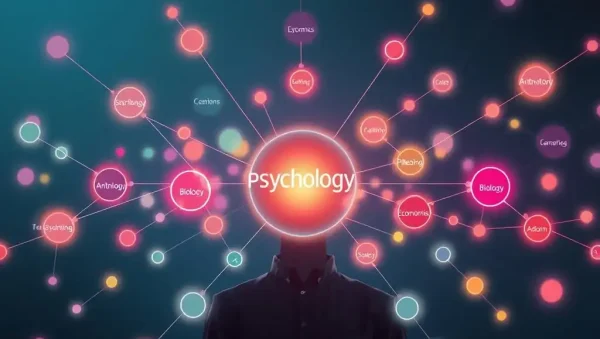
🤔 Psychology isn't an island; its rich tapestry weaves together threads from biology, sociology, anthropology, and more. Exploring these psychology connections to…
Read article
🤔 Explore fundamental questions about human behavior and the mind in this introduction to basic psychology key concepts. Uncover enduring mysteries and…
Read articlePsychology is the scientific study of the mind and behavior, encompassing everything from unconscious drives to conscious decision-making, neural processes, and social interactions. This subcategory serves as your essential gateway into the discipline, breaking down core definitions, historical roots, and modern perspectives. Whether you are a student beginning your coursework or a curious reader exploring human nature, this section provides a structured, SEO-optimized overview that demystifies terminology like cognition, emotion, and perception. You will learn how psychologists use the scientific method, differentiate between subfields, and apply findings to real-world settings, all while building a strong vocabulary for further study.
Psychology is not merely intuition or “reading people”; it is an evidence-based discipline that relies on systematic observation, experimentation, and statistical analysis. Here, we clarify the difference between folk psychology—everyday assumptions—and scientific psychology, which tests hypotheses under controlled conditions. You will explore the four primary goals: description, explanation, prediction, and control of behavior. Expect to see concrete examples, such as how researchers study memory using recall tasks or how they measure stress via physiological markers. This foundation prevents misconceptions and prepares you to evaluate psychological claims critically, a skill valuable in both academic and personal contexts.
Additionally, this section introduces the biopsychosocial model, showing how biological, psychological, and social factors interact to shape who we are. For instance, depression cannot be reduced to brain chemistry alone—it also involves cognitive patterns and environmental triggers. By understanding this holistic perspective, you gain a framework for analyzing any psychological phenomenon. We also address common myths, like the idea that psychology is only for “crazy” people, and emphasize its relevance to everyday life, from improving relationships to enhancing workplace productivity.
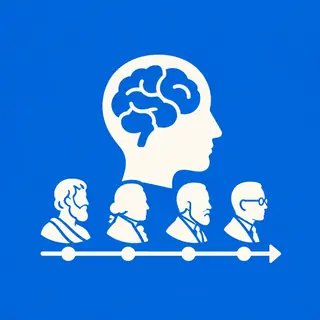
Psychology’s journey began in ancient Greece with philosophers like Socrates and Aristotle pondering the mind, but it only became an independent science in 1879 when Wilhelm Wundt opened the first psychology laboratory in Leipzig, Germany. This historical overview traces the evolution from structuralism—analyzing the basic elements of consciousness—to functionalism, which focused on how mental processes help us adapt. You will learn about key figures such as William James, Sigmund Freud, and John B. Watson, each contributing distinct paradigms. Understanding this timeline helps you appreciate why modern psychology is so diverse, with multiple schools of thought coexisting rather than a single monolithic approach.
The section also highlights the cognitive revolution of the 1950s and 1960s, which shifted attention back to internal mental states after behaviorism’s dominance. We explain how breakthroughs in neuroscience and computer science influenced this change, leading to today’s interdisciplinary field. By seeing how psychology has grown—through controversies, ethical reforms, and technological advances—you will understand its current strengths and limitations. This historical lens makes abstract concepts more tangible and shows that psychology is a living, evolving science, not a static set of facts.
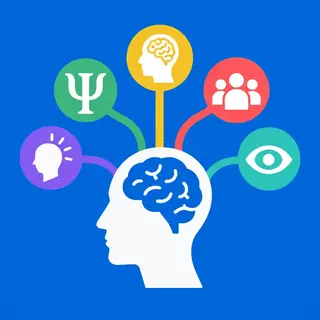
Contemporary psychology is not a single viewpoint but a multi-perspectival science. This section breaks down the seven main schools: biological, behavioral, psychodynamic, humanistic, cognitive, evolutionary, and sociocultural. Each perspective answers the “why” of behavior differently—for example, a biological psychologist looks at brain circuits, while a behavioral psychologist examines reinforcement history. We provide side-by-side comparisons, using a common scenario like aggression: a biological view cites testosterone, a sociocultural view points to media influence, and a cognitive view highlights hostile interpretations. This comparative approach helps you see how psychologists integrate insights rather than compete.
Moreover, we discuss eclecticism—how modern therapists often combine perspectives to tailor treatment for individual clients. For instance, cognitive-behavioral therapy (CBT) merges cognitive and behavioral principles, while psychopharmacology pairs biological interventions with talk therapy. Understanding these perspectives equips you to read research papers intelligently, recognizing which lens a study employs and its inherent biases. It also empowers you to apply psychological thinking to your own life, whether you are exploring career choices, improving study habits, or managing stress. Each perspective offers unique tools, and this overview ensures you have a balanced toolkit.
Many people confuse psychologists with psychiatrists, but this section clarifies that while psychiatrists are medical doctors who prescribe medication, psychologists hold doctoral degrees and focus on therapy, research, and assessment. You will explore diverse career paths: clinical, counseling, school, industrial-organizational, forensic, and neuropsychology. Each role has distinct training requirements, settings, and client populations. For example, a school psychologist helps students with learning disabilities, while an I-O psychologist improves workplace morale and productivity. We also highlight the growing demand for psychologists in tech, sports, and marketing, where understanding human behavior drives innovation.
Beyond careers, this section demonstrates how psychology applies to everyday life—from parenting strategies based on developmental research to consumer behavior insights used in advertising. We introduce basic research methods like surveys, case studies, and experiments, so you understand how psychologists gather reliable data. Ethical guidelines, including informed consent and confidentiality, are explained to show how practitioners protect participants. By the end, you will know how to identify credible psychological information, whether from a peer-reviewed journal or a popular article, and how to spot pseudoscience. This practical knowledge turns abstract theory into actionable insight.
To navigate psychology, you need a vocabulary of core terms. This section defines cognition, emotion, motivation, personality, perception, and consciousness in plain language, with illustrative examples. For instance, cognition refers to mental processes like thinking, memory, and problem-solving, while emotion is a complex state involving physiological arousal, expressive behavior, and conscious experience. We also explain dependent vs. independent variables, correlation vs. causation, and statistical significance, so you can interpret research findings correctly. These terms are not just jargon—they are the building blocks for every advanced topic you will encounter later.
Additionally, this glossary-like section introduces major disorders (like anxiety and depression) and key therapies (like exposure therapy and mindfulness) in a simplified manner, without oversimplifying their complexity. We emphasize that psychology is a discipline of nuance, where a single term can have multiple layers of meaning depending on context. To reinforce learning, we include memory aids and mnemonic devices, such as associating “cognition” with “cog” (a gear) to remember it involves mental processes. By mastering this vocabulary, you will feel confident reading introductory textbooks, following lectures, and engaging in informed discussions about psychological topics.
Psychology is a science because it uses the scientific method—hypothesis testing, controlled experiments, and peer review—to gather evidence. Common sense often relies on hindsight bias, but psychology tests predictions empirically. For example, “opposites attract” is contradicted by research showing similarity predicts relationship satisfaction. Science allows psychology to correct intuitive errors and build reliable theories about behavior.
A psychologist holds a PhD or PsyD and focuses on therapy, assessments, and research. They cannot prescribe medication in most states. A psychiatrist is a medical doctor (MD or DO) who specializes in mental health, can prescribe medications, and often treats severe disorders with a combined approach of therapy and pharmacology. Both collaborate in integrated care settings.
No, you can learn foundational concepts without formal coursework. This subcategory is designed for beginners, using plain language and real-life examples. However, a degree helps you engage with advanced theories, research methods, and clinical practice. For personal growth, self-study with reliable resources is sufficient to appreciate human behavior.
Psychology offers practical tools for coping with stress, improving communication, and making better decisions. For instance, understanding classical conditioning helps you break habits, while cognitive restructuring changes negative thought patterns. It also enhances empathy—knowing why people behave as they do fosters patience and better relationships at home and work.
The major branches include clinical, cognitive, developmental, social, biological, and industrial-organizational psychology. Clinical focuses on mental health treatment, cognitive on mental processes, developmental on lifespan changes, social on group behavior, biological on brain mechanisms, and I-O on workplace dynamics. Each offers unique career paths and research interests, yet they all share the goal of explaining behavior scientifically.