Explore the Fascinating History of Psychology
Welcome to the History of Psychology subcategory, part of our Introduction to Psychology series on Psychology Basics. Here, we journey from ancient philosophical musings to modern brain science, uncovering how psychology evolved into a rigorous, evidence-based discipline. This page is your gateway to understanding the key figures, schools of thought, and paradigm shifts that shape how we think about the mind and behavior today.
🧠 Ancient Roots & Philosophical Foundations
Before psychology had a lab, it lived in philosophy. Thinkers like Socrates, Plato, and Aristotle debated the nature of the soul, memory, and perception, setting the stage for later empirical inquiry. In this section, you’ll explore how Eastern traditions (e.g., Buddhist mindfulness) and Western rationalism merged into early questions about consciousness and free will.
Expect to learn about the transition from dualism (mind-body separation, championed by Descartes) to materialism, and how the 17th-19th century philosophers like John Locke and Immanuel Kant influenced psychological concepts like associationism and innate ideas. This foundation clarifies why psychology, unlike physics, was slow to adopt experiments—and why it matters for modern cognitive science.
🔬 Birth of Scientific Psychology (1879–1900)
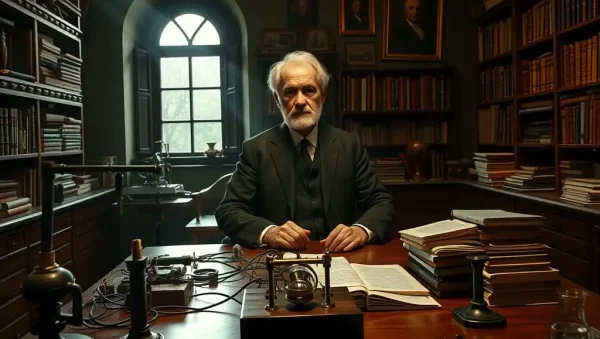
1879 is a landmark year: Wilhelm Wundt opened the first psychology laboratory in Leipzig, Germany, marking psychology’s independence from philosophy. Here, you’ll study structuralism, led by Edward Titchener, which used introspection to break down consciousness into basic elements—much like chemistry breaks down molecules.
This section explains the methodological rigor early psychologists adopted, including controlled reaction-time experiments. You’ll also meet William James, whose functionalism (influenced by Darwin) shifted focus to how mental processes help organisms adapt. Understanding this birth period helps you see why psychology remains split between experimental labs and applied practice today.
🚀 Major Schools of Thought: Behaviorism, Psychoanalysis & Humanism
The 20th century exploded with competing paradigms. Behaviorism (Watson, Skinner) rejected introspection entirely, focusing only on observable stimuli and responses. Meanwhile, Freud’s psychoanalysis delved into the unconscious, dreams, and childhood conflicts—offering a radical, if controversial, alternative. Later, humanists like Maslow and Rogers emphasized free will and self-actualization, reacting against both behaviorism’s determinism and psychoanalysis’s pessimism.
Expect a clear comparison of these schools: their key experiments, famous quotes, and practical applications (e.g., conditioning in therapy vs. talk therapy). You’ll also learn why cognitive revolution (1950s onward) arose, bringing back mental processes like memory and problem-solving via computer metaphors—shaping today’s integrated approach.
🧬 Modern Neuroscience, Cognition & Cultural Shifts
Today’s psychology merges biology with behavior. This section covers the rise of cognitive neuroscience (e.g., fMRI studies), the influence of genetics and evolutionary psychology, and the growing importance of multiculturalism—highlighting how Western-centric early psychology missed cultural variability in perception, attachment, and mental health.
You’ll explore key milestones like the DSM’s evolution, positive psychology’s emergence (Seligman), and technology-driven research (AI, virtual reality therapy). We also examine ethical lessons from past abuses, such as the Stanford prison experiment, illustrating how history shapes current IRB guidelines and best practices. This section bridges past to present, showing how each era’s mistakes and breakthroughs refine our understanding of human nature.
📚 Key Figures Timeline & Critical Thinking Tools
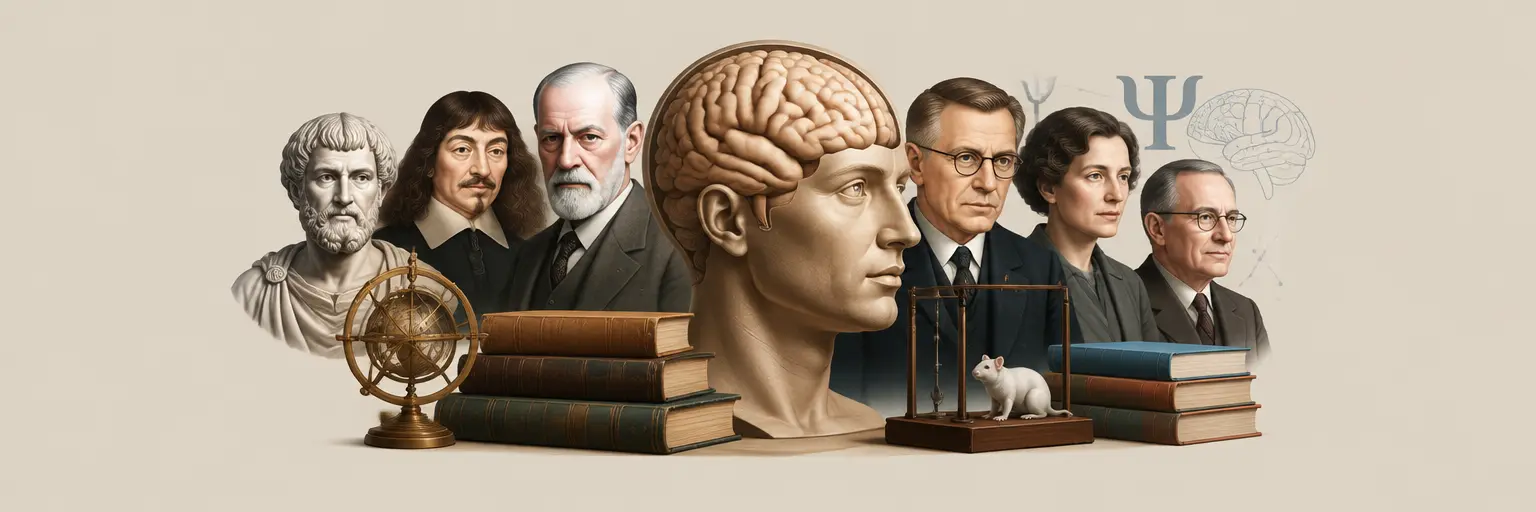
To help you retain this rich history, we offer a visual timeline of figures from Wundt to contemporary pioneers like Elizabeth Loftus (false memories) and Carol Dweck (mindset). Here, you’ll find concise biographical sketches, their main contributions, and their lasting influence on clinical, educational, or social psychology.
We also provide critical thinking checklists to evaluate historical claims: For instance, why introspection failed as a reliable method, or how Freud’s theories are often unfalsifiable. By connecting names to ideas and methods, this section transforms a list of dates into a usable mental map—perfect for exam prep or your own intellectual curiosity.
Frequently Asked Questions
Who is considered the father of modern psychology?
Wilhelm Wundt is widely called the father of modern psychology because he founded the first experimental psychology lab in 1879. He used introspection to study conscious experience, establishing psychology as a separate science from philosophy. Later, William James is considered the father of American psychology due to his functionalist approach.
Why did behaviorism reject introspection?
Introspection was subjective and inconsistent—different researchers got different results. John Watson and B.F. Skinner argued that only observable, measurable behavior could be scientifically studied. They focused on stimulus-response relationships, which allowed psychology to become more objective, though this later limited its scope until the cognitive revolution reintroduced mental processes.
What is the cognitive revolution in psychology?
The cognitive revolution (mid-1950s) was a shift back to studying mental processes like memory, attention, and problem-solving, which behaviorism had ignored. Influenced by computer science and linguistics, psychologists like George Miller and Ulric Neisser used information-processing models. This led to cognitive psychology and later to cognitive neuroscience, integrating brain imaging with mental functions.
How has the history of psychology affected mental health treatment today?
Early psychoanalysis contributed talk therapy, while behaviorism gave us exposure therapies and systematic desensitization. Humanism emphasized client-centered empathy. Modern therapy often blends these, using evidence-based methods like CBT (cognitive-behavioral therapy) that combine cognitive restructuring with behavioral techniques. Historical ethical failures also led to stricter informed consent and confidentiality rules.
What role did women and minorities play in psychology’s history?
Often overlooked, figures like Mary Whiton Calkins (first woman APA president) and Kenneth Clark (studied racial identity in children) made crucial contributions. They faced discrimination but advanced areas like memory, self-psychology, and social justice. Their work diversified psychology and highlighted cultural biases, prompting modern emphasis on inclusive research and culturally competent practice.