
Controversial Topics in Psychology
Psychology is far from a settled science—it thrives on debate, and its most provocative questions challenge how we understand the mind, behavior, and even truth itself. From the ethical limits of experiments that once pushed participants to their breaking point, to the age-old nature vs. nurture battle over what truly shapes who we are, these controversies force us to question foundational assumptions. Even our most trusted mental tools, like eyewitness testimony, prove surprisingly fragile under scrutiny. Whether you’re a student or a curious reader, exploring these hot-button topics reveals the raw, unfinished edges of psychology—where science, morality, and human fallibility collide. Step in, and you’ll never see the field—or your own memory—the same way again.
 The Reliability of Eyewitness Testimony
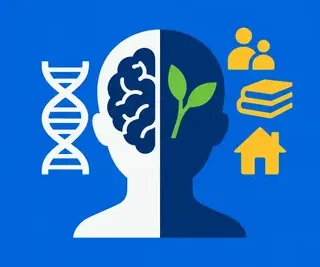 The Nature vs. Nurture Debate
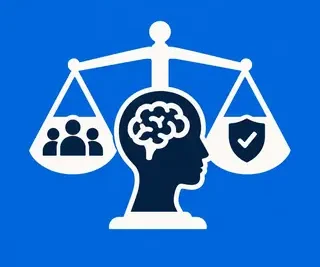 The Ethics of Psychological Research
Controversial Topics in Psychology
Psychology is not just a science of clear answers; it is also a field rich with heated debates, ethical dilemmas, and challenging questions about human nature. Here, we explore the most debated areas in the discipline, from how research treats participants to the eternal battle between genes and environment. This page is designed for students and curious readers who want to understand the deeper, often uncomfortable, controversies that shape modern psychological practice and research. Discover the evidence, the arguments, and the critical thinking required to navigate these complex issues.
🧠 The Ethics of Psychological Research
This subcategory dives into the moral principles that govern experiments, focusing on landmarks like the Milgram and Stanford Prison studies. You will encounter the delicate balance between scientific discovery and participant well-being. Expect to learn about informed consent, deception, debriefing, and the role of institutional review boards. We also examine why some past studies are now considered unethical, and how contemporary researchers protect vulnerable populations while still pushing the boundaries of knowledge. Key topics include the Tuskegee syphilis study, the Belmont Report, and modern ethical guidelines. Prepare to question whether any research is worth potential psychological harm, and explore how ethics committees decide what is acceptable.
🌱 The Nature vs. Nurture Debate
Are we products of our genes or our environments? This subcategory unpacks the oldest, most persistent disagreement in psychology. You will explore twin studies, adoption research, and epigenetic evidence that show both sides are deeply intertwined. Expect to learn about heritability estimates, critical periods in development, and the role of parenting versus peer influence. The debate now focuses on gene-environment interaction, not a simple either-or. We cover modern theories like differential susceptibility and shared versus nonshared environment. This section also explains why the debate has real-world stakes in education, mental health treatment, and social policy. By the end, you will see why most psychologists now reject the dichotomy in favor of a complex, interactive model.
👁️ The Reliability of Eyewitness Testimony
How accurate is our memory when we witness a crime? This subcategory examines a controversial area that sits at the intersection of psychology and law. You will learn about the misinformation effect, source monitoring errors, and the impact of stress on memory encoding. Expect to explore classic studies by Elizabeth Loftus and others that show how leading questions can alter memories. Research indicates that eyewitness identifications are often incorrect, yet juries still heavily rely on them. We also discuss reforms like double-blind lineups and sequential presentation to reduce false convictions. This section highlights tragic cases of wrongful imprisonment and explains why confidence in a testimony is not a reliable indicator of accuracy. Understanding these limitations is crucial for anyone interested in forensic psychology or criminal justice.
Frequently Asked Questions
Why are certain psychological studies considered unethical even if they produced influential results?
Those studies often violated basic rights, such as informed consent, protection from harm, and the right to withdraw. For example, Milgram's participants experienced severe distress without full knowledge of the procedure. Today, ethical guidelines prioritize participant welfare above scientific gains, meaning that replicating such studies would require significant modifications or be banned outright.
Can nature and nurture really be separated in controlled experiments?
No, because genes and environment are inseparable in practice. Even in twin studies, environments are not truly random, and gene expression can be influenced by surroundings. Modern research focuses on measuring the interaction, such as how a genetic predisposition for depression only manifests under stressful life events. Thus, the true answer is that both forces always co-operate.
How common are mistaken eyewitness identifications in real court cases?
According to the Innocence Project, eyewitness misidentification is the leading cause of wrongful convictions, contributing to over 69% of exonerations in the U.S. This high rate persists despite witnesses being confident. The problem stems from memory malleability, cross-race effects, and suggestive police procedures, which is why legal systems are adopting stricter lineup standards.
What is the most controversial modern ethical issue in psychology research?
One rising issue is the use of big data and online behavior without explicit consent, as seen in the Facebook emotional contagion study. Another is the ethics of brain stimulation or pharmacological interventions that could alter mood or cognition. These raise questions about privacy, autonomy, and the potential for misuse, making them subjects of intense debate.
Does eyewitness confidence correlate with accuracy after a crime?
Only weakly, and only under ideal circumstances. Confidence can be inflated by post-event feedback (e.g., an officer saying "good job") or by repeated questioning. In optimal conditions, high confidence at the first identification attempt can be somewhat predictive, but in real-world situations, stress and delay degrade this link. Thus, confidence should not be treated as proof of accuracy.