Cognitive Enhancement & Learning: A Psychological Primer
Welcome to Psychology Basics’ dedicated hub on Cognitive Enhancement & Learning. Here, we explore evidence-based methods to sharpen memory, accelerate reading, master new languages, and build smarter study habits—all grounded in psychological research. Whether you are a student, lifelong learner, or curious mind, this category bridges neuroscience and everyday practice to help you learn faster, retain more, and think more clearly. Dive into our curated reviews and actionable techniques below.
🧠 Brain Training Games and Apps: A Review
Our reviews cut through marketing hype to examine whether popular apps like Lumosity, Peak, and Elevate genuinely improve working memory, processing speed, and fluid intelligence. Expect honest assessments of research backing, including the controversial “far transfer” effect—does training on a game actually help you in real-world tasks? We also highlight free, science-based alternatives like dual n-back and cognitive bias drills, so you can make an informed choice before spending time or money. Key takeaway: most gains are task-specific, but consistent practice can boost confidence and focus.
📚 Memory Improvement Techniques and Exercises
Unlock the ancient and modern secrets of mnemonic mastery. This subcategory covers spaced repetition, the method of loci, chunking, and elaborative interrogation—each explained with simple step-by-step exercises. You’ll learn how to create vivid mental images, link abstract facts to personal experiences, and use retrieval practice to turn short-term knowledge into long-term memory. Psychological research shows that active recall, not passive rereading, is the single most powerful habit for retention. We also address common memory myths, such as “learning styles,” to keep your practice efficient and evidence-based.
⚡ Speed Reading and Comprehension Strategies
Speed reading is often oversold—skimming without comprehension is pointless. Here, we review research on saccades, subvocalization, and peripheral vision to separate genuine techniques from snake oil. Expect practical drills like pointer pacing, chunking words into groups, and previewing text structures (headings, summaries) to boost your words-per-minute while maintaining understanding. We emphasize that comprehension is a skill of attention, not just eye movement, and we’ll show you how to adjust speed based on text difficulty and purpose—whether you’re scanning a news article or deep-reading a textbook.
🌍 Learning New Languages: A Psychological Approach
Discover why some adults struggle with accents while others pick up grammar quickly—and what psychology says about it. This section explores the critical period hypothesis, working memory’s role in sentence parsing, and the power of interleaving (mixing vocabulary, grammar, and conversation) over blocked practice. You’ll find evidence-based strategies like spaced-repetition flashcards (Anki), shadowing native speakers, and immersive “comprehensible input” via videos and podcasts. Motivation and mindset matter too: a growth mindset reduces anxiety and boosts persistence. We also tackle common pitfalls like translation dependency and overcorrection.
📝 Effective Study Habits and Learning Strategies
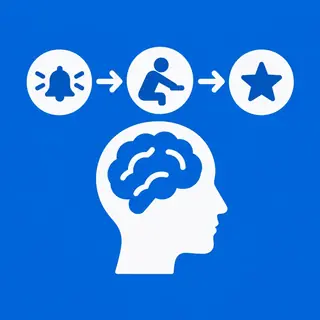
Transform your revision routine with psychological principles that actually work. Expect deep dives into the testing effect, self-explanation, distributed practice (spacing study sessions), and the Feynman technique (teaching to learn). We also cover environment design—lighting, noise, digital distractions—and how to use implementation intentions (“If I finish this page, I’ll take a break”) to beat procrastination. Research shows that interleaving subjects, not just within subjects, improves problem-solving flexibility. Our guides include weekly planners, pomodoro variations, and metacognitive reflection prompts to track your accuracy and adjust strategies.
🛠️ Best Tools for Cognitive Enhancement
From nootropics to neurofeedback, this subcategory reviews hardware, software, and supplements with a skeptical, science-first eye. We examine research on caffeine, L-theanine, creatine, and omega-3s, separating evidence-backed benefits from placebo hype. Hardware tools like transcranial direct current stimulation (tDCS) and binaural beats are discussed with caution, highlighting safety and ethical concerns. Software tools include brainwave entrainment apps, focus timers (Forest, Cold Turkey), and knowledge-management systems like Obsidian and Notion. Our goal is to help you build a personalized “cognitive stack” that is safe, affordable, and aligned with your specific goals—whether that’s exam prep or creative work.
Frequently Asked Questions
Are brain training games scientifically proven to improve general intelligence?
Most peer-reviewed studies show that brain training games improve only the specific tasks trained—called “near transfer.” Far transfer to general IQ, memory, or multitasking is weak and often null in large-scale trials. However, regular use can improve confidence and reaction time. For broader cognitive gains, combine games with physical exercise, sleep, and active learning strategies like spaced repetition.
What is the most effective memory technique for students?
Spaced repetition combined with active recall is the strongest evidence-based method. For example, reviewing flashcards at expanding intervals (1 day, 3 days, 1 week) exploits the spacing effect. Add elaborative interrogation—asking “why is this true?”—to deepen encoding. Avoid rereading or highlighting; instead, practice retrieving answers without looking. Even 10 minutes daily beats marathon cram sessions.
Can speed reading reduce comprehension below normal reading levels?
Yes. Speeds above 500-700 words per minute often sacrifice comprehension, especially for complex texts. Research suggests subvocalization (inner voice) is hard to eliminate without losing semantic understanding. For casual material, skimming with previewing works. For dense academic content, slower, deliberate reading with note-taking is best. Use speed reading only for familiar or low-stakes material.
Is it harder to learn a new language as an adult than as a child?
Adults are generally faster at learning grammar and vocabulary initially due to metacognitive skills, but children often achieve more native-like accents and fluency long-term. The “critical period” hypothesis applies mainly to pronunciation and implicit grammar. Adults can compensate with explicit instruction, spaced repetition, and immersive practice. Attitude, motivation, and consistency outweigh age in most cases.
Do nootropic supplements like piracetam or modafinil actually enhance cognition?
Modafinil shows modest effects on wakefulness and attention in sleep-deprived individuals, but benefits are inconsistent for healthy, well-rested users. Piracetam lacks robust evidence for cognitive enhancement in healthy people. Caffeine plus L-theanine reliably improves alertness and calm focus. Always consult a physician—many supplements have side effects or interactions, and no pill replaces sleep, nutrition, or structured learning.