Brain Training Apps for Seniors: Maintaining Cognitive Health Through Play
😊 Combat age-related cognitive decline with engaging brain training apps! Discover the best brain games for seniors' cognitive health, offering fun and…
Read article
Unlock your mind’s full potential with our deep dive into the latest brain training games and apps. Designed for students, lifelong learners, and anyone curious about cognitive enhancement, this review cuts through the hype to reveal which tools genuinely boost memory, focus, and problem-solving—and which are just digital fluff. We evaluate scientifically-backed platforms like Lumosity, Elevate, and Peak, alongside emerging neuroplasticity-based apps, using real psychology research on working memory, executive function, and fluid intelligence. Discover evidence-based features, user engagement strategies, and the surprising truth about “brain age” claims. Whether you’re prepping for exams, sharpening professional skills, or simply keeping your mind agile, our honest, jargon-free reviews help you choose the right app for your goals—without wasting time or money. Boost your daily mental workout with actionable tips, comparative scoring, and expert insights drawn from cognitive psychology and neuroscience. Ready to train smarter, not harder? Start here and transform your routine into a powerful, science-driven habit.

😊 Combat age-related cognitive decline with engaging brain training apps! Discover the best brain games for seniors' cognitive health, offering fun and…
Read article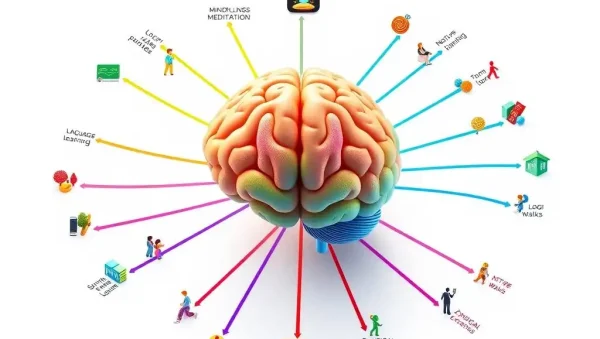
🤔 Unlock your cognitive potential! This article explores diverse brain training methods, helping you discover the best approach for your individual learning…
Read articleWelcome to our comprehensive review of brain training games and apps, a dedicated corner of Psychology Basics for students and curious minds. Here, we dissect popular digital tools designed to boost memory, attention, problem-solving, and processing speed. Unlike hype-driven marketing, our reviews are grounded in cognitive science, helping you separate scientifically-backed exercises from mere entertainment. Whether you’re a student sharpening study skills or a lifelong learner, this subcategory offers actionable insights into how these apps truly affect your brain’s plasticity.
When you dive into our reviews, you’ll first encounter the core question: do these games transfer skills to real life? We critically analyze peer-reviewed studies, meta-analyses, and placebo-controlled trials for each app. You’ll learn about the concept of near transfer (improvement on similar tasks) versus far transfer (general cognitive gains), which is often overstated by developers. For example, Lumosity’s own research has shown modest gains in working memory, but not in intelligence or daily decision-making. Our goal is to equip you with a clear-eyed view of what qualifies as genuine cognitive enhancement versus a digital pastime.
Expect practical takeaways: we break down which cognitive domains—like executive function or spatial reasoning—are most trainable according to current evidence. We also flag common pitfalls, such as the “practice effect” where improvement on a game is just learned familiarity, not brain growth. By the end of each review, you’ll know whether an app is worth your subscription or if your time is better spent on aerobic exercise, which has stronger neuroplastic benefits. This section is your scientific compass in a marketplace crowded with bold claims.
Here, we provide head-to-head comparisons of industry giants—Peak, Elevate, CogniFit, and newer entrants like BrainHQ—alongside niche options like NeuroNation and Fit Brains. We evaluate each app’s interface, daily workout length (typically 5–15 minutes), adaptive algorithms, and gamification elements that keep you engaged. Our reviews include screenshots of dashboards, progress tracking, and difficulty curves, so you can judge if the design promotes long-term adherence. We also disclose subscription costs, free tiers, and refund policies, ensuring you get the best value for your budget.
Beyond surface features, we test personalization: does the app adjust to your baseline abilities and fatigue? For instance, Elevate’s writing and math drills are praised for real-world relevance, while Peak’s “Pro” mode offers deep analytics for serious enhancers. We also examine data privacy, a critical but often ignored factor—many apps sell your cognitive performance data to third parties. By reading our comparisons, you’ll avoid wasting money on redundant features and choose an app that aligns with your specific goals, whether that’s faster reading speed or improved recall for academic subjects.
This section categorizes games by the mental faculties they target, allowing you to target your weaknesses. You’ll find detailed breakdowns for working memory (e.g., n-back tasks in Dual N-Back), processing speed (reaction-time games), attention control (visual search tasks), and executive planning (puzzle-based logic). We explain the neuroanatomy behind each domain—like the prefrontal cortex’s role in executive function—so you understand why certain exercises feel harder. Each review includes sample tasks, time-to-mastery estimates, and potential plateau points, helping you set realistic expectations for your mental workouts.
We also debunk the myth that “brain games” universally improve fluid intelligence. Instead, we highlight apps with adaptive difficulty that pushes your zone of proximal development, such as CogniFit’s neuroscience-backed assessments. For students preparing for exams, we recommend specific games for memory consolidation and test anxiety reduction. For older adults, we discuss apps that support cognitive reserve and may delay age-related decline. This domain-specific lens ensures you’re not just playing—you’re strategically training the brain areas that matter for your daily life.
Playing brain games for 10 minutes a day won’t transform your cognition if you don’t apply those skills. Here, we offer “bridging techniques” that connect virtual exercises to offline scenarios. For example, after training visual memory with a matching game, we suggest trying to recall a supermarket list without notes. We also discuss how to combine brain training with other healthy habits—sleep, physical activity, and social interaction—which synergistically amplify neurogenesis. You’ll find habit-building frameworks like implementation intentions (“I will train for 10 minutes after morning coffee”) to make consistency effortless.
Additionally, we review apps that incorporate spaced repetition and reminders, which are crucial for long-term retention. We also explore the role of mindfulness and meditation apps in enhancing focus, showing how cross-training with Calm or Headspace can complement your cognitive regimen. For educators and parents, we include recommendations for child-friendly apps that support academic readiness without excessive screen time. This section ensures your digital training translates into tangible improvements in studying, work performance, and everyday problem-solving.
Not all that glitters is gold; this section candidly discusses the dark side of brain training. We cover potential harms like overconfidence, where users mistake game proficiency for overall intelligence, leading to risky decisions. We also analyze ethical issues in marketing—many companies use neuro-myths about “left/right brain” or “10% brain usage” to sell subscriptions. Our reviews include a “skeptic’s corner” for each app, listing red flags such as unsupported claims, lack of transparency about study funding, and testimonials not based on peer review. Furthermore, we examine the risk of cognitive fatigue from overtraining, which paradoxically impairs memory.
We also address accessibility concerns: many apps are not designed for individuals with visual or motor impairments, nor for non-English speakers. We highlight apps that offer multilingual support and adaptive interfaces. Additionally, we discuss the placebo effect—believing you’re smarter may improve your confidence and performance on cognitive tests, even if the app itself is ineffective. By the end of this section, you’ll be a critical consumer, able to spot pseudo-science and make informed choices that prioritize mental health over quick fixes.
No, rigorous studies show no significant increase in general intelligence (IQ) from brain games. They may improve specific trained tasks, like working memory, but these gains rarely transfer to abstract reasoning or problem-solving in unfamiliar situations. Focus on apps that train adaptive, varied tasks and combine them with physical exercise and sleep for the best cognitive benefits.
Most research suggests 15–20 minutes per day, 3–5 days per week, for at least 8–10 weeks is a reasonable minimum. However, the quality of time matters more than quantity—distributed practice with breaks (spaced practice) outperforms cramming. Use apps with adaptive difficulty to stay challenged; if the game feels too easy, increase the level or take a brief mental break.
Effectiveness depends on the scientific basis of the drills, not the price. Many free apps like Peak or Elevate offer high-quality cognitive tasks but limit advanced analytics. However, paid subscriptions often include more personalized coaching and more rigorous assessments. Check if the free version includes adaptive algorithms—if yes, it can be equally effective for basic training.
Currently, there is no strong evidence that brain games prevent dementia. Some studies show slight improvements in cognitive speed but no effect on disease risk. A more proven approach is a combination of aerobic exercise, Mediterranean diet, social engagement, and lifelong learning. If you use brain games, treat them as one small piece of a holistic brain-health plan.
For students, we recommend Elevate for its writing and math drills, and Peak’s “Focus” mode for attention. For memory-heavy subjects, try Kaggl’s memory matrix or Anki (flashcards) which uses spaced repetition, a scientifically validated method. Avoid fast-paced arcade-style games, as they stress speed over deep encoding. Pair app use with active recall and self-testing, not just game playing.