

The Influence of Culture on Gender Roles and Behavior
😊 Culture profoundly shapes our understanding of gender, influencing everything from acceptable behaviors to career choices. This article explores how cultural norms…
Read article

Cultural Psychology explores how shared beliefs, values, and practices shape the human mind, emotions, and behavior across different societies. This field examines the dynamic interplay between culture and individual psychology, revealing that our ways of thinking, feeling, and relating to others are not universal but deeply influenced by the social contexts we grow up in. From understanding how acculturation transforms personal identity to recognizing how mental health symptoms are expressed and treated differently around the world, this area challenges the assumption of a one-size-fits-all approach to human nature. By diving into cross-cultural studies and developing cultural competence, you will learn why behaviors that seem “normal” in one culture might be viewed quite differently in another—and how this awareness can improve therapy, education, and everyday relationships. Perfect for students and curious readers, this section offers essential insights into the cultural roots of perception, emotion, and social interaction, making psychology more relevant, inclusive, and globally aware.
😊 Culture profoundly shapes our understanding of gender, influencing everything from acceptable behaviors to career choices. This article explores how cultural norms…
Read article
🤔 This article explores how religious beliefs and practices significantly shape personal identity during acculturation, examining Religion's role in identity formation across…
Read article
🤔 Explore how cultural norms shape gender roles, impacting individual identities and behaviors. This introduction to cultural norms, gender roles, and psychology…
Read article
🤔 This article explores how cultural variations impact DSM diagnosis, highlighting the crucial need for cultural competence in accurate psychiatric assessment and…
Read article
🤔 Post-traumatic stress disorder (PTSD) treatment isn't one-size-fits-all. This article explores crucial cultural differences impacting PTSD treatment efficacy, emphasizing culturally sensitive approaches…
Read article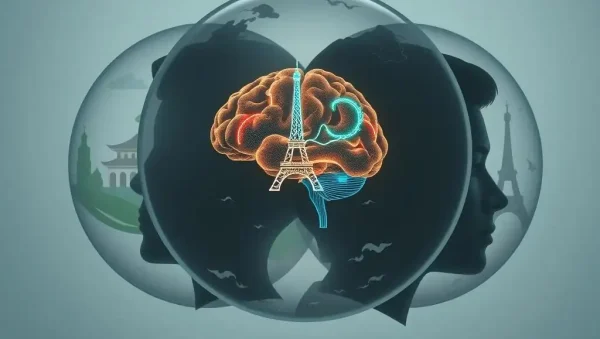
😊 This article explores how cultural context significantly shapes understanding and treatment of mental illness. Examining diverse perspectives reveals the profound cultural…
Read article
🤔 Explore the fascinating world of cross-cultural attitudes toward death and dying. This article examines how vastly different cultural beliefs and practices…
Read article
😊 Explore the fascinating world of crosscultural affection expression! This article unveils how displays of love and intimacy vary dramatically across cultures,…
Read article
😊 Navigating cultural values in therapy relationships is crucial. This article explores how diverse cultural backgrounds impact the therapeutic alliance, highlighting the…
Read article
🤔 Explore how society shapes our self-perception in "The Cultural Construction of Self: How We See Ourselves." This article delves into cultural…
Read article
😊 Navigating the digital world requires cultural competence. This article explores how digital psychology intersects with cultural understanding, highlighting the challenges and…
Read articleCultural psychology explores how cultural contexts shape human thought, emotion, and behavior. At Psychology Basics, this category bridges individual psychological processes with collective cultural norms, offering students and general readers a foundational understanding of how culture influences identity, mental health, and social interactions. Dive into the subcategories below to uncover practical insights, research findings, and frameworks for navigating our increasingly interconnected world.
This subcategory examines how individuals adapt to new cultural environments while maintaining their heritage identity. You’ll learn about acculturation strategies—assimilation, integration, separation, and marginalization—and how each affects psychological well-being. Expect to explore real-world case studies of immigrants, refugees, and sojourners, alongside theories like Berry’s model. Identity negotiation processes are highlighted, showing how bicultural individuals blend values, languages, and social roles. This section is ideal for understanding the emotional journey of cultural transition and its impact on self-concept, resilience, and belonging.
Here, we dissect how cultural norms, values, and scripts shape everyday actions—from communication styles to decision-making and conformity. You’ll discover differences between individualistic vs. collectivistic cultures, and how these orientations affect altruism, competition, and parenting. The subcategory covers nonverbal cues, social roles, and moral reasoning, using cross-cultural vignettes to illustrate concepts. Cultural tightness-looseness is a key framework, explaining why some societies enforce strict rules while others tolerate ambiguity. This content is vital for students seeking to decode why people from different backgrounds behave differently in similar situations.
This section tackles how psychopathology manifests and is treated differently across cultures. You’ll explore cultural syndromes like *taijin kyofusho* (Japan) or *ataque de nervios* (Latin America), emphasizing that symptoms are often culturally bound. The subcategory also reviews stigma, explanatory models of illness, and the role of family and spirituality in recovery. Ethnopsychopharmacology is introduced, noting how genetics and diet affect drug metabolism. Readers gain critical tools to recognize why Western diagnostic categories may not translate universally, and how culturally sensitive assessment improves accuracy. Ideal for aspiring clinicians and global health enthusiasts.
Focusing on research methodology, this subcategory teaches you how psychologists design, execute, and interpret studies that compare multiple cultures. Learn about emic vs. etic approaches, translation-back-translation techniques, and measurement equivalence to avoid biased conclusions. You’ll see how studies on intelligence, emotion recognition, and attachment styles are replicated or revised across countries. Bias and equivalence issues are unpacked, including sampling, response styles, and contextual confounds. Whether you’re a student planning research or a critical reader of psychology reports, this section equips you with a skeptical yet constructive lens to evaluate global evidence.
This practical subcategory prepares you for applying psychological knowledge across diverse populations. It covers cultural humility, self-awareness, and the development of therapeutic skills that respect client worldviews. Expect frameworks like the DSM-5 Cultural Formulation Interview and strategies for adapting evidence-based interventions to different cultural contexts. Ethical dilemmas in multicultural practice are discussed, such as balancing universal ethical codes with local customs. For educators, counselors, and students, this section provides actionable checklists and reflective exercises to reduce bias, build trust, and improve outcomes in clinics, schools, and community settings.
Cultural psychology seeks to understand how culture and mind mutually constitute each other, often using qualitative methods within one culture. Cross-cultural psychology compares multiple cultures to test universal vs. culture-specific phenomena, typically using quantitative surveys. In practice, cultural psychology asks “how does meaning shape behavior?” while cross-cultural psychology asks “how do societies differ on trait X?”
Positive effects include increased social support, cognitive flexibility, and career opportunities, which enhance self-esteem. Negative effects arise from acculturative stress—such as identity confusion, discrimination, and family conflicts—linked to anxiety, depression, and substance use. Integration, balancing both cultures, generally produces the best mental health outcomes, whereas marginalization leads to the poorest.
Core features like low mood and anhedonia appear universal, but expression, symptoms, and prevalence vary. For example, somatic complaints (headaches, fatigue) dominate in many Asian cultures, while guilt is more central in Western settings. Some conditions, like social anxiety, have culture-specific forms (e.g., taijin kyofusho focuses on offending others, not oneself). Thus, depression has universal biology but cultural overlays.
Cultural competence is the ability to understand, respect, and effectively respond to clients’ cultural backgrounds in assessment, diagnosis, and therapy. It matters because misdiagnosis, premature termination, and poor trust occur when clinicians ignore cultural factors. Competent practice involves self-reflection, learning about client cultures, and adapting techniques, ultimately improving treatment adherence and outcomes.
No, because biases seep in through language, sampling, and researcher assumptions. However, rigorous methods—like back-translation, testing equivalence, and using mixed-method designs—minimize bias. Researchers also practice reflexivity, acknowledging their cultural lens. Rather than chasing perfection, the goal is transparency about limitations to ensure findings are interpreted cautiously and ethically.