Overcoming Memory Blocks: Strategies for Retrieving Lost Information
🤔 Struggling to remember? This article explores proven techniques to overcome memory blocks and significantly improve memory recall strategies, helping you access…
Read article

Unlock your brain’s full potential with memory improvement techniques and exercises—a core pillar of cognitive enhancement and learning. Whether you’re a student cramming for exams, a professional mastering new skills, or a lifelong learner, these science-backed strategies—from spaced repetition and mnemonic devices to active recall and visualization—help you retain information faster and longer. Strengthening your memory isn’t just about remembering facts; it boosts problem-solving, creativity, and overall mental agility. Dive into practical drills like the Method of Loci, chunking, and mindfulness-based focus training, all designed to optimize your brain’s neuroplasticity. Start today and transform how you learn, remember, and thrive.
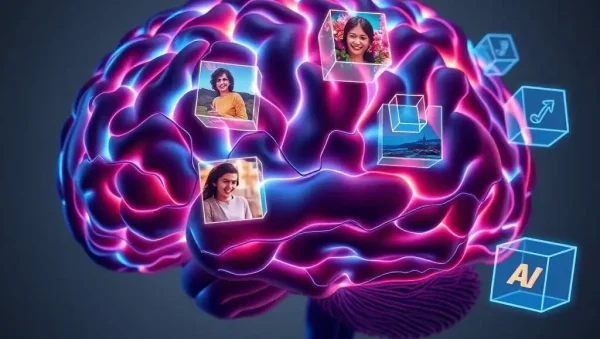
🤔 Struggling to remember? This article explores proven techniques to overcome memory blocks and significantly improve memory recall strategies, helping you access…
Read article
🤔 Aging inevitably affects memory, impacting cognitive function. This article explores the multifaceted nature of memory loss, aging causes, and strategies for…
Read articleWelcome to the Memory Improvement Techniques and Exercises subcategory, part of the Cognitive Enhancement & Learning section on Psychology Basics. Here, we translate complex cognitive psychology into actionable strategies you can use daily. Whether you are a student preparing for exams, a professional learning new skills, or an older adult seeking to maintain mental sharpness, this guide focuses on practical mnemonic devices, spaced repetition, and brain training exercises. You will learn how memory works—encoding, storage, and retrieval—and how to leverage neuroplasticity to build a stronger, more reliable memory system. Let's begin your journey toward better recall and cognitive fitness.
Mnemonic systems are powerful mental shortcuts that transform abstract information into vivid, memorable images or structures. The Method of Loci (memory palace) is a top performer: you visualize a familiar route and place items you need to remember at specific locations. Similarly, chunking breaks large datasets (like phone numbers) into smaller groups, while acronyms and peg-word systems link new data to fixed anchor lists. These techniques reduce cognitive load and dramatically increase recall speed.
In practice, you can start with small lists—grocery items, names, or foreign vocabulary. For example, create a mental palace of your living room and place a "dancing banana" on the sofa to remember "banana," and a "leaping book" on the coffee table for "book." The more bizarre and emotional the imagery, the stronger the neural trace. Regular practice of these systems not only improves memory for specific tasks but also enhances overall attention and visualization skills, making them foundational tools for any serious learner.
Forgetting is natural, but you can outsmart it with spaced repetition—reviewing material at gradually increasing intervals right before you are about to forget it. Apps like Anki or Quizlet use algorithms to optimize these intervals. Combined with active recall (testing yourself rather than rereading), this method strengthens neural pathways far more effectively than passive study. Research by Ebbinghaus shows that the forgetting curve is steep, but spaced review flattens it significantly.
To integrate this, schedule revision at 1 day, 3 days, 7 days, and 21 days after first learning. Use flashcards with prompts that force retrieval, not just recognition. Even a simple habit of closing your textbook and writing down everything you remember is powerful. This approach is especially effective for medical students, language learners, and anyone preparing for certifications. It trains your brain to organize information for long-term storage, making knowledge durable and transferable.
Your memory capacity is deeply tied to your physical health. Sleep is non-negotiable: during deep sleep, the hippocampus replays and consolidates memories, transferring them to the cortex. Chronic sleep deprivation can cut retention by up to 40%. Nutrition also matters—omega-3 fatty acids, antioxidants (blueberries, dark chocolate), and B vitamins support neuronal health. Aerobic exercise increases BDNF (brain-derived neurotrophic factor), which stimulates the growth of new neurons in the hippocampus.
Integrate a daily 20-minute brisk walk, aim for 7–9 hours of quality sleep, and hydrate properly. Also, manage stress with mindfulness—cortisol damages the hippocampus, so meditation is a direct memory enhancer. These lifestyle interventions are not optional extras; they are the biological foundation on which all cognitive techniques rest. When your brain is well-fed, rested, and stress-free, mnemonic and repetition strategies become far more potent.
Working memory is your mental scratchpad; you can strengthen it with specific, repeatable drills. The N-back task (e.g., 2-back or 3-back) asks you to remember a sequence of items and respond when the current item matches one from N steps back—it is proven to improve fluid intelligence. Dual-task training, like counting backwards by 3s while listening to an audio list, also stretches your capacity. Simple games like Memory Match, Sudoku, or crossword puzzles help, but they must increase in difficulty to create new neural connections.
Create a 15-minute daily routine: first, do a 5-minute N-back exercise (use free apps), then 5 minutes of category fluency (name as many animals as possible in one minute), and finally 5 minutes of backward spelling of random words. These exercises force your brain to hold, manipulate, and manipulate information under time pressure. Over weeks, you will notice improved focus, faster problem-solving, and better recall in daily conversations. Consistency beats intensity—make it a habit.
Memory improvement is not just about adding techniques; it’s also about correcting errors in your learning process. Errorless learning involves presenting information correctly the first time to avoid wrong encoding, while errorful learning uses mistakes to highlight gaps. Metacognition—thinking about your own memory—helps you identify which strategies work for you. For instance, after a study session, ask: "Did I recall more from imagery or from repetition?" Then adjust accordingly.
A powerful exercise is to "teach back" a concept to an imaginary student; any hesitation reveals weak points in your memory. Also, use the Feynman technique: explain a topic in simple language, identify where you stumble, then revisit those spots. Combining these metacognitive checks with structured practice ensures that your memory training is not blind repetition but a targeted, self-aware process. This leads to faster mastery and fewer forgotten details in real-world applications, from exams to professional presentations.
Most people notice improvement in working memory within 2–4 weeks of consistent daily practice (15–20 minutes). However, for long-term retention of complex information, such as course material or new languages, expect 6–8 weeks of combined spaced repetition and mnemonic use. Neuroplasticity begins immediately, but durable change requires repetition and sleep consolidation.
Yes, with adjustments. For ADHD, break tasks into shorter intervals and use external cues (visual reminders). For mild cognitive decline, focus on familiar mnemonics (like loci in your own home) and gentle exercises. Always consult a healthcare professional first. These methods can slow decline and improve daily functioning, but they are not cures for neurological disorders.
The Major System or phonetic peg system converts digits to consonant sounds, creating memorable words. For example, 32 becomes "M N" → "Moon." You then visualize a moon in a scene related to the date. Alternatively, chunk numbers into pairs or triples. Practice a few times daily, and you will memorize even 20-digit numbers within a week.
Yes, but avoid overloading. Use the Method of Loci for the sequence of topics, then apply chunking within each topic, and finalize with active recall. Start with one technique until it feels automatic, then layer the second. Overcomplicating can hurt encoding, so keep sessions under 30 minutes and always end with a retrieval test.
Caffeine can improve short-term attention and reaction time, but it does not strengthen long-term retention. Ginkgo biloba has mixed evidence—some studies show small benefits for older adults, but results are inconsistent. The best "supplement" is regular sleep, Omega-3 fatty acids, and B-vitamin-rich foods. Avoid relying on pills; lifestyle and practice are far more reliable.