Behavioral Theories in Psychology: A Foundational Guide
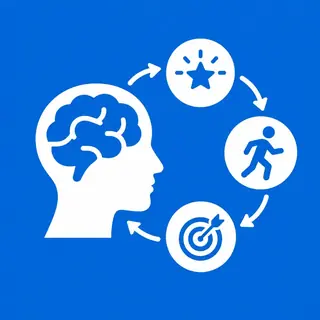
Welcome to the Behavioral Theories section of Psychology Basics. Here, we break down how psychologists explain learning, habit formation, and behavior change through observable actions and environmental influences. Whether you are a student preparing for exams or a curious reader, this page covers the core pillars—classical and operant conditioning, social learning, real-world applications, and critical perspectives—using clear, jargon-free language. Explore each subcategory below to deepen your understanding of why we behave the way we do.
🔍 Critiques of Behavioral Theories
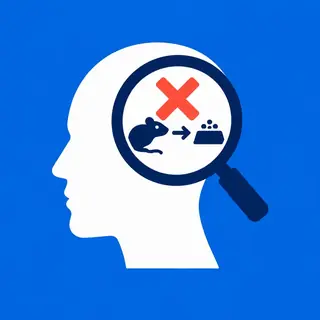
This subcategory examines the limitations and counterarguments that scholars raise against strict behaviorism. You will learn about the overemphasis on external stimuli, the neglect of internal mental states, and critiques regarding ethical concerns in animal-based research. We also discuss how cognitive psychology and neuroscience challenge behaviorist assumptions about free will and biological predispositions. Expect a balanced view that acknowledges both the strengths and blind spots of behaviorist frameworks, helping you think critically about any psychological theory you encounter.
🎭 Social Learning Theory
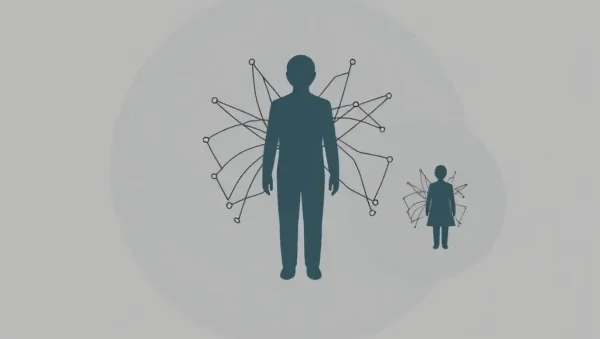
Here, we explore Albert Bandura’s groundbreaking idea that we learn not only through direct reinforcement but also by observing others. This subcategory covers the famous Bobo doll experiment, the role of modeling and imitation, and the four key processes: attention, retention, reproduction, and motivation. You’ll also see how social learning bridges behaviorism and cognitive psychology, explaining phenomena like media influence, peer pressure, and even parenting styles. Practical examples from daily life make this theory immediately relatable and testable in real-world settings.
💡 Classical Conditioning
Dive into the foundational work of Ivan Pavlov and learn how neutral stimuli become triggers for automatic responses. This section explains unconditioned and conditioned stimuli, acquisition, extinction, spontaneous recovery, and stimulus generalization versus discrimination. You’ll find step-by-step examples—from Pavlov’s dogs to modern advertising and phobia treatments—that illustrate how pairing stimuli changes behavior. We also clarify common misconceptions, such as why not all associations stick, making this a practical resource for understanding emotional and reflexive learning.
⚙️ Operant Conditioning
This subcategory focuses on B.F. Skinner’s theory of learning through consequences. You will master the differences between reinforcement and punishment, positive and negative contingencies, and schedules of reinforcement (fixed, variable, interval, ratio). We provide classic examples like rat lever-pressing and real-world applications in parenting, education, and workplace rewards. Special attention is given to shaping, chaining, and why extinction occurs—crucial knowledge for anyone applying behavior modification techniques or preparing for psychology exams.
🌍 Applications of Behavioral Theories
Finally, see how these theories move beyond textbooks into clinics, classrooms, and homes. This section covers behavioral therapy techniques such as systematic desensitization, token economies, and exposure therapy. We also discuss applied behavior analysis (ABA) for autism, habit reversal training, and how operant conditioning powers digital apps and gamification. Real case studies and ethical considerations are included, showing you how to implement these principles ethically and effectively in modern psychological practice, education, and personal self-improvement.
Frequently Asked Questions
What is the main difference between classical and operant conditioning?
Classical conditioning links an involuntary reflexive response to a new stimulus through pairing (e.g., a bell triggers salivation). Operant conditioning, however, changes voluntary behavior based on consequences—reinforcement increases a behavior, while punishment decreases it. In short, classical is about automatic reactions to stimuli, operant is about actions and their outcomes.
How does social learning theory explain aggression in children?
Bandura’s Bobo doll experiment showed that children who watched an adult act aggressively toward a doll were more likely to imitate that aggression. The theory suggests that children learn by observing models, especially if the model is similar, admired, or rewarded. This demonstrates that behavior is learned not just by direct reinforcement but also by watching others, which has major implications for media and parenting.
Can behavioral theories be used to treat anxiety disorders?
Yes, classical conditioning underpins exposure therapy and systematic desensitization, where patients gradually face feared stimuli in a safe manner. Operant conditioning is used in reinforcement-based reward systems to encourage brave behaviors. These approaches are highly effective for phobias, panic disorder, and obsessive-compulsive symptoms, often combined with cognitive techniques for lasting change.
What are the main criticisms of behaviorism?
Critics argue that behaviorism ignores internal mental processes, like thoughts and emotions, which are central to human experience. It also relies heavily on animal studies, raising questions about generalizability, and fails to explain spontaneous insights or creativity. Ethically, some claim that rigid conditioning can be manipulative, which is why modern behaviorists integrate cognitive and biological perspectives.
How can I apply operant conditioning to improve my study habits?
Use positive reinforcement: reward yourself after completing a study session, such as with a snack or a short break. Break tasks into smaller steps and reinforce each achievement. Also, create a fixed schedule to harness variable reinforcement, and remove distractions (negative punishment) to decrease procrastination. Consistency is key—always follow the desired behavior with a timely reward.