Social Learning in Childhood: Shaping Development Through Observation
😊 Childhood social learning effects are profound. This article explores how observing others shapes a child's development, impacting their behavior, social skills,…
Read article

Social Learning Theory explains how people acquire new behaviors, attitudes, and emotional responses by observing others—a process central to understanding human development and change. Developed by Albert Bandura, this theory bridges behaviorism and cognitive psychology, showing that learning isn’t just about direct rewards or punishments but also about attention, retention, reproduction, and motivation. For students new to psychology, it reveals why we imitate role models, absorb media influences, and adopt social norms without ever experiencing the consequences firsthand. Key concepts like observational learning, vicarious reinforcement, and self-efficacy are unpacked here, making it easier to connect everyday experiences—from parenting styles to advertising—to scientific principles. Whether you’re exploring why kids mimic superheroes or why peer pressure works, this theory offers a practical lens for analyzing real-world behavior. Dive in to see how modeling, reciprocal determinism, and cognitive factors shape who we become, and discover why this framework remains a cornerstone in educational, clinical, and social psychology research.
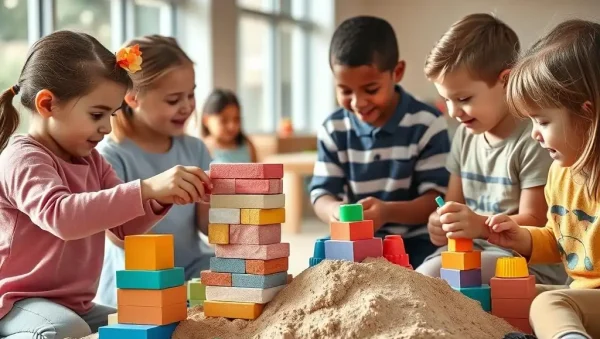
😊 Childhood social learning effects are profound. This article explores how observing others shapes a child's development, impacting their behavior, social skills,…
Read article
🤔 This article explores how Social Learning Theory illuminates the causes of aggression, demonstrating that violent behavior isn't innate but learned through…
Read articleSocial Learning Theory, pioneered by Albert Bandura, bridges the gap between traditional behavioral theories and cognitive psychology. Within the Behavioral Theories category, this subcategory explores how people learn by observing others, imitating models, and processing the consequences of those actions. For students and curious readers, this theory explains everything from why children mimic parents to how media influences adult behavior. Here, you’ll discover the mechanisms behind modeling, self-efficacy, and reciprocal determinism, all grounded in practical examples and classic experiments like the Bobo doll study. This page is your gateway to mastering one of psychology’s most influential frameworks.
This section breaks down the four essential components of Bandura’s theory: attention, retention, reproduction, and motivation. Attention focuses on what you notice in a model, retention involves remembering the observed behavior, reproduction is your ability to perform it, and motivation depends on reinforcement or punishment. You’ll learn how these steps work together to turn observation into action, and why not all observed behaviors become learned ones. This foundational knowledge helps you apply the theory to real-life scenarios, from classroom learning to habit formation.
Expect practical explanations of how distractions reduce attention, how memory skills enhance retention, and how physical limitations affect reproduction. We’ll also discuss the role of vicarious reinforcement—seeing others rewarded or punished—since it directly shapes motivation. By the end, you’ll be able to identify each principle in everyday situations, such as a toddler learning to wave or an adult picking up a coworker’s efficiency tactics. This is the essential starting point for anyone new to social learning concepts.
No discussion of Social Learning Theory is complete without Bandura’s 1961 Bobo doll study, which demonstrated that children aggressively imitate adults. In this section, you’ll examine the experiment’s design, results, and its profound implications for understanding media violence and aggression. Key findings showed that children who watched aggressive models were more likely to strike the doll, even without encouragement. This evidence challenged strict behaviorist views that learning only occurs through direct reinforcement.
We’ll also explore modern replications and critiques, including debates about ecological validity and ethical concerns. You’ll see how this experiment laid the groundwork for social-cognitive perspectives, influencing parenting advice and media regulation. Understanding this study helps you critically evaluate claims about video games and crime rates, and it shows how experimental psychology translates into social policy. Expect clear, step-by-step visuals and summaries that make the research accessible to all readers.
Self-efficacy—your belief in your own ability to succeed—is a crucial output of observational learning. This section explains how seeing others succeed (or fail) shapes your confidence and performance. Bandura distinguished four sources of self-efficacy: mastery experiences, vicarious experiences, social persuasion, and emotional states. For example, watching a peer ace a math test boosts your own belief that you can too, especially if you identify with that peer.
We’ll discuss practical applications in education, therapy, and workplace training. Teachers use modeling to build student confidence, while therapists help clients overcome phobias by observing calm models. You’ll also learn about the “Pygmalion effect” where high expectations from others raise your self-efficacy and outcomes. This knowledge empowers you to harness observational learning intentionally, whether you’re a parent, student, or professional aiming to develop new skills or mentor others effectively.
Reciprocal determinism is Bandura’s triadic model showing that personal factors, behavior, and environment mutually influence one another. This section unpacks how your thoughts and feelings affect your actions, your actions alter your surroundings, and your environment then reshapes your thoughts. Example: A shy student (personal) avoids class participation (behavior), which makes the classroom seem more intimidating (environment), reinforcing shyness. Breaking this cycle requires changing one component.
We’ll provide case studies from addiction recovery and habit change, illustrating how altering an environment (e.g., removing junk food) can shift personal cravings and behavior. You’ll also learn about internal vs. external locus of control and how it interacts with this model. Understanding reciprocal determinism is key to personal growth, as it reveals that you are not a passive victim of circumstance. Instead, you can actively reshape your world through consistent behavioral changes and cognitive reframing.
Today’s media saturated environment makes social learning more relevant than ever. This section examines how television, social media, and video games serve as powerful models for behavior. Bandura’s concepts apply directly to influencers, viral challenges, and online tutorials. You’ll analyze how parasocial relationships with celebrities and YouTubers drive imitation, both positively (fitness trends) and negatively (dangerous stunts).
We’ll discuss research on screen violence, prosocial programming like educational cartoons, and the role of targeted advertising. You’ll learn how algorithms create personalized observational environments, potentially reinforcing stereotypes or promoting social comparison. Practical tips include curating your feed mindfully and using modeling to build new habits (e.g., following productivity experts). This section bridges academic theory with your daily digital life, showing you how to become a critical consumer rather than a passive imitator.
Operant conditioning, from B.F. Skinner, focuses on learning through direct consequences like rewards and punishments. In contrast, Social Learning Theory emphasizes observation and modeling. You can learn a behavior simply by watching someone else be reinforced, without experiencing the consequence yourself. This makes social learning faster and more adaptable, explaining how humans acquire complex skills, language, and social norms.
Yes, addiction can develop through observational learning. For instance, a teenager may start smoking after watching a parent or celebrity smoke and receive social approval. The behavior is then vicariously reinforced. Additionally, self-efficacy plays a role—if a person believes they can quit, they’re more likely to attempt it. However, addiction also involves biological factors, so social learning is one piece of a broader puzzle.
Adults absolutely learn socially. Examples include learning new software by watching a coworker, picking up cooking techniques from online videos, or adopting workplace etiquette from senior colleagues. However, adults have more developed cognitive filters, so they’re more selective about which models they imitate. They may also rely more on reflection and past experiences, whereas children often imitate more automatically.
Punishment can reduce imitation when the observer notices negative consequences for the model. For example, if a student sees a peer punished for cheating, they may be less likely to cheat. However, punishment is less effective than reinforcement because it can create fear or anxiety. Vicarious punishment works best when consequences are clear and consistent, and when the observer identifies with the model.
Start by identifying positive role models who exhibit habits you want, such as waking early or exercising. Watch them closely, break down their actions, and rehearse them mentally. Also, create an environment that supports your goals—remove temptations and add cues for good behavior. Finally, track your progress and celebrate small wins to boost your self-efficacy, making the new habit stick.