
Acquisition in Classical Conditioning: How Associations Are Initially Formed


Unravel the mysteries of the human mind with Psychology Basics. Are you curious about how we learn? Then delve into the fascinating world of classical conditioning, and discover the fundamental principles behind acquisition in classical conditioning. Learn how initial associations are formed and unlock the secrets of this powerful learning process. This exploration of classical conditioning initial learning will leave you with a newfound understanding of behavioral theories – read on to find out more!
- Understanding Classical Conditioning Initial Learning
- The Process of Acquisition: Forming Associations
- Factors Influencing Acquisition Speed in Classical Conditioning
- Measuring Acquisition: Assessing the Strength of the Conditioned Response
- Extinction and Spontaneous Recovery: Beyond Initial Learning
-
Frequently Asked Questions
- What is acquisition in classical conditioning?
- How many pairings are needed for acquisition to occur?
- What is the role of the unconditioned stimulus (UCS) in acquisition?
- What is the difference between acquisition and extinction in classical conditioning?
- Can classical conditioning explain all learning?
- Final Reflection: The Enduring Power of Association
- Unlock the Power of Conditioning: Start Your Journey Today!
Understanding Classical Conditioning Initial Learning
Classical conditioning, a fundamental concept in behavioral psychology, explains how we learn to associate two unrelated stimuli. This process, often referred to as associative learning, is crucial in understanding a wide range of behaviors, from simple reflexes to complex emotional responses. This article will delve into the initial stages of classical conditioning, specifically focusing on the acquisition phase – the process by which these associations are initially formed.
We will explore the foundational principles and experimental evidence that underpin our understanding of this vital learning mechanism, crucial for comprehending how our brains form connections between seemingly unrelated events. Understanding classical conditioning's initial learning is key to grasping the complexities of human and animal behavior, impacting various fields like education, therapy, and even marketing. We'll examine how seemingly simple pairings of stimuli can lead to profound and lasting behavioral changes, highlighting the power of association in shaping our responses to the world around us.
The process of acquisition in classical conditioning is elegantly demonstrated through various experiments, and this article aims to illuminate these experiments and their profound implications. Classical conditioning initial learning is a cornerstone of behavioral psychology, and this guide provides a clear and comprehensive introduction.
The Basics of Classical Conditioning and its Initial Stages
Classical conditioning involves learning through association. It begins with two stimuli: an unconditioned stimulus (UCS) which naturally elicits a response, and a neutral stimulus (NS) which initially produces no specific response. The key to acquisition lies in repeatedly pairing the NS with the UCS. Through this repeated pairing, the NS becomes a conditioned stimulus (CS), capable of eliciting a response similar to the original UCS response. This response to the CS is called the conditioned response (CR).
Consider Pavlov's famous experiments with dogs. The UCS was food (naturally causing salivation), and the NS was a bell (initially eliciting no salivation). After repeatedly pairing the bell (NS) with the presentation of food (UCS), the dogs began to salivate (CR) at the sound of the bell (CS) alone, even without the presence of food.
This demonstrates the successful acquisition of a conditioned response. The strength of the CR, and the speed of acquisition, depends on several factors, including the intensity of the UCS, the timing of the pairings (contingency), and the number of pairings. A stronger UCS generally leads to faster acquisition, and optimally timed pairings (where the NS precedes the UCS) are more effective than randomly timed pairings.
The number of pairings required for acquisition varies considerably depending on these factors and the individual organism being conditioned. In essence, the initial learning in classical conditioning hinges on the consistent and predictable association between the NS and the UCS.
Pavlov's Experiments: A Foundation for Understanding Acquisition
Ivan Pavlov's meticulous experiments provided the foundation for our understanding of classical conditioning. His work with dogs not only demonstrated the principles of acquisition but also highlighted the crucial role of repeated pairings in establishing a conditioned response. Pavlov systematically controlled variables such as the timing and intensity of the stimuli, allowing him to precisely measure the strength of the conditioned response over time.
His findings revealed a clear relationship between the number of pairings and the strength of the conditioned response. Initially, the dogs showed little to no salivation at the sound of the bell. However, with each pairing of the bell and food, the salivation response to the bell gradually increased.
This gradual increase demonstrates the process of acquisition, where the association between the NS and the UCS strengthens with repeated pairings. Further experiments explored the effects of varying the interval between the NS and UCS, revealing optimal timing for maximum conditioning. For instance, delaying the UCS after the NS can weaken the association, highlighting the importance of temporal contiguity in the acquisition phase.
Pavlov's rigorous methodology and detailed observations laid the groundwork for subsequent research in classical conditioning, solidifying its position as a cornerstone of learning theory. The meticulous documentation of his experiments provides a lasting resource for understanding the process of acquisition in classical conditioning initial learning.
The Process of Acquisition: Forming Associations
Acquisition in classical conditioning refers to the initial learning stage where an association is formed between a neutral stimulus (NS) and an unconditioned stimulus (UCS). This process is fundamental to understanding how classical conditioning works and represents the cornerstone of initial learning in this behavioral paradigm. The strength of the association formed during acquisition directly impacts the strength of the conditioned response (CR) later on.
Several key factors influence the speed and efficiency of acquisition, including the timing and frequency of pairings between the NS and UCS, as well as the individual's biological predispositions. The more efficient the acquisition phase, the stronger and more reliable the conditioned response will become.
The Unconditioned Stimulus (UCS) and Unconditioned Response (UCR)
Before any learning occurs, we begin with an unconditioned stimulus (UCS) that naturally and automatically triggers a response. This response is called the unconditioned response (UCR). The UCS-UCR connection is innate and doesn't require prior learning. For example, consider the smell of freshly baked cookies (UCS) which naturally elicits a feeling of hunger or salivation (UCR). This is an unlearned, reflexive response.
Another example could be a puff of air directed at the eye (UCS) causing a reflexive blink (UCR). The key here is that the response is unconditioned; it happens automatically without any prior training or association. The intensity of the UCS also plays a role; a stronger UCS typically leads to a stronger UCR, influencing the speed and effectiveness of subsequent acquisition. Understanding the inherent strength of the UCS-UCR connection is crucial for predicting the success of classical conditioning.
Introducing the Neutral Stimulus (NS)
The next step involves introducing a neutral stimulus (NS). This is a stimulus that, initially, elicits no specific response. It's important that the NS is truly neutral; it shouldn't already be associated with any particular response relevant to the UCR. In our cookie example, the NS could be the sound of a bell. The sound of the bell, before conditioning, doesn't inherently cause salivation.
Similarly, in the eye-blink example, the NS could be a specific tone. The effectiveness of the NS depends on its distinctiveness and salience. A subtle or easily overlooked NS will be less effective in the acquisition process than a more prominent one. Careful selection of a neutral stimulus is vital for successful classical conditioning; the initial neutrality is the defining characteristic that allows for the association to be learned.
Repeated Pairings: NS and UCS
Acquisition is achieved through repeated pairings of the NS and the UCS. The crucial element here is contingency: the NS must consistently precede the UCS. The optimal timing is usually a short interval between the NS and UCS. If we consistently ring the bell (NS) just before presenting the cookies (UCS), the dog will eventually learn to associate the bell with the cookies.
The repeated pairing strengthens the association between the NS and the UCS. This is not a passive process; it involves active learning on the part of the organism. The number of pairings needed for successful acquisition varies depending on factors such as the intensity of the UCS, the salience of the NS, and the species of the organism. For example, studies have shown that some pairings may be sufficient in some instances, while others require many more repetitions for a strong association to develop.
Furthermore, the timing of the pairings is critical; presenting the NS and UCS simultaneously, or presenting the NS after the UCS, may result in weaker or no conditioning at all. This temporal relationship between the NS and UCS is a key determinant of the success of classical conditioning. The process is gradual; the strength of the association increases with each pairing, ultimately leading to the NS becoming a conditioned stimulus (CS) that elicits a conditioned response (CR), similar to the UCR.
The Emergence of the Conditioned Response (CR)
The initial stages of classical conditioning involve the gradual development of the conditioned response (CR). This isn't a sudden, dramatic shift in behavior, but rather a subtle and progressive change. Initially, the neutral stimulus (NS), which will eventually become the conditioned stimulus (CS), elicits no particular response. However, through repeated pairings with the unconditioned stimulus (US), the NS begins to take on predictive value. The animal or person starts to associate the NS with the upcoming US. This association isn't immediately obvious; it builds gradually over several pairings.
For example, consider Pavlov's famous dog experiments. Initially, the bell (NS) produced no salivation. Only the presentation of food (US) elicited salivation (UR). But, after repeated pairings of the bell and food, the dogs began to salivate (CR) at the sound of the bell alone, even before the food was presented.
The intensity of the CR, the amount of saliva produced, increased with each successful pairing. This demonstrates the gradual strengthening of the association between the NS and the US, leading to the emergence of the CR. The timing of these pairings is crucial; the NS needs to precede the US closely in time for the association to be effectively learned. A delay between the two can weaken the conditioning process.
The emergence of the CR is not always uniform across individuals or even across repeated trials within a single individual. Some might show a quicker acquisition of the CR than others, demonstrating individual differences in learning capacity and susceptibility to classical conditioning. This variability is influenced by various factors, including the intensity of the US, the salience of the NS, and the individual's prior experiences.
For instance, a stronger US (e.g., a larger amount of food) might lead to faster conditioning than a weaker US. Similarly, a more noticeable or distinctive NS might facilitate faster learning. These individual differences highlight the complexity of the acquisition process and the influence of biological and experiential factors on learning.
Further research is needed to fully understand the nuances of this process and the factors that contribute to individual variation in the rate of CR development. The initial, weak CR gradually strengthens through repeated pairings, reflecting the strengthening of the association between the CS and the US, a process central to understanding classical conditioning initial learning.
Factors Influencing Acquisition Speed in Classical Conditioning
Classical conditioning, the process by which an organism learns to associate two stimuli, doesn't happen at the same rate for everyone or in every situation. The speed of acquisition, meaning how quickly the conditioned response (CR) is learned, is influenced by several crucial factors. Understanding these factors is key to grasping the nuances of initial learning in classical conditioning. This section delves into three major influences on acquisition speed: the strength of the unconditioned stimulus, the timing of stimulus presentation, and the number of pairings between stimuli.
Strength of the Unconditioned Stimulus (UCS)
The intensity or strength of the unconditioned stimulus (UCS) significantly impacts how quickly a conditioned response (CR) develops. A more intense UCS generally leads to faster acquisition. Think of it this way: a small drop of lemon juice on your tongue might elicit a slight pucker (a weak UCS), while a large squirt would provoke a far stronger reaction (a strong UCS). Similarly, in Pavlov's famous experiment, a stronger, more potent food (UCS) would likely result in faster salivation (CR) learning compared to a weaker, less appealing food.
This faster acquisition with stronger UCSs is likely due to the more significant biological impact of the intense stimulus. The stronger the initial response to the UCS, the more readily the organism associates that response with a neutral stimulus (NS) that precedes it. This is supported by numerous studies showing that a more salient or noticeable UCS results in quicker conditioning. For example, studies using loud noises as UCSs generally show faster acquisition than those using softer sounds. The greater the initial impact, the stronger the neural connections formed between the NS and the UCS, accelerating the learning process.
Timing of Stimulus Presentation: Contiguity and Contingency
The temporal relationship between the neutral stimulus (NS) and the unconditioned stimulus (UCS) is absolutely critical in classical conditioning. Two key concepts here are contiguity and contingency.
Contiguity refers to the closeness in time between the NS and the UCS. Generally, the shorter the interval between the presentation of the NS and the UCS, the faster the acquisition. Ideally, the NS should precede the UCS by a very short time, often just a fraction of a second. If there's a long delay, the association between the two stimuli is weakened, and acquisition is slower or may not occur at all.
Contingency, on the other hand, refers to the predictability of the UCS following the NS. A high degree of contingency means the UCS always follows the NS. This predictability strengthens the association and accelerates acquisition. If the UCS sometimes appears without the NS, or the NS sometimes appears without the UCS, the contingency is low, and learning is much slower and less reliable. In essence, the organism learns to anticipate the UCS based on the presence of the NS; this anticipation is the CR. If the prediction is unreliable, the learning process is hampered.
Number of Pairings: Repetition and Learning
The number of times the NS and UCS are paired also profoundly influences acquisition speed. Simply put, more pairings generally lead to faster and stronger conditioning. This is intuitive: repeated exposure strengthens the association between the two stimuli. Each pairing reinforces the neural pathways connecting the NS representation to the UCS response, making the association more robust and the CR stronger.
However, the relationship isn't strictly linear. While increasing pairings initially leads to faster acquisition, there's a point of diminishing returns. After a certain number of pairings, the rate of learning slows down significantly. The organism has largely learned the association, and further pairings add little additional learning.
The optimal number of pairings varies depending on factors like the strength of the UCS, the timing of presentation, and the species of organism being studied. But the fundamental principle remains: repetition strengthens the association and accelerates learning, up to a point. This principle is reflected across many studies on classical conditioning, highlighting the importance of repeated exposure in establishing a conditioned response.
Biological Predispositions: Preparedness and Taste Aversion
Biological factors significantly influence the speed and ease of classical conditioning. The concept of preparedness highlights how some associations are learned more readily than others due to evolutionary pressures. Animals, including humans, are biologically predisposed to form certain associations more easily than others.
For example, it's much easier to condition a fear response to stimuli associated with potential threats (like snakes or spiders) than to neutral stimuli (like flowers or geometric shapes). This is because throughout evolutionary history, associating these threatening stimuli with danger has enhanced survival. This inherent bias towards certain pairings reflects our evolutionary heritage and explains why phobias related to survival-relevant stimuli are relatively common.
Consider the classic example of taste aversion learning. In a single pairing, an animal can develop an aversion to a specific food if it becomes ill shortly after consuming it. This rapid learning is highly adaptive, as it prevents the animal from consuming potentially toxic substances again.
This contrasts sharply with the typically gradual acquisition observed in other types of classical conditioning. The speed and strength of taste aversion learning demonstrate a strong biological predisposition to link taste with illness, showcasing how innate factors can significantly override the usual parameters of classical conditioning. This preparedness, or biological readiness, to learn certain associations quickly and efficiently, significantly impacts the speed of initial learning in classical conditioning.
The ease with which taste aversions are acquired underscores the powerful influence of evolutionary pressures shaping our learning capabilities. This biological predisposition, while advantageous in many ways, also highlights the limitations of solely relying on environmental factors to explain the acquisition of all learned associations.
The speed at which classical conditioning occurs can be dramatically influenced by the inherent biological predispositions of the organism. The rapid acquisition of taste aversions, for instance, showcases how biological preparedness shapes learning. This innate ability to quickly associate certain stimuli, like tastes and subsequent illness, demonstrates the interplay between nature and nurture in the learning process.
Furthermore, the relative ease with which fear responses are conditioned to stimuli historically associated with threats (such as snakes or heights) further supports the impact of evolutionary pressures on classical conditioning. This inherent readiness to learn specific associations, rather than others, highlights the complexity of classical conditioning and underscores the limitations of viewing it solely as a simple process of stimulus pairing. Understanding these biological predispositions is crucial for a complete understanding of "classical conditioning initial learning."
Measuring Acquisition: Assessing the Strength of the Conditioned Response
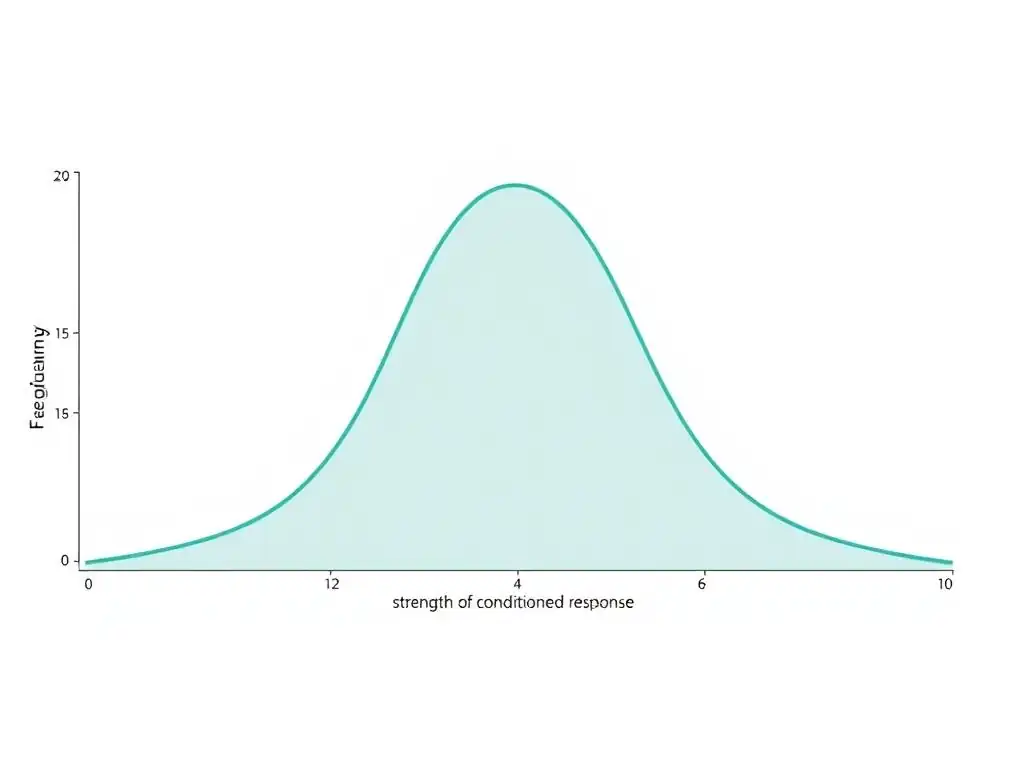
Measuring the strength of the conditioned response (CR) during the acquisition phase of classical conditioning is crucial for understanding the learning process. It allows researchers to quantify the association formed between the conditioned stimulus (CS) and the unconditioned stimulus (US). Several methods exist, each offering unique insights into the development of this learned response. The strength of the CR isn't simply a binary "yes/no" but rather a gradual increase in response, mirroring the strengthening of the association. Effective measurement allows us to track this progress and provides valuable data for understanding the dynamics of classical conditioning initial learning.
Measuring the Magnitude of the CR
The magnitude of the CR refers to the intensity or strength of the response. For instance, if we are conditioning a dog to salivate (CR) at the sound of a bell (CS) after pairing it with food (US), the magnitude could be measured by the amount of saliva produced. This could be quantified in milliliters, providing a precise numerical value representing the response strength. A larger volume of saliva indicates a stronger CR, reflecting a more robust association between the bell and the anticipation of food. Other examples include:
- Fear conditioning: The magnitude of freezing behavior in response to a fear-inducing stimulus (CS) can be measured by the duration of freezing. Longer freezing times indicate a stronger conditioned fear response.
- Taste aversion: The magnitude of avoidance of a particular food (CS) after it's paired with illness (US) can be measured by the amount of food consumed. Less consumption shows a stronger aversion.
Precise measurement requires careful control of extraneous variables. For example, the dog's initial hunger level might influence salivation. Researchers must standardize procedures to minimize these confounding factors and ensure reliable measurement of the CR's magnitude. This rigorous approach is essential for obtaining accurate data on classical conditioning initial learning.
Latency of the CR: Response Time
Another crucial aspect of measuring acquisition is the latency of the CR, which is the time elapsed between the presentation of the CS and the onset of the CR. A shorter latency indicates a stronger association. In our dog salivation example, a shorter delay between the bell ringing and the dog's initial salivation reflects a more firmly established conditioned response. As learning progresses, the latency typically decreases, demonstrating the strengthening of the CS-US association.
Consider this: Initially, the dog might only salivate several seconds after hearing the bell. However, as conditioning progresses, the dog might start salivating almost immediately upon hearing the bell. This reduction in latency provides strong evidence of successful classical conditioning initial learning. Similarly, in fear conditioning, a shorter latency between the presentation of the fear-inducing stimulus and the onset of freezing indicates a stronger conditioned fear response. Analyzing latency alongside magnitude provides a comprehensive understanding of the learning process.
Generalization and Discrimination in the Acquisition Phase
Generalization and discrimination are important processes that occur during the acquisition phase, shaping the specificity of the learned response. Generalization refers to the tendency for the CR to occur in response to stimuli similar to the CS. For instance, if the dog salivates to a bell of a slightly different pitch or tone, this demonstrates generalization. The extent of generalization reflects the breadth of the learned association. A wider range of stimuli eliciting the CR suggests a less precise association.
Discrimination, on the other hand, refers to the ability to differentiate between the CS and other similar stimuli. If the dog only salivates to the specific bell used during training and not to other bells, this indicates good discrimination. The ability to discriminate reflects the precision of the learned association.
Successful discrimination demonstrates a more refined and specific learned response, highlighting the selectivity of classical conditioning initial learning. The balance between generalization and discrimination profoundly impacts the effectiveness and specificity of the learned response. The interplay of these two processes is crucial in understanding the complete picture of classical conditioning initial learning.
Extinction and Spontaneous Recovery: Beyond Initial Learning

This section delves into the processes of extinction and spontaneous recovery, crucial aspects of classical conditioning that extend beyond the initial acquisition of the conditioned response (CR). While acquisition focuses on how associations are initially formed, extinction and spontaneous recovery illuminate the dynamic nature of these learned associations and their resilience over time. Understanding these processes is vital for a complete grasp of classical conditioning and its implications. This is particularly relevant to understanding the nuances of "classical conditioning initial learning" and its limitations.
The Role of Extinction in Understanding Acquisition
Extinction is the gradual weakening and eventual disappearance of a conditioned response. It occurs when the conditioned stimulus (CS) is repeatedly presented without the unconditioned stimulus (UCS). For example, if Pavlov's dogs consistently heard the bell (CS) without receiving food (UCS), their salivation (CR) would gradually decrease until it ceased altogether. This doesn't mean the association is completely erased; it's merely inhibited. The initial learning, however, provides the foundation upon which extinction operates. Without the initial pairing of the CS and UCS during acquisition, there would be no conditioned response to extinguish.
The rate of extinction varies depending on several factors. The strength of the initial association, the frequency of pairings during acquisition, and the consistency of the extinction procedure all play significant roles. A strongly established CR will naturally take longer to extinguish than a weakly established one. Similarly, a more consistent extinction procedure (always presenting the CS without the UCS) leads to faster extinction than an inconsistent one.
Consider this example: A child (subject) develops a fear of dogs (CR) after being bitten by one (UCS). The sight of a dog (CS) now elicits fear. Through extinction, the child is repeatedly exposed to dogs in a safe environment (CS without the UCS – being bitten). Over time, the child's fear response gradually diminishes. However, it's important to note that extinction is not unlearning; it's a new learning process that inhibits the previously learned association.
Spontaneous Recovery and the Persistence of Learning
Spontaneous recovery is a phenomenon where a previously extinguished conditioned response reappears after a period of rest, without any further pairings of the CS and UCS. After the dog's salivation response to the bell had been extinguished, Pavlov observed that after a period of time, the dogs would again salivate slightly upon hearing the bell, even though no food had been presented. This demonstrates that the initial learning, while seemingly erased through extinction, is not entirely forgotten. The association between the CS and UCS remains latent, capable of resurfacing under specific conditions.
The strength of spontaneous recovery is typically weaker than the original conditioned response. Multiple extinction sessions may be needed to fully eliminate the response. This highlights the resilience and persistence of learned associations, even after they appear to be extinguished. This persistence is a key element in understanding the complexities of "classical conditioning initial learning" and how it influences subsequent behavior. The reappearance of the CR suggests that extinction does not erase the initial learning but rather suppresses it. The underlying association, formed during acquisition, remains, ready to be reactivated under the right circumstances.
| Factor | Effect on Extinction | Effect on Spontaneous Recovery |
|---|---|---|
| Strength of initial learning | Slower extinction | Stronger spontaneous recovery |
| Consistency of extinction | Faster extinction | Weaker spontaneous recovery |
| Length of rest period | Not directly applicable | Stronger spontaneous recovery |
The interplay between acquisition, extinction, and spontaneous recovery underscores the dynamic and complex nature of classical conditioning. While acquisition lays the groundwork for learned associations, extinction and spontaneous recovery reveal the enduring and adaptable nature of these associations within the brain. 🐾
Frequently Asked Questions
What is acquisition in classical conditioning?
Acquisition in classical conditioning refers to the initial learning stage where an association is formed between a neutral stimulus and an unconditioned stimulus. This happens through repeated pairings of the two stimuli. The neutral stimulus eventually becomes a conditioned stimulus.
How many pairings are needed for acquisition to occur?
The number of pairings needed varies greatly depending on factors such as the intensity of the stimuli and the individual's learning capacity. Some pairings may be sufficient, while others may require many more repetitions for a strong association to form. There's no single magic number.
What is the role of the unconditioned stimulus (UCS) in acquisition?
The UCS is crucial because it naturally elicits an unconditioned response (UCR). Through repeated pairings with a neutral stimulus, the UCS transfers its ability to elicit a response to the now-conditioned stimulus (CS). The UCS is the key to initiating the learning process.
What is the difference between acquisition and extinction in classical conditioning?
Acquisition is the initial learning of the association, while extinction is the gradual weakening of that association. Extinction occurs when the conditioned stimulus (CS) is repeatedly presented without the unconditioned stimulus (UCS).
Can classical conditioning explain all learning?
No, classical conditioning explains a specific type of learning – associative learning through pairing stimuli. Other types of learning, like operant conditioning (learning through consequences), and cognitive learning (learning through mental processes), are also crucial in explaining the complexity of human and animal behavior.
Final Reflection: The Enduring Power of Association
Understanding the initial stages of classical conditioning remains crucial in today's world, as the principles governing how we learn through association profoundly impact our behaviors, choices, and even our emotional responses. The seemingly simple process of pairing stimuli to create learned responses has far-reaching consequences, shaping everything from our preferences and aversions to our deepest anxieties and ingrained habits. This understanding is not merely academic; it's the bedrock upon which effective therapies, marketing strategies, and even personal growth techniques are built.
The impact of classical conditioning on our cultural and social landscape is undeniable, subtly shaping our experiences from childhood onward. We see its influence in the power of branding, the effectiveness of advertising, and the formation of deeply ingrained prejudices. The associations we form early in life often have a lasting impact, coloring our perceptions and influencing our interactions throughout our lives. Give me a child until he is seven, and I will show you the man.
This quote, though not directly about classical conditioning, highlights the profound and lasting impact of early learning experiences, a concept deeply intertwined with the principles discussed in this article.
Consider the power you now hold. You've explored the fundamental mechanisms of classical conditioning, witnessing firsthand how seemingly simple pairings can create complex learned responses. Now, take a moment to reflect on your own life. Identify instances where classical conditioning has shaped your behaviors, preferences, or beliefs. Can you consciously utilize this knowledge to create positive associations and break free from negative ones? The power to shape your own learning, to consciously cultivate beneficial associations, rests within you. Embrace this understanding, and use it to build a more fulfilling and meaningful life.
Unlock the Power of Conditioning: Start Your Journey Today!
Thank you for exploring the fascinating world of classical conditioning! Understanding how associations are formed provides valuable insights into human behavior. Now, let's apply this knowledge to your life and studies.
Here are some practical steps you can take:
- Experiment with Conditioning: Try associating a neutral stimulus, such as a particular song, with a specific emotional experience. Observe how your feelings change when you hear that song again.
- Share Your Knowledge: Discuss your newfound understanding with friends or colleagues; teaching others reinforces your own learning and can lead to stimulating discussions.
- Engage with the Psychology Community: Connect with other enthusiasts and experts online to share experiences and explore real-world applications of classical conditioning.
What unexpected connections have you discovered that might alter your perspective on learning and personal experiences?