Mirror Neurons and Empathy: A Cognitive Neuroscience Perspective
🤔 Mirror neurons empathy explained simply: Discover how these specialized brain cells, firing both when we act and when we observe others,…
Read article
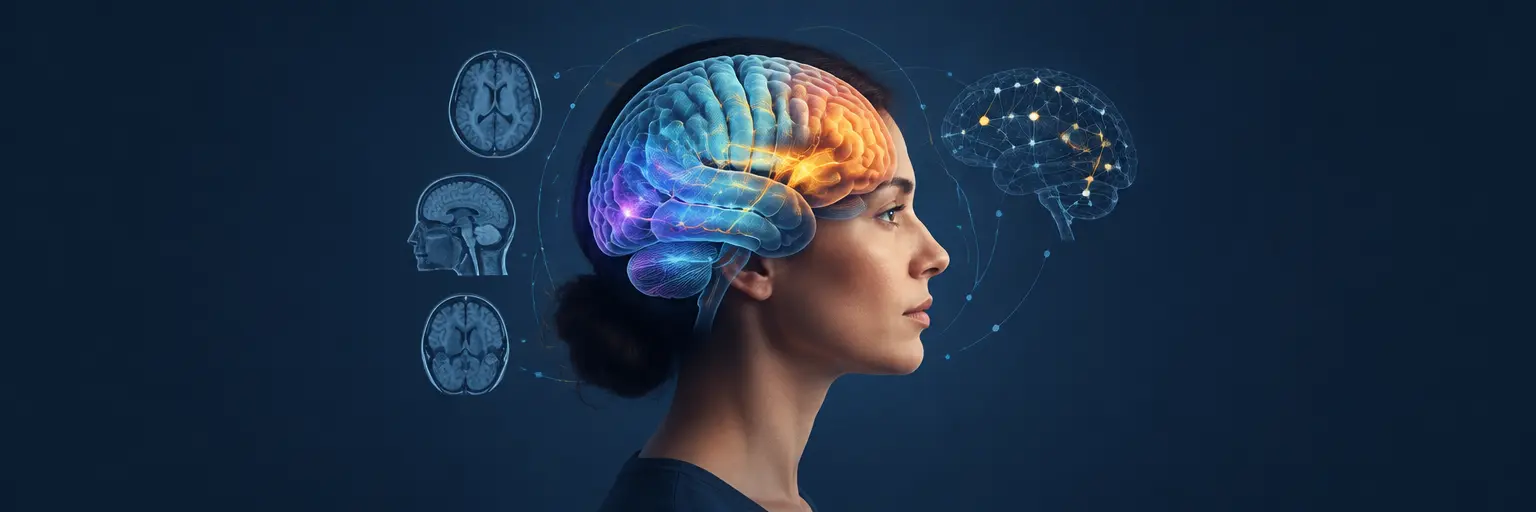
Cognitive Neuroscience bridges the gap between the brain’s physical machinery and the mind’s most intricate processes, offering a cutting-edge window into how we think, feel, and remember. By combining neuroimaging tools like fMRI and EEG with psychological experiments, this field reveals the neural underpinnings of attention, memory, language, and decision-making. For students and curious minds, it’s the perfect starting point to explore how biological systems create conscious experience—from synaptic firing to complex reasoning. Whether you’re unraveling the mysteries of perception or mapping the brain’s plasticity, cognitive neuroscience provides clear, evidence-based explanations that turn abstract psychology into tangible neural reality. Dive in to understand why your brain’s wiring shapes every thought, and how mind-body connections drive behavior—essential knowledge for anyone beginning their journey in neuropsychology.
🤔 Mirror neurons empathy explained simply: Discover how these specialized brain cells, firing both when we act and when we observe others,…
Read article
🤔 Explore the intricate relationship between aging and cognitive decline. This article provides a neuroscientific overview of age-related changes in brain function,…
Read article
🤔 Discover how to improve brain function naturally through evidence-based cognitive enhancement techniques. This article explores neuroscientific research on methods to boost…
Read articleCognitive neuroscience bridges the gap between mind and brain, exploring how neural circuits give rise to mental processes like memory, attention, language, and decision-making. As a core subcategory within neuropsychology, it focuses on mapping cognitive functions to specific brain regions and networks, using tools like fMRI, EEG, and lesion studies. For students and general readers, this area offers a fascinating, evidence-based look at how our thoughts, emotions, and behaviors are rooted in biological activity. Below, you’ll discover essential themes, methods, and real-world applications that define this vibrant field—perfect for building a solid foundation in psychology basics.
At the heart of cognitive neuroscience lies the identification of large-scale brain networks—such as the default mode network, central executive network, and salience network—that support complex behaviors. Understanding these networks helps explain why certain tasks, like recalling a memory or focusing on a lecture, activate distinct regions in coordinated patterns. This subcategory emphasizes how the prefrontal cortex, hippocampus, and parietal lobes work together, rather than in isolation, to produce seamless cognition. By studying these interactions, you’ll learn why brain injuries can have surprising, non-localized effects, and how neuroplasticity allows other regions to compensate. This foundational knowledge is crucial for anyone exploring neuropsychology, as it frames every subsequent topic.
Expect to encounter clear, jargon-light explanations of connectivity, synaptic transmission, and the role of white matter tracts. We’ll break down how researchers use graph theory and connectomics to map these networks, giving you a visual and conceptual grasp of brain organization. Whether you’re a beginner or revisiting concepts, this section will demystify terms like "top-down processing" and "executive control," linking them directly to everyday experiences like multitasking or forgetting. The goal is to build a mental model of the brain as an integrated system, not a collection of isolated modules—a perspective that modern neuropsychology embraces wholeheartedly.
To understand how we know what we know about the brain, you’ll explore the toolbox of cognitive neuroscience: functional magnetic resonance imaging (fMRI), electroencephalography (EEG), transcranial magnetic stimulation (TMS), and patient lesion studies. Each method has unique strengths—fMRI offers spatial precision, while EEG provides millisecond-level temporal resolution—and their combination yields powerful insights. This subcategory teaches you how to interpret brain activation maps, understand event-related potentials (ERPs), and discern correlation from causation in experimental designs. You’ll also learn about the limitations, such as the blood-oxygen-level-dependent (BOLD) signal’s indirect nature, and how researchers mitigate confounds. This practical knowledge is indispensable for critically evaluating neuroscience claims in media or academic papers.
Expect step-by-step walkthroughs of classic experiments, like those on face perception or working memory, to see methodology in action. We’ll discuss ethical considerations, such as informed consent in brain stimulation, and the reproducibility crisis in neuroimaging. For students, this section provides a valuable bridge between theory and lab practice, offering tips on how to design simple cognitive tasks and analyze data. For general readers, it demystifies those colorful brain scans you see online, turning them into meaningful evidence rather than impressive visuals. By the end, you’ll feel confident asking informed questions about any new neuroscience study you encounter.
Memory is one of the most richly studied domains in cognitive neuroscience, and this subcategory dives deep into its multiple systems: working, episodic, semantic, and procedural memory. You’ll learn how the hippocampus acts as a gateway for forming new episodic memories, while the prefrontal cortex orchestrates retrieval and monitoring. We’ll explore the difference between explicit (conscious) and implicit (unconscious) memory, and how conditions like amnesia reveal dissociations between them. For example, patients with hippocampal damage can learn new motor skills (procedural memory) but forget what happened minutes ago—a classic demonstration of separate neural pathways. This section also covers memory consolidation during sleep, including the role of sharp-wave ripples and slow-wave oscillations.
Expect clear diagrams and real-life analogies, such as comparing working memory to a mental workspace with limited capacity. You’ll discover why forgetting is not a failure but a neural feature, driven by interference and decay processes. We’ll touch on false memories, showing how retrieval is a reconstructive process vulnerable to distortion. For students, understanding these systems is vital for linking cognitive theories to brain anatomy. For general readers, it explains everyday phenomena like tip-of-the-tongue states or déjà vu. This subcategory emphasizes practical takeaways, such as study techniques that align with how the brain encodes information, making it both educational and immediately useful.
From the moment light hits your retina to the moment you recognize a face, cognitive neuroscience unravels a rapid sequence of neural events. This subcategory focuses on the ventral "what" pathway and dorsal "where/how" pathway, which process object identity and spatial location, respectively. You’ll learn how attention acts as a filter, prioritizing stimuli in a crowded visual field, and how frontal-parietal networks direct both bottom-up (stimulus-driven) and top-down (goal-directed) attention. Conditions like visual neglect, where patients ignore one side of space, highlight the brain’s lateralization of attention. We’ll also explore phenomena like change blindness, showing that our subjective visual experience is less complete than we think.
Expect to see elegant experiments, such as those using binocular rivalry or inattentional blindness, to illustrate these principles. We’ll break down the neural basis of visual illusions, revealing how perception is an active construction, not a passive recording. For students, this section connects classic psychology findings (e.g., Treisman’s feature integration theory) to modern neuroimaging evidence. For general readers, it answers questions like why we miss obvious obstacles when distracted or why optical illusions fool everyone. The practical angle includes tips for improving attention, such as minimizing multitasking, and understanding how video game training can enhance visual cognition. This is a visually rich and intuitive entry point into cognitive neuroscience.
Every choice, from selecting coffee to navigating moral dilemmas, engages the brain’s cognitive control systems. This subcategory explores the prefrontal cortex’s role in executive functions: planning, inhibition, working memory updating, and cognitive flexibility. You’ll learn about the conflict monitoring theory, where the anterior cingulate cortex detects errors and signals the prefrontal cortex to adjust behavior. We’ll examine how neurochemicals like dopamine and norepinephrine modulate these processes, influencing risk-taking and reward-based decisions. Furthermore, you’ll see how damage to these areas—due to stroke or TBI—impairs judgment and impulse control, providing insights into real-world behaviors like addiction or pathological gambling.
Expect interactive thought experiments, such as the Iowa Gambling Task or Stroop test, to demonstrate these concepts in your own mind. We’ll discuss the dual-process theory, contrasting fast, intuitive "System 1" with slow, deliberative "System 2" thinking, and map it to neural substrates. For students, this section prepares you for advanced topics in neuroeconomics and social neuroscience. For general readers, it offers a deeper understanding of why willpower fluctuates and how to improve self-regulation. We’ll also cover developmental changes, showing how the adolescent brain’s still-maturing prefrontal cortex explains teenage impulsivity. This blend of biology and practical insight makes cognitive control a compelling cornerstone of neuropsychology.
Cognitive psychology focuses on mental processes—like memory or attention—using behavioral experiments, whereas cognitive neuroscience investigates the neural mechanisms underlying those processes, using brain imaging and lesion studies. Both fields complement each other: psychology tells you what happens, neuroscience tells you where and how in the brain. In neuropsychology, you often combine both perspectives to understand disorders.
Lesion studies examine patients with brain damage to infer which functions rely on damaged regions. For example, damage to Broca’s area impairs speech production, suggesting that region is critical for language. These studies provide causal evidence, unlike correlation from fMRI. Modern research also uses temporary lesions via TMS in healthy brains, allowing controlled experiments without permanent damage.
Yes, insights from cognitive neuroscience lead to practical interventions. For memory, spacing practice and sleep consolidation boost hippocampal encoding. For attention, reducing distractions and practicing mindfulness strengthens prefrontal control. Additionally, neurofeedback and cognitive training apps incorporate these principles, though their long-term benefits require more research. The key is matching strategies to how your brain naturally learns.
fMRI measures blood flow indirectly, giving a delayed and blurred signal relative to neural activity (temporal resolution of seconds). It also requires participants to lie still, limiting naturalistic tasks. Additionally, correlating BOLD signals with cognition doesn’t prove causation—brain activity might be supportive rather than necessary. Finally, reproducibility issues arise from small samples and varied analysis pipelines, though best practices are improving.
Neuroplasticity allows undamaged brain regions to take over lost functions, especially in children. For example, after a stroke affecting language, the right hemisphere may support speech recovery. Rehabilitation uses this principle: repetitive, targeted training strengthens new neural pathways. Older brains have diminished plasticity, but still retain remarkable adaptive capacity. Recovery depends on lesion size, age, and therapy intensity, emphasizing the brain’s dynamic nature.