The Hidden Struggles: Addressing the Cognitive Deficits After Brain Injury
🤔 Brain injury often leaves lasting cognitive deficits, impacting daily life. This article explores the challenges of cognitive deficits brain injury recovery,…
Read article
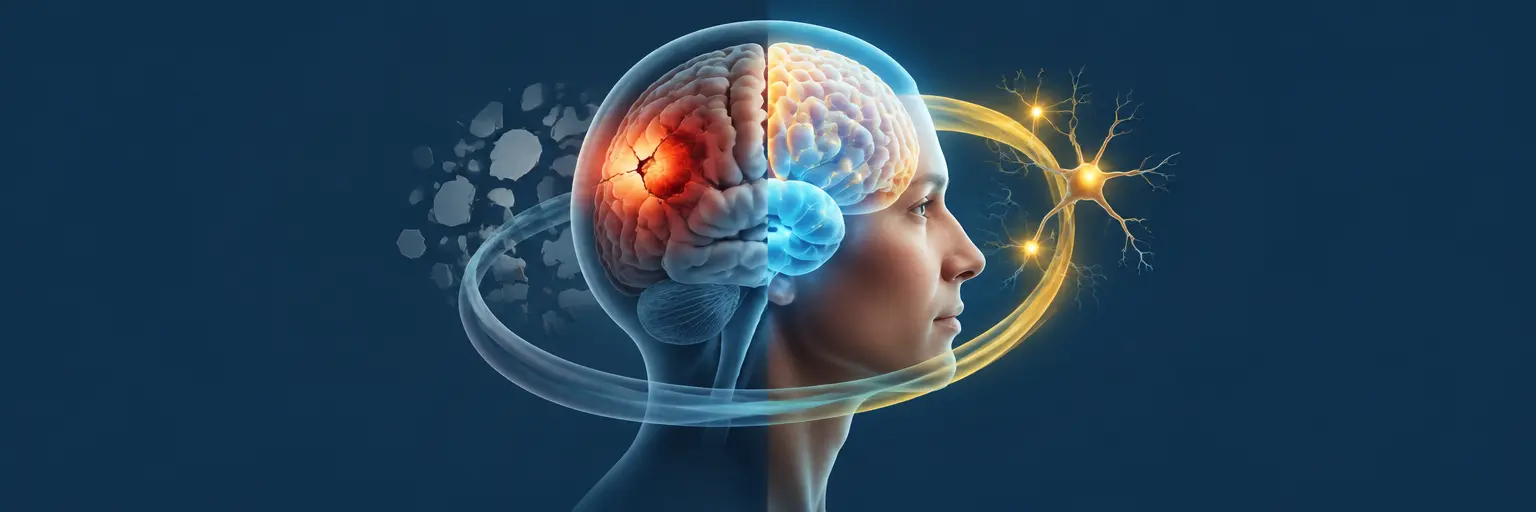
Brain Injury and Recovery in neuropsychology explores how trauma, stroke, or disease disrupts cognitive functions and how the brain adapts through neuroplasticity. From concussion management to rehabilitation strategies, this field bridges biological damage with real-world behavior, memory, and emotion. Discover how targeted therapies, cognitive exercises, and supportive environments can rewire neural pathways, offering hope for rebuilding skills and identity after injury. Whether you’re a student or a curious reader, understanding recovery timelines, common deficits, and evidence-based interventions unlocks the brain’s remarkable capacity to heal and relearn.
🤔 Brain injury often leaves lasting cognitive deficits, impacting daily life. This article explores the challenges of cognitive deficits brain injury recovery,…
Read article
🤔 Uncover the powerful influence of genetics on brain injury, exploring how individual genetic variations impact both susceptibility to injury and the…
Read articleWelcome to the Brain Injury and Recovery subcategory within Neuropsychology at Psychology Basics. Here, we explore how traumatic or acquired brain damage affects cognition, emotion, and behavior—and how the brain’s remarkable plasticity enables rehabilitation. Whether you’re a psychology student, a caregiver, or a curious reader, this section demystifies the science of neural repair, from concussion protocols to stroke rehabilitation. Expect evidence-based insights, real-world case examples, and practical strategies to support recovery. Let’s dive into the intricate journey of healing the most complex organ in the human body.
Brain injuries fall into two broad categories: traumatic (e.g., falls, car accidents, sports impacts) and acquired (e.g., stroke, infection, oxygen deprivation, tumors). Traumatic brain injury (TBI) ranges from mild concussions to severe penetrating wounds, while acquired injuries often result from interrupted blood flow or metabolic crises. Understanding the distinction is crucial because the recovery trajectory differs—TBIs often involve focal damage, whereas anoxic injuries produce diffuse neuronal loss.
In this subcategory, you’ll learn how each type affects specific brain regions—like the frontal lobe’s role in executive function or the hippocampus’s vulnerability to anoxia. We also break down severity scales (Glasgow Coma Scale) and explain how secondary injuries (swelling, inflammation) extend initial damage. This foundational knowledge helps you recognize why symptoms vary widely, from subtle memory slips to profound personality changes, and sets the stage for discussing tailored rehabilitation approaches.
Neuroplasticity is the brain’s ability to reorganize itself by forming new neural connections throughout life—even after injury. Post-injury, neighboring neurons can take over lost functions, and dormant pathways may be strengthened. This adaptability is the cornerstone of recovery, but it is not automatic; it requires targeted stimulation, repetition, and sometimes pharmacological support. Synaptic pruning and dendritic sprouting are key cellular processes that underpin this rewiring.
Here, we explain the difference between structural plasticity (physical changes in neurons) and functional plasticity (compensatory activation of alternate brain networks). You’ll discover how age, injury severity, and environmental enrichment influence neuroplastic capacity. We also highlight cutting-edge research on brain-derived neurotrophic factor (BDNF) and how exercise, sleep, and cognitive training boost its release—giving you actionable insights to maximize recovery at home or in clinical settings.
Effective recovery demands a multidisciplinary approach. Physical rehabilitation addresses motor deficits through physiotherapy and occupational therapy, while cognitive rehabilitation targets attention, memory, and problem-solving via structured drills and compensatory strategies. Speech-language therapy handles communication and swallowing, and psychotherapy manages emotional sequelae like depression and anxiety. Each therapy is individualized based on neuropsychological assessments that map deficits to specific brain regions.
In this section, we explore evidence-based techniques such as constraint-induced movement therapy, spaced retrieval for memory, and computerized cognitive training (e.g., CogMed). We also discuss the role of assistive technologies—from smart home devices to virtual reality simulations—that enhance engagement and ecological validity. By understanding how therapies synergize, you’ll see why “one-size-fits-all” programs fail and why personalized, goal-oriented plans yield the best long-term outcomes.
Recovery is not linear; it unfolds in overlapping stages. The acute phase (hours to days) focuses on medical stabilization—reducing intracranial pressure, preventing seizures, and preserving vital functions. The subacute phase (weeks to months) is where active rehabilitation begins, capitalizing on early neuroplasticity. Here, patients may experience spontaneous improvements, but also plateaus and setbacks. The chronic phase (months to years) emphasizes adaptive strategies and community reintegration, as raw cognitive gains slow but quality-of-life interventions continue.
This subcategory details what to expect at each stage, including the phenomenon of spontaneous recovery and the window of heightened plasticity. We explain the Rancho Los Amigos Scale used to gauge cognitive recovery, and how caregiver support evolves from hands-on assistance to advocacy. You’ll also learn about long-term risks—like post-traumatic epilepsy and cognitive fatigue—and strategies to monitor them, ensuring you have a realistic roadmap for both patients and families.
Why do two people with similar injuries recover differently? Prognosis hinges on multiple variables: age (children and young adults show better plasticity), premorbid intelligence (cognitive reserve offers buffering), injury location and size, and time to rehabilitation. Also critical are psychosocial factors—social support, motivation, and absence of substance abuse—which can accelerate or hinder neural repair. Even sleep quality and nutrition play direct roles in synaptic consolidation and repair.
We break down each factor with real-life examples, such as how a university professor’s rich vocabulary aided his aphasia recovery versus a manual laborer’s challenges. We also discuss the controversial role of gender and genetics in recovery trajectories. By understanding these predictors, clinicians can set realistic expectations and families can advocate for resources—like neuropsychologists and vocational counselors—that align with the likely course, reducing frustration and enhancing resilience.
A traumatic brain injury (TBI) results from an external physical force—like a blow to the head or a penetrating object. An acquired brain injury (ABI) encompasses any injury occurring after birth, including strokes, infections, tumors, or oxygen deprivation. While all TBIs are ABIs, not all ABIs are traumatic. The distinction matters because treatments and prevention strategies differ—TBIs often require surgical intervention, whereas ABIs may focus on vascular or metabolic management.
Ideally, rehabilitation begins as soon as the patient is medically stable—often within 24 to 48 hours for mild injuries, and within days for severe ones. Early intervention capitalizes on the acute phase of heightened neuroplasticity, preventing secondary complications like muscle atrophy or learned non-use. However, even delayed rehabilitation (weeks or months later) can yield benefits, as the brain remains plastic throughout life, albeit at a slower pace.
Complete recovery is rare for severe injuries; most patients experience permanent deficits. However, functional recovery—meaning the ability to perform daily tasks—is achievable through compensation and neuroplastic rewiring. For example, a person with memory loss may use external aids, while another with motor deficits may learn to use a cane. Recovery is a continuum, not an all-or-nothing phenomenon, and many achieve a fulfilling life despite lasting challenges.
Family members are crucial as emotional anchors, caregivers, and advocates. They help with therapy homework, monitor for mood swings or fatigue, and communicate with medical teams. Their consistent presence reduces patient anxiety and increases motivation. However, caregivers also face burnout—so supportive guidance, respite care, and counseling for families are vital components of holistic recovery programs.
No drug “heals” the brain directly, but several assist the process. Amantadine and methylphenidate may improve attention and arousal—particularly after TBI. Selective serotonin reuptake inhibitors (SSRIs) treat post-injury depression, which can hinder recovery. Cholinesterase inhibitors are used for memory issues post-stroke. Always under a neurologist’s supervision, these medications complement therapy, not replace it. Lifestyle factors—sleep, omega-3s, and aerobic exercise—also enhance endogenous repair mechanisms.