



The Effects of Social Media on Attention Spans: How Platforms Impact Focus
🤔 Social media's impact on attention spans is significant, with studies revealing a correlation between increased platform use and decreased focused attention.…
Read article

Social Psychology explores how our thoughts, feelings, and behaviors are shaped by the real or imagined presence of others. From the subtle pull of social influence and the art of attitudes and persuasion to the complexities of group dynamics and interpersonal relationships, this field reveals the invisible forces behind conformity, altruism, and bias. Whether you’re untangling prejudice and discrimination or navigating the new frontiers of online social behavior, this section offers clear, evidence-based insights into why we connect, conflict, and cooperate—making it essential reading for students and curious minds alike. Unlock the science of everyday interaction and see yourself—and others—in a whole new light.
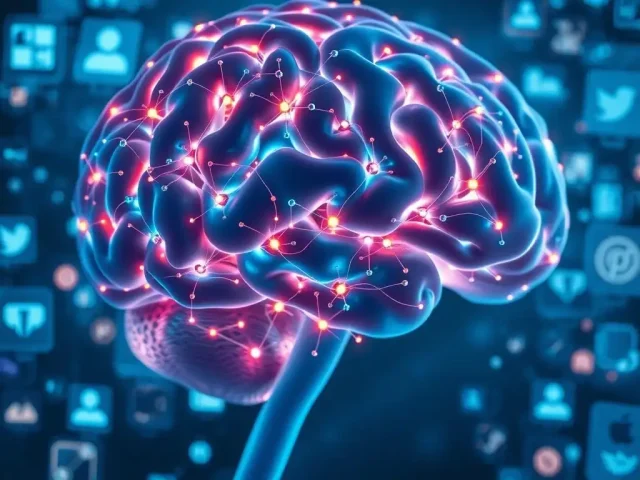
🤔 Social media's impact on attention spans is significant, with studies revealing a correlation between increased platform use and decreased focused attention.…
Read article
🤔 Explore the evolving landscape of Psychology persuasion: future trends in this field reveal how technology and neuroscience are reshaping our understanding…
Read article
🤔 Explore the complex ethical dilemmas presented by online interactions. This article, ideal for online ethics psychology students and general readers, examines…
Read article
🤔 Explore the fascinating world of gender psychology and helping behavior! This article examines whether observed differences in altruism between men and…
Read article
🤔 Learn to identify subtle tactics used to influence your decisions. This article equips you with critical thinking skills essential for resisting…
Read article
🤔 Discover the power of the few! This article explores minority influence psychology explained, revealing how consistent, confident minorities can sway majority…
Read article
😊 Learn how setting healthy boundaries is crucial for your emotional wellbeing. This article, ideal for psychology students and anyone seeking self-improvement,…
Read article
😊 Discover how the Contact Hypothesis challenges prejudice reduction. This insightful article explores how positive intergroup contact, under specific conditions, can effectively…
Read article
😊 Unlock deeper relationships through empathy. This article explores how understanding and sharing others' feelings—the cornerstone of empathy—fosters stronger connections, enriching personal…
Read article
🤔 Unraveling the psychology of organ donation reveals the profound altruism driving life-saving decisions. This article explores the motivations behind this selfless…
Read article
😊 Culture profoundly shapes our communication styles, conflict resolution strategies, and expectations in relationships. Understanding culture's impact on relationships is crucial for…
Read article
😊Unlock the secrets of influence! This article explains the reciprocity principle in psychology, revealing how the simple act of giving fosters a…
Read articleWelcome to the Social Psychology section of Psychology Basics. Here, we explore how our thoughts, emotions, and behaviors are shaped by the presence—real, imagined, or implied—of other people. From why we form friendships to how we succumb to peer pressure, this category covers the core theories and everyday examples that make social psychology both fascinating and practical. Perfect for students and curious readers, our guides use clear language, real-world scenarios, and evidence-based insights to help you understand the invisible forces driving human interaction.
In this subcategory, you will discover the psychology behind attraction, love, friendship, and conflict. We break down key concepts like the mere-exposure effect, attachment styles, and the social exchange theory, explaining why some relationships flourish while others fade. Expect practical advice on improving communication, managing jealousy, and building lasting bonds. Whether you’re navigating romantic partnerships, family ties, or workplace connections, these articles provide a research-backed roadmap to healthier, more fulfilling interactions.
Why do people help strangers, donate to charity, or risk their own safety for others? This section dives into the psychology of kindness, empathy, and heroism. You’ll learn about the bystander effect, the empathy-altruism hypothesis, and how situational factors like mood and time pressure influence helping. We also explore real-life examples of altruism, from everyday acts of generosity to large-scale humanitarian efforts, and discuss how to cultivate a more prosocial mindset in your own life.
Here, we tackle the uncomfortable but essential topic of how bias forms and how to reduce it. Understand the difference between prejudice, stereotypes, and discrimination, and explore theories like social identity theory and realistic conflict theory. Our articles examine implicit bias, microaggressions, and systemic inequality, offering evidence-based strategies such as intergroup contact and perspective-taking. This subcategory aims to equip you with the knowledge to recognize bias in yourself and others, and to act toward a more inclusive society.
Groups influence everything from decision-making to personal identity. In this section, you’ll learn about group cohesion, roles, norms, and leadership. We cover phenomena like groupthink, social loafing, and deindividuation, explaining how they can lead to both brilliant teamwork and disastrous collective errors. Expect case studies from sports teams, corporate boardrooms, and online communities, plus tips on fostering effective collaboration and avoiding common pitfalls in group settings.
This subcategory explores how attitudes are formed, changed, and used to persuade. Delve into the classic Elaboration Likelihood Model, cognitive dissonance theory, and the art of rhetoric. You’ll learn why some advertisements, political messages, or public health campaigns succeed while others fail, and how to spot manipulative persuasion tactics. Practical applications include improving your own argumentation skills, resisting peer pressure, and understanding the psychology behind marketing and propaganda.
Digital spaces have transformed social psychology, and this section covers how people behave, connect, and influence each other online. Topics include social media’s effect on self-esteem and identity, cyberbullying, online disinhibition, and the dynamics of virtual communities. We examine filter bubbles, echo chambers, and viral misinformation, alongside positive phenomena like digital activism and online support groups. Expect actionable insights for navigating your digital life more mindfully and ethically.
The final subcategory focuses on how others change our behavior—often without us noticing. Learn about conformity (Asch’s experiments), obedience (Milgram’s studies), and compliance techniques like foot-in-the-door and scarcity. We explain the roles of authority, social proof, and group pressure, and how these forces operate in real-world settings from cults to corporate culture. This section also offers strategies to resist undue influence and to use social influence positively, such as in public health campaigns.
Social psychology focuses on the individual’s thoughts, feelings, and behaviors in social contexts, examining how mental processes are shaped by others. Sociology, in contrast, studies broader social structures, institutions, and group-level patterns. For example, a social psychologist might ask why one person conforms to a group, while a sociologist looks at how societal norms emerge across entire populations.
Understanding attachment styles helps you recognize your own patterns in intimacy. Practicing active listening and using “I” statements reduces conflict. Also, being aware of the mere-exposure effect reminds you that familiarity breeds liking—so invest time in relationships. Finally, learn to manage social loafing in group projects by setting clear roles and accountability, which strengthens cooperation and mutual respect.
Implicit biases are not fixed; they can be reduced with sustained effort. Strategies include consciously exposing yourself to counter-stereotypical examples (e.g., media featuring diverse role models), practicing perspective-taking, and encouraging intergroup contact. Repeating these actions helps rewire automatic associations over time. However, change requires ongoing mindfulness, as biases can resurface under stress or when exposed to reinforcing environments.
This is largely explained by the bystander effect, where the presence of others reduces individual responsibility (“diffusion of responsibility”). People also look to others for cues; if no one acts, they interpret the situation as non-urgent (“pluralistic ignorance”). To overcome this, Pittsburgh’s research suggests singling out a specific person (“you in the red shirt, call 911”) to break the diffusion.
Social media creates constant social comparison, often leading to upward comparisons with idealized images, which can lower self-esteem. However, the effect is not uniform: passive scrolling tends to harm mood, while active engagement with close friends can boost well-being. Setting boundaries, curating feeds to include realistic content, and focusing on offline achievements help mitigate negative impacts.