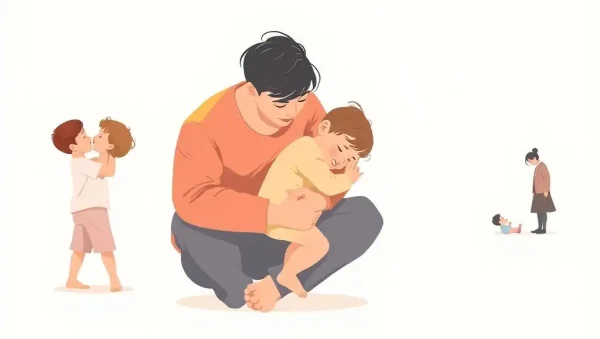
Understanding Attachment Styles and Their Impact
Attachment styles are the emotional blueprints we carry into every relationship, shaped largely by our earliest caregiving experiences. In this subcategory of Psychology Basics, you’ll discover how secure, anxious, avoidant, and disorganized attachment patterns influence communication, intimacy, conflict resolution, and long-term satisfaction. Whether you’re a student studying developmental psychology or a general reader seeking self-awareness, this guide will help you decode relationship behavior and improve your interpersonal skills.
🔍 The Four Core Attachment Styles Explained
Attachment theory, pioneered by John Bowlby and Mary Ainsworth, categorizes adult relationship patterns into four distinct styles. Secure attachment thrives on trust and open communication, while anxious attachment craves constant reassurance and fears abandonment. Avoidant attachment values independence and often distances emotionally, whereas disorganized attachment blends fear and confusion from inconsistent caregiving. Understanding these categories is the first step toward recognizing your own relational habits.
Each style is not a permanent label but a learned tendency that can shift with self-reflection and healthy experiences. For students, this framework provides a scientific lens for studying human connection. For general readers, it offers practical vocabulary to name recurring conflicts—like why you chase after partners who pull away, or why commitment brings an urge to flee. Recognizing the “why” behind your patterns reduces shame and opens the door to change.
💬 How Attachment Styles Shape Communication
Communication is the visible surface of underlying attachment dynamics. Securely attached individuals use “I” statements, listen actively, and repair ruptures quickly. Anxiously attached people may overtext, bring up past hurts, or misinterpret neutral messages as rejection. Avoidant partners tend to shut down, use stonewalling, or avoid deep conversations altogether, while disorganized individuals might oscillate between clinginess and sudden coldness. These patterns predict whether discussions turn into productive dialogues or painful battles.
When you understand that a partner’s defensiveness often stems from fear rather than malice, you can respond with empathy instead of escalation. For example, an avoidant person’s silence is not a signal to chase harder but a cue to provide safe space. Practicing mindful communication—pausing before reacting, clarifying intent, and validating emotions—can rewire neural pathways over time. This section offers concrete scripts and role-play ideas to help you turn conflict into connection, whether at home or in clinical practice.
🧠 Impact on Intimacy and Long-Term Relationship Satisfaction
Intimacy requires vulnerability, which feels safe for securely attached individuals but threatening for those with anxious or avoidant styles. Anxious partners often dive deep too fast, while avoidant ones keep intimacy at arm’s length. Disorganized attachment may lead to push-pull cycles where closeness triggers distress. Research consistently shows that secure attachment correlates with higher relationship satisfaction, lower divorce rates, and better mental health across both partners.
Yet, attachment styles are not destiny. Couples with mismatched styles can thrive by co-creating “earned security”—through consistent responsiveness, transparent needs talk, and shared rituals of reassurance. For example, an anxious-avoidant pairing might schedule weekly check-ins to reduce uncertainty. Understanding these impacts helps you set realistic expectations, seek therapy when needed, and build resilience against common relational traps like jealousy, emotional withdrawal, or passive-aggressiveness.
🔄 Can Attachment Styles Change? The Science of Neuroplasticity
For decades, experts debated whether attachment styles are fixed or malleable. Modern research, including longitudinal studies, confirms that adult attachment can shift, especially after major life events, therapy, or a secure romantic partnership. Neuroplasticity—the brain’s ability to reorganize—allows new relational habits to form with repeated practice. Cognitive-behavioral approaches, emotionally focused therapy (EFT), and mindfulness training have all shown effectiveness in moving individuals toward greater security.
Practical steps include journaling relationship triggers, practicing self-soothing during distress, and intentionally choosing partners who demonstrate consistency. For students, this is a fascinating area of applied psychology; for general readers, it’s empowering to know that a “fix” is possible. The key is not to wait for a partner to change you, but to take ownership of your own healing—seeking professional support if patterns feel deeply ingrained. Change is gradual, but every conversation offers a mini-opportunity to rewrite your script.
🧩 Attachment in Parenting, Friendships, and the Workplace
Attachment styles do not only affect romantic relationships—they ripple into parenting, friendships, and professional interactions. A securely attached parent fosters resilience in children; an anxious parent may hover, while an avoidant parent might dismiss emotions. In friendships, attachment shows up as who initiates plans, how conflict is handled, and whether support is sought. At work, it influences leadership styles, teamwork, and reactions to feedback. For example, avoidant employees may resist collaborative projects, while anxious workers might over-apologize.
Understanding this breadth helps you generalize insights beyond a partner. A manager who recognizes an employee’s anxious communication can offer clearer expectations to reduce stress. A friend aware of avoidant tendencies can respect boundaries without taking them personally. This holistic view also aids educators and counselors in creating supportive environments. By applying attachment principles across contexts, you improve emotional intelligence globally, not just in romance—a core goal of Psychology Basics for lifelong learners.
🛠️ Practical Exercises to Identify Your Own Attachment Style
Self-assessment is the gateway to growth. Start with validated tools like the Experiences in Close Relationships-Revised (ECR-R) questionnaire or the Adult Attachment Interview (AAI) for deeper insight. Simple journal prompts include: “How do I react when a partner is slow to text back?” or “Do I feel relieved or anxious after a big argument?” Observe your body reactions—racing heart, tight chest—as clues. Also, reflect on childhood memories: Did caregivers respond consistently? Were emotions welcomed or punished? These reflections reveal your baseline style.
Next, try behavioral experiments: deliberately ask for help, express a small need, or practice staying in the room during a disagreement. Note your internal discomfort and subsequent outcomes. Over weeks, patterns emerge that guide your next steps. Pair this with reading case studies or joining a psychology forum for shared experiences. Remember, the goal is not to label yourself permanently but to increase self-compassion and choice. The more aware you are, the less your attachment style unconsciously runs the show.
Frequently Asked Questions
What is the most common attachment style?
Secure attachment is the most common, found in about 50-60% of adults in Western samples. It develops from consistent, responsive caregiving and is linked to healthier relationships. However, anxious and avoidant styles are each seen in roughly 20% of the population, with disorganized attachment being less common, around 5-10%.
Can two insecure attachment styles make a relationship work?
Yes, but it requires effort. An anxious-avoidant pairing often creates a push-pull dynamic, yet with conscious communication and therapy, couples can move toward “earned security.” The key is to identify patterns early, use non-blaming language, and commit to regular check-ins. Couples counseling can provide a structured framework.
How long does it take to change an attachment style?
There is no fixed timeline, but research suggests meaningful shifts often occur over 6 months to 2 years of consistent practice or therapy. Factors include the severity of past trauma, motivation, and the quality of your current relationships. Small changes, like responding differently to triggers, can show progress within weeks.
Are attachment styles genetic?
No, attachment styles are primarily learned through early interactions, not genetic inheritance. However, temperament—a genetic component—can influence how easily you become anxious or avoidant. Parenting style and environment play the dominant role, which is why siblings can develop different attachment patterns despite shared genes.
Can I have multiple attachment styles depending on the relationship?
Yes, many people display a primary style but vary across relationships. For example, you might be secure with friends but anxious toward romantic partners. This happens because different contexts activate different attachment systems. Awareness of these variations helps you target specific relationships that need improvement without diagnosing yourself too rigidly.