Understanding Lifespan Development in Developmental Psychology
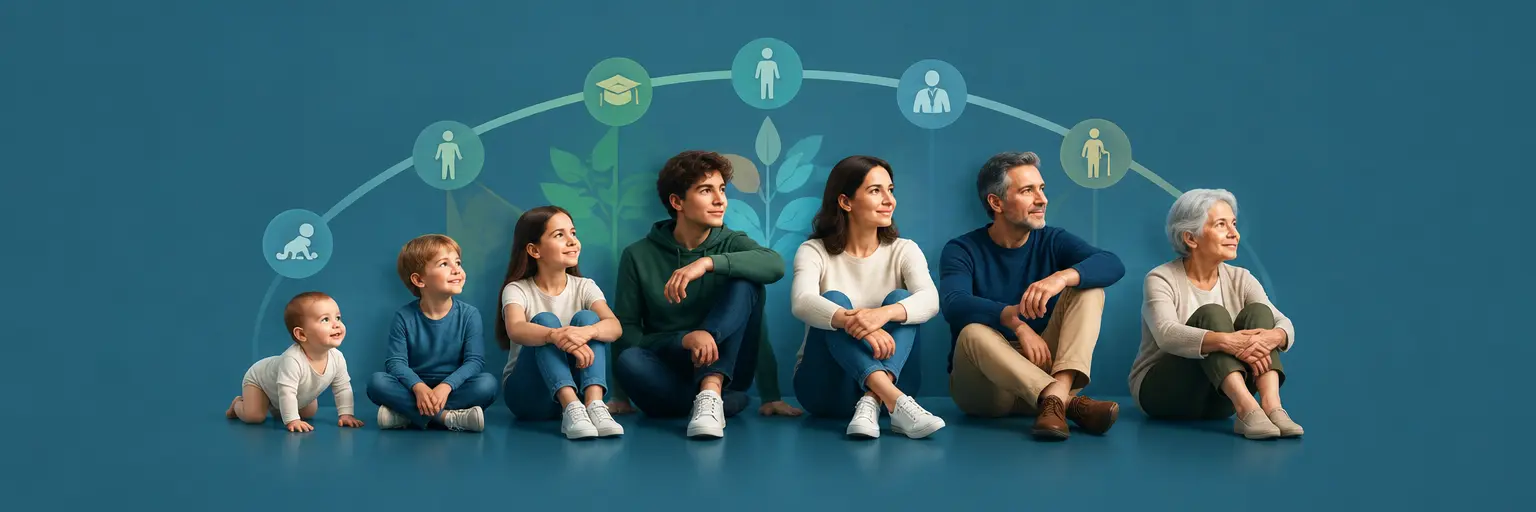
Lifespan development is the scientific study of how humans grow, change, and remain stable from conception through old age. Within the broader field of developmental psychology, this subcategory focuses on the entire journey of life—physical, cognitive, emotional, and social transformations—rather than limiting analysis to childhood. For students and curious readers on Psychology Basics, this page unpacks the major theories, stages, and real-world applications of human development, helping you see how early experiences shape later outcomes and why each phase of life has unique challenges and strengths.
🧠 Core Theories That Explain Lifespan Growth
Developmental psychology is anchored by several powerful frameworks that guide how we understand change over time. Erikson’s psychosocial theory outlines eight stages from trust in infancy to integrity in late adulthood, each presenting a conflict to resolve. Piaget’s cognitive stages describe how children build knowledge through sensorimotor, preoperational, concrete, and formal operational phases. Additionally, Vygotsky’s sociocultural theory emphasizes how mentors and culture accelerate learning, while Bronfenbrenner’s ecological systems model shows how family, school, and policy layers interact. Expect to compare these lenses to see that no single theory captures development alone—each adds a distinct piece to the lifespan puzzle.
These theories are not just academic abstractions; they inform parenting, education, and therapy. For instance, knowing Piaget’s concrete operational stage helps teachers design hands-on science lessons for middle schoolers, while Erikson’s identity versus role confusion stage explains why teens question their future. By mastering these frameworks, you gain a practical toolkit for interpreting behavior at any age, from toddler tantrums to elder reflections. The subcategory also highlights nature versus nurture debates, showing how genetics and environment jointly sculpt traits like intelligence and temperament.
👶 Infancy and Childhood: Foundations of the Lifespan
The earliest years are the most rapid period of growth, with neural connections forming at incredible speed. In this section, you will explore motor milestones (sitting, walking), language acquisition from babbling to full sentences, and attachment patterns—secure, avoidant, or anxious—that predict later relationships. Cognitive development here includes object permanence and egocentrism from Piaget, while social-emotional growth centers on Erikson’s trust versus mistrust and autonomy versus shame. Expect to learn how sensitive periods, such as the first three years for language, shape lifelong learning capabilities.
Practical applications abound: pediatricians use developmental milestones to screen for delays, and early childhood educators design play-based curricula that scaffold emerging skills. This subcategory also addresses the impact of adversity, such as neglect or poverty, on brain architecture and why early intervention programs like Head Start yield long-term academic gains. For parents and future caregivers, understanding these phases reduces anxiety about “normal” behavior and highlights when professional support is beneficial, making this a crucial read for anyone interacting with young children.
🌱 Adolescence: Identity, Brain, and Social Pressures
Adolescence, roughly ages 10 to 19, is defined by puberty-driven bodily changes alongside dramatic brain remodeling. The prefrontal cortex—responsible for impulse control and planning—matures slowly, while the limbic system (emotions and reward) is hyperactive, explaining risky behavior. This subcategory covers Erikson’s identity versus role confusion, where teens experiment with values, careers, and sexual identity. You will also learn about Piaget’s formal operational logic, which enables abstract thinking and hypothetical reasoning, and how peer relationships become the primary social arena, often rivaling family influence.
Expect to see discussions on social media’s double-edged impact: it offers connection but also promotes upward social comparison and cyberbullying. This section also explains why sleep patterns shift later, how school schedules often clash with biological rhythms, and what protective factors—like parental monitoring and extracurricular activities—buffer against anxiety and substance use. For educators and families, this knowledge transforms typical “teen rebellion” into a scientifically predictable phase, fostering empathy and better communication strategies during a notoriously turbulent period.
👨👩👧 Adulthood:Work, Relationships, and Generativity
Adulthood is not stagnant; it is marked by career establishment, intimate partnerships, and parenting, along with cognitive changes. In early adulthood (20-40s), Erikson’s intimacy versus isolation stage drives the search for committed relationships, while middle adulthood (40-65) introduces generativity versus stagnation—the desire to leave a legacy through work, mentorship, or raising children. This subcategory examines how cognitive abilities peak and then shift: fluid intelligence (speed and problem-solving) declines slightly, but crystallized intelligence (knowledge and experience) continues to rise, explaining why older workers excel at complex judgment.
Socially, you’ll explore the sandwich generation, adults caring for both children and aging parents, and how career transitions—like midlife career changes—impact well-being. The section also highlights emotional regulation improvements with age; adults often report greater life satisfaction despite physical declines because they prioritize meaningful goals. Practical takeaways include strategies for maintaining brain health through lifelong learning and the importance of strong social networks in preventing loneliness, which is a robust predictor of mortality. This phase shows development is lifelong, not linear.
👵 Late Adulthood and Aging: Wisdom, Loss, and Resilience
Late adulthood (65+) is a time of both gains and losses. Physical changes—visual acuity, hearing, and bone density—decline, but emotional well-being often improves. Erikson’s final stage of integrity versus despair urges older adults to review their lives with acceptance rather than regret. This subcategory covers cognitive aging nuances: while processing speed slows, wisdom—defined as expert knowledge in practical living—tends to grow. You’ll also learn about successful aging theories that emphasize selective optimization with compensation, where seniors adapt by focusing on preserved abilities and using aids like glasses or hearing aids.
Grief, widowhood, and chronic illness are addressed with sensitivity, but so are positive aspects like grandparenting, volunteering, and spiritual growth. The section debunks the myth that dementia is inevitable by explaining differences between normal forgetfulness and pathological conditions like Alzheimer’s. Practical applications include designing age-friendly communities, promoting exercise and nutrition to delay frailty, and fostering intergenerational programs that reduce ageism. For caregivers, this content offers compassion fatigue prevention and communication tips with those experiencing cognitive decline, ensuring that aging is framed as a stage of adaptation, not just decline.
🔍 Research Methods and Controversies in Lifespan Studies
How do we know what we know about development? This subcategory dives into longitudinal studies (following the same people over years) versus cross-sectional designs (comparing age groups at one time). Each has strengths and weaknesses—longitudinal reveals individual change but suffers from attrition, while cross-sectional risks cohort effects. You’ll also explore twin and adoption studies that parse genetic and environmental contributions, plus naturalistic observation and experiments. Expect to evaluate ethical challenges, such as obtaining consent from children or elder participants and avoiding harm during staged stress tests.
Controversies include critical periods versus sensitive periods: can a child fully recover from early language deprivation? And continuity versus discontinuity—does growth happen gradually or in sudden leaps? This section also addresses cultural universality versus diversity, questioning if Western stage models apply globally. For students, this methodological grounding is essential to critically appraise popular psychology claims, such as “left-brain/right-brain” myths or “brain training” games. Armed with this knowledge, you can separate solid evidence from pseudoscience, making you a more informed reader of developmental research.
Frequently Asked Questions
What is the difference between lifespan development and child development?
Lifespan development covers the entire human life from conception to death, including adolescence, adulthood, and aging. Child development is a narrower focus on birth through adolescence. Lifespan approaches emphasize that change occurs at every age, whereas child development traditionally dominated early psychology. For example, Erikson’s theory spans eight stages across the lifespan, unlike Freud’s childhood-focused model. Understanding lifespan development helps you see adulthood and aging as active periods of growth, not just endpoints.
How does attachment in infancy affect adult relationships?
Secure attachment in infancy—when caregivers respond consistently—builds a working model of trust, leading to healthier adult romantic and platonic relationships. In contrast, avoidant attachment may result in emotional distance, and anxious attachment often causes clinginess or fear of abandonment. However, attachment is not destiny; later experiences, therapy, and secure relationships with partners can reshape attachment styles. Research shows that many adults earn security by reflecting on and altering their relational patterns.
Is personality stable or does it change across the lifespan?
Personality traits show moderate stability, especially after age 30, but they do change. The Big Five traits—openness, conscientiousness, extraversion, agreeableness, and neuroticism—tend to shift naturally: people often become more agreeable and conscientious with age, while neuroticism declines. Life events like marriage, career success, or trauma can accelerate these changes. Personality is a blend of heredity and environment, so while your baseline might persist, you actively adapt through choices and social roles.
What are the most common cognitive changes in later life?
Normal aging brings slower processing speed, reduced working memory capacity, and decreased fluid intelligence (novel problem-solving). However, crystallized intelligence—accumulated knowledge and vocabulary—often improves. Most older adults retain everyday memory functions but may forget names or misplace items. Pathological changes, like dementia, involve significant memory loss, confusion, and impaired judgment. Engaging in social activities, physical exercise, and learning new skills can slow cognitive decline and support neural plasticity.
Why is puberty starting earlier now than in past generations?
Earlier puberty—particularly in girls—is linked to rising childhood obesity rates, which affect hormone levels, as well as environmental endocrine disruptors like certain plastics. Improved nutrition and healthcare also play roles, though genetics set individual baselines. Early puberty carries risks of social comparison, body image issues, and even depression. Parents can support early maturing children by providing accurate education, fostering healthy eating, and emphasizing internal worth over appearance. Consistent pediatric monitoring helps manage any medical concerns.