Moral Development and the Law: How They Intersect
🤔 Explore the fascinating intersection of moral development and the law. This article examines how our evolving sense of right and wrong,…
Read article

Moral development explores how individuals acquire, refine, and apply their sense of right and wrong across the lifespan—shaped by cognition, emotion, social context, and culture. For students and curious minds, this foundational topic bridges psychology and ethics, revealing why people make diverse moral choices and how reasoning evolves from childhood obedience to principled autonomy. Key theories—like Kohlberg’s stages of moral reasoning and Gilligan’s care-based perspective—offer practical insights for education, parenting, and personal growth. Understanding moral development helps you decode everyday dilemmas, foster empathy, and recognize the interplay between innate instincts and learned values. Dive in to see how justice, empathy, and cultural norms converge in shaping character, and unlock tools to think critically about your own ethical compass.
🤔 Explore the fascinating intersection of moral development and the law. This article examines how our evolving sense of right and wrong,…
Read article
😊 This article explores the fascinating interplay between moral development and emotional intelligence, revealing how strong emotional skills foster ethical decision-making and…
Read articleMoral development is a cornerstone of developmental psychology, examining how individuals acquire, refine, and apply concepts of right and wrong across their lifespan. On Psychology Basics, this subcategory offers a clear, research-backed introduction to the cognitive, emotional, and social processes that shape ethical reasoning—from early childhood through adulthood. Whether you are a student or a curious reader, you will explore foundational theories, real-world applications, and modern debates in moral psychology, all explained in an accessible, introductory style.
This section introduces the most influential frameworks that explain how moral thinking evolves. You will encounter Jean Piaget’s early stages of moral judgment, Lawrence Kohlberg’s six-stage model of moral reasoning, and Carol Gilligan’s critique emphasizing care-based ethics. These theories are essential for understanding moral cognition, justice vs. care orientations, and the shift from heteronomous (external) to autonomous (internal) morality. Each model is paired with practical examples—like sharing toys or debating rules—to help you see how children and adults navigate ethical dilemmas in daily life.
Beyond theory, this section compares the strengths and limitations of each approach, including cultural and gender biases in classic research. You will learn why Kohlberg’s stages, although influential, have been revised by later scholars to accommodate social intuition and emotional empathy. This balanced perspective is vital for students preparing for exams or general readers seeking a nuanced grasp of moral reasoning development without oversimplification.
Here, we focus on how family, peers, schools, and media shape moral growth. You will explore attachment styles, authoritative vs. authoritarian parenting, and the use of inductive discipline—where explanations foster internal guilt and empathy rather than fear. Research highlights how warm, open communication combined with consistent boundaries accelerates prosocial behavior and moral identity. This part also covers the influence of siblings and friendships, showing how cooperative play and conflict resolution teach fairness, perspective-taking, and forgiveness.
Additionally, you will examine the impact of cultural norms and religious or secular moral education in schools. The content emphasizes that moral development is not a passive process but an interactive dialogue between the child and their environment. By the end, you will understand why modeling ethical behavior by adults is often more effective than simply telling children what to do—a key insight for parents, educators, and caregivers looking to apply psychology in real life.
This facet unpacks the mental machinery behind moral choices. You will learn about theory of mind—the ability to attribute mental states to others—as a prerequisite for empathy and moral judgment. We also discuss the development of executive functions, such as impulse control and working memory, which allow children to weigh consequences before acting. Emotional regulation is highlighted as a buffer against aggressive or antisocial responses, illustrating how anger and guilt can either hinder or facilitate ethical behavior.
Furthermore, this section introduces the latest research on moral intuition versus deliberate reasoning. Using examples like the trolley problem, you will see how fast, automatic gut feelings often precede slow, rational justifications. This dual-process perspective is central to modern developmental psychology, offering a richer view than older stage models. Expect explanations of brain regions involved—such as the prefrontal cortex and amygdala—making complex neuroscience approachable for beginners.
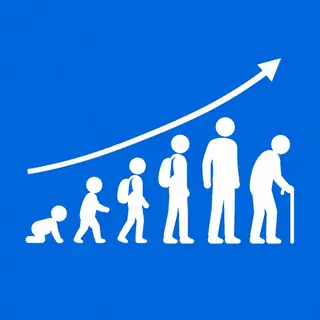
Contrary to the assumption that morality is fixed in childhood, this section illustrates its dynamic nature through adolescence, adulthood, and aging. You will explore identity formation in teens, where moral values become integrated with personal beliefs and social roles. Recent studies show that post-conventional reasoning—questioning and redefining universal principles—can emerge in young adulthood, often influenced by higher education, diverse social exposure, and moral dilemmas at work or in relationships. This part also covers moral disengagement mechanisms, like blaming the victim or euphemistic labeling, that can appear even in mature adults under stress.
For older adults, we discuss how wisdom and generativity—the desire to contribute to future generations—can deepen moral sensitivity, though cognitive decline may affect consistency. Practical implications include counseling, conflict resolution, and ethical leadership training. By viewing moral development as a lifelong journey, you will appreciate why early interventions matter but are never the whole story, and how personal growth continues to refine one’s ethical compass well into later life.
This final body section touches on contemporary issues: the influence of digital media on empathy, moral development in virtual environments, and the role of moral education in anti-bullying programs. You will examine whether exposure to violent games reduces moral sensitivity or, conversely, whether cooperative online play enhances perspective-taking. Also covered are applied settings like medical ethics training, legal decision-making, and environmental stewardship, where developmental psychology informs ethical behavior change campaigns. The content encourages critical thinking about how societal changes—from social media to global crises—reshape moral development pathways.
Moreover, we address cultural relativism versus universal ethical principles, a hot debate in the field. You will see how cross-cultural studies challenge Western-centric models, advocating for more inclusive frameworks. This section is valuable for students pursuing careers in psychology, education, or policy, as it bridges theoretical knowledge with actionable strategies. Expect to walk away with a clear sense of how moral development research impacts real-world problems, from classroom climates to corporate ethics programs.
For beginners, Lawrence Kohlberg’s stages of moral reasoning are the most foundational and widely taught. He proposed three levels—pre-conventional, conventional, and post-conventional—each with two stages, focusing on justice and rule-based thinking. However, pair it with Carol Gilligan’s critique on care ethics to get a balanced view, especially for understanding gender and relational aspects.
Moral development begins in early childhood, around age 2–3, with basic empathy and rule-following. Piaget noted that children under age 6 see rules as fixed and external (heteronomous). By age 6–10, they start understanding reciprocity and intention, moving toward autonomous morality. However, foundational emotional capacities like empathy appear even in infancy, so the process starts very early.
Both. There is an innate biological basis—such as empathy and fairness instincts—but moral development is significantly shaped by environment, parenting, schooling, and culture. Direct teaching, modeling, and guided discussions about dilemmas can enhance moral reasoning. The plasticity of childhood means early, consistent ethical instruction has a strong, lasting impact.
Cultural variations are substantial. Individualistic cultures (e.g., the U.S.) emphasize autonomy and individual rights, aligning with Kohlberg’s post-conventional stages. Collectivist cultures (e.g., East Asian) prioritize group harmony, duty, and relational care, which may not fit neatly into Kohlberg’s hierarchy. Researchers now advocate for culturally sensitive models that recognize multiple moral foundations, such as loyalty, authority, and purity, beyond just fairness.
Signs include consistent lack of empathy, no guilt or remorse after harming others, difficulty understanding others’ perspectives, and rigid or overly simplistic rule-following without context. Frequent lying, cruelty to animals, or bullying that ignores consequences may also indicate delays. However, context matters—temporary regression is normal. If concerns persist, a child psychologist should assess for underlying cognitive or emotional issues.