The Neural Basis of Attention: Brain Regions Involved in Focus
😊 Discover how our brains focus! This article explores the fascinating neural basis of attention, detailing the specific brain regions crucial for…
Read article

Attention and consciousness form the dynamic core of how we experience the world, yet they are surprisingly distinct processes. While attention acts as a selective spotlight, filtering the overwhelming stream of sensory information to prioritize what matters most, consciousness is the subjective awareness that arises from that filtered stream—the feeling of being “here” and “now.” This foundational topic in cognitive psychology explores how we focus, sustain, and shift our mental resources, from fleeting selective attention to the deeper states of mind-wandering and altered awareness. Understanding these mechanisms not only reveals the limits of human perception—such as inattentional blindness—but also sheds light on why multitasking often fails and how mindfulness can reshape our attentional habits. For students and curious readers, mastering the interplay between attention and consciousness unlocks the gateway to memory, learning, decision-making, and even the very sense of self. Dive in to uncover how your brain decides what you see, what you ignore, and what ultimately reaches your conscious mind.
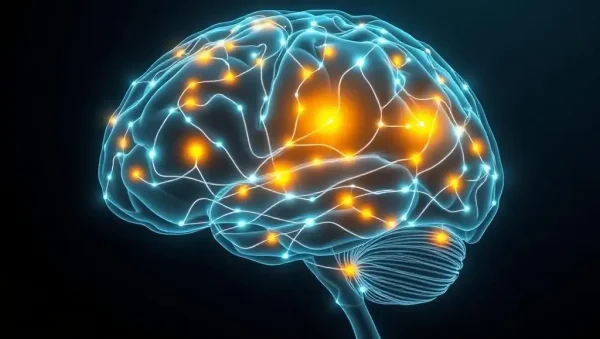
😊 Discover how our brains focus! This article explores the fascinating neural basis of attention, detailing the specific brain regions crucial for…
Read article
🤔 Spatial attention is crucial for navigating our world. This introductory article for spatial attention psychology beginners explains how our brains selectively…
Read articleWelcome to the Attention and Consciousness subcategory of our Cognitive Psychology section at Psychology Basics. Here, we delve into the fascinating mental processes that determine what we notice, how we focus, and why we experience awareness. This page is your gateway to understanding selective attention, sustained vigilance, divided attention, and the states of consciousness that shape our daily lives. Whether you are a student seeking foundational knowledge or a curious reader, this resource is crafted to clarify complex theories with accessible language, real-world examples, and practical insights.
Selective attention is the cognitive mechanism that allows you to focus on a specific stimulus while ignoring irrelevant distractions. This is your brain’s built-in filtering system, essential for tasks like listening to a friend in a noisy café or reading in a busy room. Classic theories, such as Broadbent’s filter model and Treisman’s attenuation theory, explain how information is prioritized early in processing. You will learn about the cocktail party effect, where your name grabs your attention even in a crowded environment, and how automated processes free up mental resources.
Expect to explore practical applications, including how selective attention impacts driving, studying, and even digital media consumption. We also discuss the limits of this filter—why you might miss a gorilla walking across a basketball court, as shown in famous inattentional blindness studies. Understanding these limits helps you improve focus and avoid cognitive overload in high-demand situations.
Divided attention occurs when you attempt to process multiple streams of information simultaneously, often called multitasking. Contrary to popular belief, true parallel processing is rare—your brain usually switches rapidly between tasks, reducing efficiency. Research shows that only simple, well-practiced tasks can be automated enough to run concurrently. This section explains the dual-task paradigm and the role of working memory, highlighting why texting while driving is so dangerous due to attentional bottlenecks.
You will discover practical strategies to improve divided attention, such as chunking related tasks or using environmental cues. We also cover the psychological costs of task-switching, including increased error rates and longer completion times. By understanding these limits, you can better organize your workday, prioritize important activities, and reduce mental fatigue—valuable knowledge for students and professionals alike.
Consciousness is not a single state but a spectrum ranging from full alertness to deep sleep, and includes altered states like meditation, hypnosis, and drug-induced experiences. This subcategory explores how biological rhythms, such as circadian cycles, regulate our daily fluctuations in consciousness. You will learn about the stages of sleep—NREM and REM—and their distinct brainwave patterns, muscle activity, and dreaming characteristics. Understanding sleep is crucial because it directly impacts memory consolidation, emotional regulation, and overall cognitive performance.
Beyond sleep, we examine mindfulness and flow states, where focused awareness enhances well-being and creativity. We also address the neuroscience of consciousness, including the role of the thalamus and the default mode network. Practical takeaways include how to optimize your sleep hygiene, recognize signs of altered consciousness, and use techniques like meditation to sharpen attention. This knowledge empowers you to manage your mental energy more effectively in daily life.
Sustained attention, or vigilance, is the ability to maintain consistent focus on a monotonous task over extended periods. This skill is critical for air traffic controllers, security monitors, and even long-distance drivers. Research shows that vigilance tends to decline after just 20-30 minutes, a phenomenon known as the vigilance decrement. In this section, we explore psychological theories—such as resource depletion and arousal theory—that explain why our focus wanes and how to counteract it.
You will find evidence-based techniques to prolong attention, including regular micro-breaks, task variation, and the use of performance feedback. We also discuss the impact of sleep deprivation and stress on vigilance, offering actionable advice to boost your endurance. Understanding these dynamics helps you design better study sessions, improve workplace productivity, and maintain safety in high-stakes environments. This knowledge is especially useful for students during exam prep or professionals in demanding roles.
Altered states of consciousness are temporary shifts in awareness that differ from normal waking experience. Hypnosis involves heightened suggestibility and focused relaxation, often used for pain management or habit change. Meditation, especially mindfulness, cultivates non-judgmental awareness of the present moment, leading to changes in attention and emotional regulation. Flow, described by Csikszentmihalyi, is an optimal state where you are fully immersed and energized in an activity. Each state has unique neural correlates and psychological benefits.
Expect to learn how to induce these states safely and what scientific evidence says about their effectiveness. For example, meditation has been shown to increase grey matter in attention-related brain regions, while flow enhances creativity and intrinsic motivation. We also address common misconceptions, such as the idea that hypnosis can control people against their will. By understanding these states, you can harness them for personal growth, stress reduction, and peak performance in sports, arts, or academics.
Attention is the cognitive process of selectively concentrating on specific stimuli, while consciousness refers to your overall awareness of yourself and the environment. You can be conscious of something without attending to it, but attention often directs consciousness. For example, you are conscious of the room you’re in, but you attend to a phone notification. Attention is a mechanism that shapes what enters conscious experience, making it a subset of the broader concept of awareness.
Yes, attention is trainable through practices like mindfulness meditation, which enhances sustained and selective attention. Cognitive training tasks, such as dual n-back exercises, also show modest improvements. However, the most effective approach combines regular physical exercise, adequate sleep, and minimizing digital distractions. Studies suggest that consistent practice over weeks leads to measurable neural changes, improving your ability to focus on demanding tasks.
Multitasking divides your attention, causing information to be processed superficially rather than deeply encoded into memory. When you split focus between tasks, your brain rapidly switches, leaving fewer resources for memory consolidation. This often results in losing track of details or making errors. To remember better, try monotasking—completing one task at a time—and use external reminders or notes to offload cognitive load.
The main stages are NREM (stages 1-3) and REM sleep. NREM stage 3, or deep sleep, is crucial for physical restoration and memory consolidation. REM sleep is associated with vivid dreaming and emotional processing. A typical cycle lasts about 90 minutes, repeating 4-5 times per night. Disruptions in these stages can lead to cognitive deficits, mood issues, and impaired attention. Prioritizing a consistent sleep schedule supports optimal brain function.
Research confirms hypnosis produces genuine changes in brain activity, particularly in regions involved in attention and executive control. Suggestibility varies among individuals, but hypnotic states involve focused attention and reduced peripheral awareness. Brain imaging shows altered connectivity between the prefrontal cortex and insula, indicating a real state. While not magical, it can be effective for pain relief and habit modification when used by trained professionals.