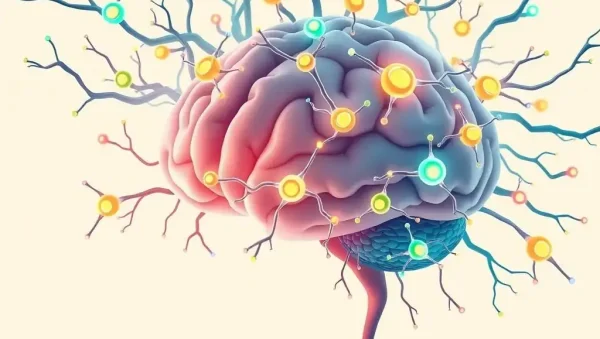
Explore the Intriguing Intersection of Language and Thought
Welcome to the Language and Thought subcategory within Cognitive Psychology at Psychology Basics. Here, we unravel one of psychology’s most fascinating questions: Does the language we speak shape how we think, or is thought independent of language? This page is your gateway to understanding how words, grammar, and symbols influence memory, perception, problem-solving, and even cultural worldviews. Whether you are a student preparing for exams or a curious reader, you’ll find clear explanations, classic theories, and modern research that connect linguistic patterns to cognitive processes.
🧠 The Sapir-Whorf Hypothesis: Linguistic Relativity
The Sapir-Whorf hypothesis proposes that language structures our perception of reality. Strong determinism claims language entirely dictates thought, while weak relativity suggests language influences habits of thinking. You’ll explore classic examples—like the many Inuit words for snow or the grammatical gender of objects in Spanish or German—and learn how these affect memory and attention.
Expect a balanced analysis of experimental evidence, including studies on color perception and spatial navigation. You’ll also discover why most cognitive psychologists reject strong determinism but embrace weak relativity. This section gives you a solid foundation to critically evaluate how much our mother tongue biases our mental life.
🗣️ Inner Speech and Self-Regulation
Inner speech—the silent talk you have with yourself—is a core bridge between language and thought. Lev Vygotsky argued that private speech evolves from social talk and becomes a tool for planning, problem-solving, and emotional control. Modern research confirms that inner speech activates the same brain regions as external speech.
Here, you’ll learn how inner speech develops in children, its role in working memory, and its connection to executive functions like impulse control. We also discuss aphasia and how losing language capacity alters self-reflection. This is vital for understanding disorders like schizophrenia, where inner speech can become misattributed to external voices.
🌍 Bilingualism and Cognitive Flexibility
Does speaking two languages change your brain? Research shows bilinguals often outperform monolinguals in tasks requiring attention switching, conflict resolution, and working memory. This “bilingual advantage” stems from constantly suppressing one language while using another, training the executive control system.
You’ll read about the critical period hypothesis, neural plasticity, and how code-switching reflects cognitive agility. We also address counterarguments—some recent studies fail to replicate strong advantages—so you get an honest view. Ideal for educators, parents, or anyone considering learning a second language later in life.
🧩 Language, Categorization, and Memory
Words are not just labels; they are tools for categorization. When we name an object or event, we activate a whole network of associated concepts, influencing what we remember and how we interpret new information. This section explores prototypes, semantic networks, and the tip-of-the-tongue phenomenon.
Discover how language tags can shape eyewitness testimony—the classic “smashed vs. hit” car crash studies by Elizabeth Loftus show how verb choice alters memory reconstruction. You’ll also see how metaphors structure abstract thinking (e.g., “time is money”) and affect decision-making in everyday life.
🔊 Sign Language and Nonverbal Thought
Not all language is vocal. Research on American Sign Language (ASL) and other signed languages reveals that language can be fully expressed and processed in the visuospatial modality. Deaf signers show unique cognitive strengths, such as enhanced facial emotion recognition and spatial memory.
We also examine whether thought can occur without any language—studies of pre-verbal infants, animal cognition, and people with severe aphasia suggest that non-linguistic thought (like mental imagery) exists independently. This gives you a richer, more inclusive view of what “language” means for cognition.
📚 Evolutionary and Computational Perspectives
How did language evolve, and what do computer models tell us about thought? You’ll explore theories from evolutionary psychology—like the social brain hypothesis—and see how neural networks simulate language acquisition. This section also touches on Universal Grammar (Chomsky) versus usage-based theories (Tomasello).
Understanding these perspectives helps place human language within the animal kingdom and artificial intelligence. Expect discussions on recursive syntax, the FOXP2 gene, and how machine translation reveals limitations of current AI in capturing meaning. Perfect for those interested in cognitive science’s frontier.
Frequently Asked Questions
Does your language actually change how you perceive colors?
Yes, but only subtly. Speakers of languages with different color boundaries (e.g., Russian has separate words for light and dark blue) are slightly faster at discriminating those colors. However, this effect is small and modulated by context; it does not make color perception fundamentally different, just biases attention and memory during categorization tasks.
Can you think without language?
Yes. Pre-verbal infants, people with severe aphasia, and many animals demonstrate complex problem-solving, spatial reasoning, and emotional recognition without linguistic representation. Mental imagery, emotions, and procedural skills operate independently of language. However, logical abstraction and future planning often benefit from inner speech as a symbolic scaffold.
Is the “bilingual advantage” real or a myth?
It’s partially real. Early meta-analyses found bilinguals outperform monolinguals on executive control tasks, but more recent studies with larger samples show smaller or null effects, especially when controlling for socioeconomic status. The advantage may be specific to certain tasks or age groups, but bilingualism does increase neural connectivity and delay cognitive decline in older adults.
What is the difference between inner speech and verbal thinking?
Inner speech is the silent, condensed version of external speech—typically word-like and grammatical. Verbal thinking is broader, including images, abstract symbols, and even logical rules that may not be fully articulated in words. Not all thought is verbal; much of creative or intuitive thinking relies on spatial and sensory codes.
Can learning a second language improve your first language skills?
Yes. Learning a second language increases metalinguistic awareness—your conscious understanding of grammar, syntax, and vocabulary structure. This often improves reading comprehension, editing, and rhetorical flexibility in your first language. Bilinguals also better detect ambiguity and parse complex sentences due to continual comparison between linguistic systems.