
Problem Solving and Decision Making: A Summary of Key Concepts


Unravel the mysteries of the mind and unlock your potential with Psychology Basics. Are you ready to sharpen your cognitive abilities and master the art of problem-solving? Our exploration of psychology problem solving skills within the fascinating field of Cognitive Psychology will equip you with practical techniques to navigate life's challenges more effectively. Dive in and discover how understanding your own mental processes can lead to better decisions and a more fulfilling life.
- Understanding Psychology Problem Solving Skills: A Foundational Overview
- Essential Decision-Making Strategies in Psychology
- Problem Solving Techniques and Their Applications
- Enhancing Psychology Problem Solving Skills: Practical Strategies
- The Interplay of Problem Solving and Decision Making in Everyday Life
-
Frequently Asked Questions
- What are the key psychological processes involved in problem-solving?
- How does decision-making relate to problem-solving?
- What are some common obstacles to effective problem-solving?
- How can I improve my psychology problem-solving skills?
- Are there specific psychological models or theories relevant to problem-solving?
- Final Reflection: The Enduring Power of Problem-Solving
- Unlock Your Problem-Solving Potential Today!
Understanding Psychology Problem Solving Skills: A Foundational Overview
Psychology problem solving skills are crucial for navigating the complexities of daily life. This article provides a foundational overview of problem-solving and decision-making within the context of cognitive psychology, exploring the key processes and strategies involved in effectively tackling challenges. We'll delve into the definition of problem-solving from a psychological perspective, examine the cognitive mechanisms that underpin successful problem-solving, and highlight the critical importance of accurate problem definition as the first step towards finding a solution.
Understanding these concepts is essential for improving your ability to analyze situations, develop effective strategies, and make sound decisions in various aspects of your personal and professional life. This exploration will equip you with practical insights into how your mind works when faced with obstacles and how to optimize your approach to problem-solving for improved outcomes.
Defining Problem Solving in Psychology
In psychology, problem-solving isn't simply about finding the right answer; it's a multifaceted cognitive process involving a sequence of steps aimed at overcoming obstacles to achieve a desired goal. It's a dynamic interaction between the individual and their environment, where perceived discrepancies between the current state and a desired future state trigger a search for solutions. This process often involves identifying the problem, generating potential solutions, evaluating those solutions, and selecting and implementing the most effective one.
Furthermore, successful problem-solving requires flexibility and adaptability, as the optimal approach may vary depending on the specific context and individual circumstances. The process is not linear; it often involves iterative cycles of evaluation and refinement, with individuals constantly monitoring their progress and adjusting their strategies as needed. This iterative nature underscores the importance of critical thinking and metacognition – the awareness and understanding of one's own thinking processes – in effective problem-solving.
The Cognitive Processes Involved in Effective Problem Solving
Effective problem-solving relies on a complex interplay of cognitive processes. These include:
- Perception: Accurately perceiving the problem and its components is paramount. Biases and preconceived notions can distort perception, leading to flawed problem definitions and ineffective solutions.
- Memory: Retrieving relevant information from long-term memory, such as past experiences and learned strategies, is crucial for generating potential solutions. Efficient memory retrieval enhances the breadth and depth of solutions considered.
- Attention: Maintaining focused attention on the problem and relevant information is essential for avoiding distractions and ensuring thorough analysis. Attentional deficits can significantly impede the problem-solving process.
- Reasoning: Logical reasoning and inferential abilities are critical for evaluating the potential consequences of different solutions and selecting the most appropriate course of action.
- Working Memory: Working memory allows for the temporary storage and manipulation of information necessary for planning and executing problem-solving strategies. A strong working memory capacity is highly beneficial.
- Executive Functions: Executive functions, such as planning, inhibition, and cognitive flexibility, are essential for organizing the problem-solving process, inhibiting impulsive actions, and adapting strategies as needed.
The intricate interaction of these cognitive processes highlights the complexity of human problem-solving and the potential impact of cognitive limitations or impairments on an individual's ability to effectively address challenges. Understanding these processes can inform interventions aimed at improving problem-solving skills.
Identifying and Defining the Problem: The First Step to a Solution
Before even considering solutions, accurately identifying and defining the problem is the most critical step in the problem-solving process. A poorly defined problem inevitably leads to ineffective or irrelevant solutions. This initial stage involves a careful analysis of the situation, gathering relevant information, and clearly articulating the nature of the challenge. This often requires distinguishing between the problem's symptoms and its underlying causes.
For example, if someone is struggling with low grades, the symptom is poor academic performance, but the underlying cause might be lack of study skills, test anxiety, or learning disabilities. Failing to identify the root cause will result in ineffective solutions, such as simply studying harder without addressing the underlying issue. Effective problem definition frequently involves breaking down complex problems into smaller, more manageable sub-problems, making them easier to understand and address individually.
This process necessitates critical thinking, careful observation, and the ability to separate facts from assumptions. This initial stage sets the foundation for a successful problem-solving outcome. Without a clear understanding of the problem, any subsequent attempts at finding a solution are likely to be unproductive.
Essential Decision-Making Strategies in Psychology
This section delves into the core strategies individuals employ when confronted with decisions, examining both intuitive and analytical approaches. Understanding these strategies is crucial for developing robust psychology problem solving skills. We'll explore how cognitive shortcuts, emotional influences, and rational models shape our choices.
Heuristics and Biases in Decision Making: Understanding Cognitive Shortcuts
Humans are not always perfectly rational decision-makers. We often rely on heuristics, mental shortcuts that simplify complex decisions. While heuristics can be efficient, they can also lead to systematic errors, known as cognitive biases. These biases can significantly impact our problem-solving abilities and lead to less-than-optimal outcomes.
For example, the availability heuristic leads us to overestimate the likelihood of events that are easily recalled, often due to their vividness or recent occurrence. Think of fearing plane crashes more than car accidents, even though statistically, car accidents are far more common. The ease of recalling dramatic plane crash news influences our perception of risk.
Another common bias is confirmation bias, where we favor information confirming pre-existing beliefs and ignore contradictory evidence. This can hinder objective problem-solving, as we may selectively seek out information supporting our initial hypothesis, neglecting crucial data that challenges it.
The following table summarizes some key heuristics and their associated biases:
| Heuristic | Description | Associated Bias(es) | Example |
|---|---|---|---|
| Availability Heuristic | Judging probability based on ease of recall | Overestimation of vivid or recent events | Fear of flying despite statistically safer than driving |
| Representativeness Heuristic | Assessing probability based on similarity to a prototype | Ignoring base rates, conjunction fallacy | Stereotyping individuals based on group membership |
| Anchoring Heuristic | Over-reliance on the first piece of information received (the "anchor") | Insufficient adjustment from the initial anchor value | Negotiating a price based heavily on the seller's initial offer |
Understanding these heuristics and biases is a crucial step in improving one's psychology problem solving skills. Recognizing their influence allows for more deliberate and less error-prone decision-making.
The Role of Emotion in Decision-Making Processes
While rational models often dominate discussions of decision-making, emotions play a significant, and sometimes overwhelming, role. Our feelings profoundly impact our choices, sometimes leading to decisions that are inconsistent with our stated goals or rational assessments.
For instance, fear can lead to impulsive actions, while excitement might lead to risk-taking behavior that might not be optimal in the long run. The somatic marker hypothesis proposes that emotions, particularly those associated with past experiences, guide decision-making by creating "gut feelings" or somatic markers that signal the potential value or risk of different options. These feelings can be conscious or unconscious, influencing our choices even when we are unaware of their impact.
The interplay between emotion and cognition in decision-making is complex. While emotions can lead to suboptimal choices, they can also be beneficial, prompting quick responses in emergency situations or guiding choices aligned with our values and long-term well-being. Effective decision-making involves recognizing and managing the impact of emotions on our judgments. Developing emotional intelligence is therefore crucial for enhancing psychology problem solving skills.
Rational Decision-Making Models: A Contrast to Heuristic Approaches
In contrast to heuristic approaches, rational decision-making models emphasize a systematic and logical process. These models, such as the expected utility theory, assume that individuals make choices by evaluating the potential outcomes of each option and selecting the one that maximizes their expected utility – the product of the probability of each outcome and its associated value.
However, even rational models have limitations. They often assume perfect information, complete rationality, and consistent preferences – conditions rarely met in real-world scenarios. Furthermore, the complexity of many decisions makes applying rational models computationally challenging, making heuristic approaches more appealing for their simplicity and efficiency.
The following table compares heuristic and rational decision-making approaches:
| Feature | Heuristic Approach | Rational Approach |
|---|---|---|
| Process | Intuitive, fast, effortless | Deliberate, slow, effortful |
| Information Use | Limited, often biased | Comprehensive, unbiased (ideally) |
| Outcome | Often satisfactory, but can be suboptimal | Aiming for optimal outcome, but limitations exist |
| Computational Cost | Low | High |
| Applicability | Suitable for everyday decisions under time pressure | More appropriate for high-stakes decisions with ample time |
While rational models provide a valuable framework for understanding ideal decision-making, recognizing the limitations of both rational and heuristic approaches, and understanding their interplay, is essential for developing effective psychology problem solving skills in real-world contexts. A nuanced understanding of both is key to becoming a more effective decision-maker.
Improving Decision-Making Skills Through Cognitive Strategies
Developing robust psychology problem solving skills hinges on honing cognitive strategies. These aren't just about thinking harder; they're about thinking smarter. Effective decision-making involves a conscious effort to overcome inherent biases and utilize techniques that promote clear, objective evaluation. One crucial aspect is metacognition, the awareness and understanding of one's own thought processes.
By reflecting on how we make decisions, we can identify recurring errors and implement corrective measures. For instance, someone prone to impulsive decisions might benefit from practicing mindfulness techniques to foster a more deliberate approach. This involves pausing before reacting, taking deep breaths, and consciously considering the potential consequences of different choices.
Furthermore, enhancing working memory capacity is vital. Working memory acts as a mental workspace where we hold and manipulate information relevant to a decision. Strengthening this capacity, perhaps through memory training exercises or utilizing mnemonic devices, allows for a more comprehensive consideration of options and their implications. Imagine choosing a university: a strong working memory allows you to simultaneously weigh factors like program quality, location, financial aid, and career prospects. Without a robust working memory, the decision-making process becomes significantly more challenging, potentially leading to suboptimal choices.
Another powerful cognitive strategy is debiasing. Humans are susceptible to numerous cognitive biases, systematic errors in thinking that skew our judgments. Confirmation bias, for example, leads us to favor information confirming pre-existing beliefs while ignoring contradictory evidence.
By actively recognizing and challenging these biases, we can strive for more objective assessments. Techniques like seeking out dissenting opinions, actively searching for counter-evidence, and employing structured decision-making frameworks can significantly mitigate the impact of biases. A real-world example is a hiring manager consciously fighting confirmation bias by evaluating candidates based on standardized criteria, rather than relying on gut feelings or superficial similarities.
Finally, the ability to effectively analyze and interpret information is paramount. This involves developing critical thinking skills, which encompass evaluating the credibility of sources, identifying logical fallacies, and distinguishing between correlation and causation. Practicing these skills helps to avoid decisions based on misinformation or flawed reasoning. For example, a consumer making a purchase might critically analyze product reviews, considering the potential for bias and the overall reliability of the information presented before making a final decision. This careful analysis directly enhances the quality of their decision-making process.
Problem Solving Techniques and Their Applications
This section delves into specific techniques frequently employed in problem-solving, crucial elements within the broader field of psychology problem solving skills. We'll explore how these methods help bridge the gap between a problem's current state and its desired solution. Understanding these techniques is key to improving your cognitive flexibility and overall problem-solving efficacy.
Means-Ends Analysis: Bridging the Gap Between Current and Desired States
Means-ends analysis is a heuristic problem-solving strategy where the problem-solver considers the difference between the current state and the desired state, and then tries to reduce that difference. It involves breaking down a large problem into smaller, more manageable sub-goals. Each sub-goal represents a step closer to the final solution.
For instance, imagine you want to write a 10-page research paper (desired state). Your current state is having no written work. Means-ends analysis would involve breaking this down:
- Sub-goal 1: Conduct preliminary research and gather relevant sources.
- Sub-goal 2: Create an outline detailing the paper's structure and arguments.
- Sub-goal 3: Write the introduction.
- Sub-goal 4: Write the body paragraphs, focusing on one section at a time.
- Sub-goal 5: Write the conclusion.
- Sub-goal 6: Edit and revise the entire paper.
- Sub-goal 7: Proofread for grammatical errors and typos.
This systematic approach allows for a more manageable and less overwhelming task. Each successfully completed sub-goal provides a sense of accomplishment, motivating you to continue. The effectiveness of means-ends analysis depends on the ability to identify relevant sub-goals and to effectively monitor progress towards the final solution. Difficulties arise when sub-goals are poorly defined or when unforeseen obstacles emerge. Successfully navigating these challenges requires adaptability and the ability to revise the plan as needed. This process is a cornerstone of developing strong psychology problem solving skills.
Working Backwards: A Reverse Engineering Approach to Problem Solving
Working backwards, also known as retrograde analysis, is a powerful problem-solving technique that starts with the desired outcome and works backward, step-by-step, to determine the necessary actions to achieve it. This approach is particularly useful for problems with a clearly defined goal and a series of sequential steps.
Consider a classic example: finding a route from point A to point B. Instead of starting at point A and exploring all possible paths, working backwards involves starting at point B and tracing the route back to point A. This helps eliminate dead ends and ensures a more efficient path-finding process.
Another application lies in complex mathematical problems or puzzles. For example, in a Sudoku puzzle, you might start by looking at the numbers already present and working backwards to deduce which numbers can be placed in empty squares. This method, while seemingly simple, significantly reduces the number of possibilities to consider, making the overall task considerably easier. This strategic reversal of the typical problem-solving approach highlights the importance of flexible thinking and creative problem-solving strategies in the development of psychology problem solving skills.
Analogical Reasoning: Applying Past Solutions to New Challenges
Analogical reasoning involves identifying similarities between a current problem and a previously solved problem, then applying the solution from the past to the present. This relies heavily on the ability to recognize patterns and transfer knowledge from one context to another. It’s a crucial component of developing strong psychology problem solving skills.
For example, a student struggling with a complex physics problem might recall a similar problem solved in a previous course. By recognizing the underlying structural similarities, they can adapt the solution from the previous problem to solve the current one. This approach is not about directly copying the solution but rather about understanding the underlying principles and applying them to a new situation.
The effectiveness of analogical reasoning depends on several factors, including:
- The similarity between the source and target problems. Greater similarity leads to a more successful transfer of knowledge.
- The problem-solver's ability to identify relevant similarities and ignore irrelevant differences.
- The problem-solver's ability to adapt the solution to the specific context of the new problem.
Analogical reasoning is a higher-order cognitive skill that contributes significantly to creative problem-solving and demonstrates a sophisticated understanding of the problem-solving process. It’s a testament to the adaptability and flexibility of the human mind in tackling challenges and showcases the power of experience in honing psychology problem solving skills.
Trial and Error: An Iterative Approach to Problem Solving
Trial and error, also known as a heuristic approach, is a fundamental problem-solving technique. It involves repeatedly attempting different solutions until a successful one is found. While seemingly simplistic, this method underpins many complex problem-solving processes, particularly in situations where a clear algorithm or solution path isn't immediately apparent. Think of a child learning to ride a bicycle – they repeatedly try, fall, adjust their approach, and try again, until they master balance and coordination. This iterative process of testing and refinement is the essence of trial and error.
The effectiveness of trial and error depends heavily on several factors. Firstly, the size of the solution space matters significantly. If there are only a few possible solutions, trial and error can be highly efficient. However, with a vast number of possibilities, it becomes increasingly impractical and time-consuming.
Secondly, the availability of feedback is crucial. Without clear feedback indicating whether a particular attempt is closer to or further from the solution, trial and error becomes a random search, significantly reducing its efficiency. Imagine trying to unlock a combination lock without any indication of whether your guess is correct – it would take an incredibly long time.
Furthermore, the nature of the problem itself influences the suitability of trial and error. Problems with clearly defined goals and readily available feedback loops are more amenable to this approach. Conversely, problems with ambiguous goals or delayed feedback are less likely to yield to simple trial and error. Consider the difference between solving a simple jigsaw puzzle (clear goal, immediate feedback) and developing a new marketing strategy (ambiguous goals, delayed feedback). The latter requires more sophisticated techniques than the simple trial-and-error approach.
Finally, it’s important to recognize the limitations of trial and error. While effective in certain contexts, it can be inefficient and even counterproductive in others. It lacks the structured approach of more sophisticated methods, and it can lead to wasted time and resources if not applied strategically. However, it remains a vital initial step in many problem-solving endeavors, often paving the way for more refined approaches once initial insights are gained.
A well-structured trial-and-error process, incorporating careful observation and iterative refinement, can be a surprisingly effective tool in a psychologist's problem-solving arsenal. Often, it's the first step towards developing more sophisticated strategies. In essence, it's a foundation upon which other, more advanced problem-solving techniques can be built.
Enhancing Psychology Problem Solving Skills: Practical Strategies
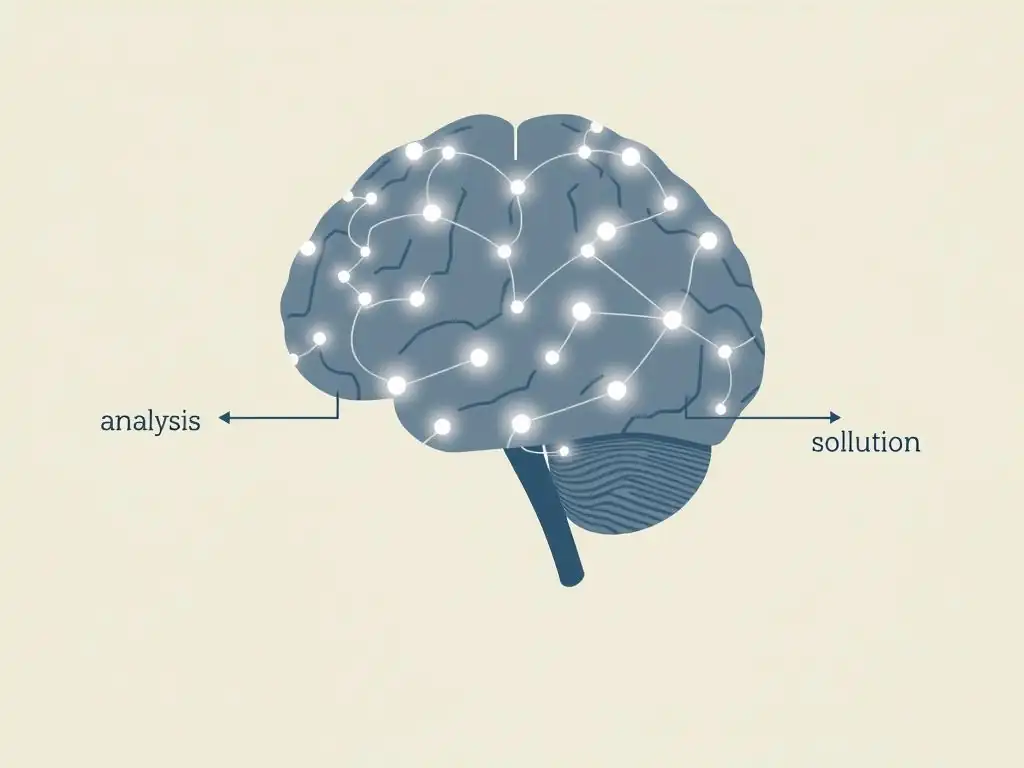
This section explores practical strategies to bolster your psychology problem-solving skills. Effective problem-solving isn't just about finding the right answer; it's about developing a robust and adaptable approach to tackling challenges. This involves cultivating several key cognitive abilities and metacognitive awareness.
We'll examine techniques applicable across various psychological contexts, from clinical case studies to research design. Mastering these strategies will significantly improve your analytical capabilities and allow you to approach complex psychological issues with greater confidence and efficiency. The ability to effectively solve problems is a cornerstone of success in the field of psychology, and these techniques are crucial for both students and professionals alike.
Developing Critical Thinking Skills for Effective Problem Solving
Critical thinking is the cornerstone of effective problem-solving in psychology. It involves analyzing information objectively, identifying biases, evaluating evidence, and constructing well-reasoned arguments. Let's delve into specific techniques:
- Identifying Assumptions: Before jumping to conclusions, consciously identify underlying assumptions shaping your understanding of the problem. For instance, when analyzing a patient's behavior, avoid prematurely assuming a specific diagnosis without thorough assessment. Ask yourself: What am I taking for granted? What alternative explanations exist?
- Evaluating Evidence: Psychology relies heavily on empirical evidence. Learn to critically assess the validity and reliability of information presented. Consider the source, methodology, and potential biases influencing the data. Is the research peer-reviewed? Are the sample sizes adequate? Are there any confounding variables?
- Considering Multiple Perspectives: Avoid tunnel vision. Actively seek out diverse perspectives and interpretations. This is especially crucial when dealing with complex psychological issues where multiple factors might be at play. Consider consulting different theoretical frameworks or seeking input from colleagues with varying expertise.
- Identifying Logical Fallacies: Become familiar with common logical fallacies (e.g., confirmation bias, straw man fallacy, hasty generalization) to avoid flawed reasoning. Regularly check your own thinking for such biases and actively challenge assumptions that might lead to inaccurate conclusions.
Cultivating Creativity and Innovation in Problem Solving
While critical thinking provides a structured approach, creativity and innovation are essential for generating novel solutions. Psychology often involves tackling unique and unpredictable situations, demanding flexible thinking.
- Brainstorming Techniques: Employ brainstorming techniques, such as mind mapping or SCAMPER (Substitute, Combine, Adapt, Modify, Put to other uses, Eliminate, Reverse), to generate a wide range of potential solutions. Don't censor ideas during the initial brainstorming phase; focus on quantity over quality at first.
- Lateral Thinking: Practice lateral thinking, which involves approaching problems from unconventional angles. Challenge your assumptions and explore seemingly unrelated concepts to spark new insights. Consider using analogies or metaphors to gain fresh perspectives.
- Incubation and Reflection: Allow time for incubation – stepping away from the problem to allow unconscious processing to occur. This period of reflection can lead to unexpected breakthroughs. Regularly review your progress and adjust your approach as needed. This iterative process is key to innovative problem-solving.
The Importance of Self-Reflection and Metacognition in Problem Solving
Metacognition – thinking about your own thinking – is crucial for improving problem-solving skills. This involves monitoring your thought processes, identifying areas for improvement, and adjusting your strategies accordingly.
- Self-Assessment: After completing a problem-solving task, reflect on your process. What worked well? What challenges did you encounter? What strategies could you improve? Keeping a journal to document your problem-solving experiences can be beneficial.
- Seeking Feedback: Actively seek feedback from peers, mentors, or supervisors. Constructive criticism can highlight blind spots and provide valuable insights for future problem-solving endeavors. Use feedback to refine your approach and enhance your skills.
- Continuous Learning: Problem-solving is a skill that improves with practice and continuous learning. Stay updated on the latest research and methodologies in your field to enhance your knowledge base and refine your techniques. Embrace a growth mindset, viewing challenges as opportunities for learning and development. This commitment to lifelong learning is essential for success in the ever-evolving field of psychology.
Overcoming Cognitive Biases to Improve Decision Making
Cognitive biases are systematic patterns of deviation from norm or rationality in judgment. They significantly impact our problem-solving skills and decision-making processes, often leading to suboptimal choices. Understanding and mitigating these biases is crucial for enhancing our ability to solve problems effectively. Several strategies can help us overcome these ingrained tendencies.
One powerful technique is mindfulness. By cultivating awareness of our own thought processes, we can identify when biases are influencing our judgments. For example, confirmation bias – the tendency to favor information confirming pre-existing beliefs – can be countered by actively seeking out contradictory evidence. Instead of only looking for information that supports a particular solution, consciously search for alternative perspectives and opposing viewpoints. This deliberate effort to challenge our assumptions is a key step in improving objective problem-solving.
Another effective approach is debiasing techniques. These are specific strategies designed to counteract particular biases. For instance, the anchoring bias, where we over-rely on the first piece of information received, can be minimized by considering a range of options and avoiding premature judgments. Before making a decision, consciously generate multiple alternatives and evaluate them systematically, rather than fixating on the initial idea. This prevents the initial "anchor" from disproportionately influencing the final decision.
Furthermore, collaborative problem-solving can significantly reduce the impact of cognitive biases. By working with others, we expose our thinking to different perspectives and challenge potential biases that might have remained unnoticed otherwise. The process of discussing problems with others, explaining our reasoning, and listening to their feedback helps to identify and correct flawed assumptions. Diverse viewpoints provide a crucial counterbalance to individual biases, leading to more robust and well-informed solutions.
Finally, seeking feedback is vital. Regularly solicit feedback on our problem-solving approaches from trusted sources. This external perspective offers valuable insights into blind spots and potential biases we might have overlooked. Constructive criticism, when received thoughtfully, can help us refine our strategies and make more informed decisions in the future. The key is to approach feedback with an open mind, willing to learn and adapt our approach based on the insights gained. This iterative process of self-reflection and improvement is essential for developing strong psychology problem solving skills.
The Interplay of Problem Solving and Decision Making in Everyday Life
This section explores the intricate dance between problem-solving and decision-making in our daily routines. We often conflate these two cognitive processes, but understanding their nuances reveals a more complex picture. Effective problem-solving frequently necessitates a series of decisions, while impactful decisions often require meticulous problem-solving beforehand. Consider a simple example: choosing what to eat for dinner. This seemingly trivial decision involves problem-solving – considering dietary restrictions, available ingredients, time constraints, and personal preferences. The final choice is the culmination of evaluating these factors and selecting the optimal solution.
Problem Solving and Decision Making in Academic Settings
Academic success hinges heavily on robust problem-solving and decision-making skills. Students constantly encounter challenges that demand these abilities. For example, writing a research paper involves:
- Problem-solving: Identifying a suitable topic, navigating research databases, synthesizing complex information, and overcoming writer's block.
- Decision-making: Choosing appropriate research methodologies, selecting relevant sources, structuring the argument, and managing time effectively.
These skills are not merely about achieving good grades; they're crucial for developing critical thinking and independent learning, essential attributes for navigating the complexities of higher education. A study by [specific information pending] showed a positive correlation between students' problem-solving abilities and their academic performance across various disciplines. Furthermore, effective time management, a crucial decision-making skill, directly impacts academic success, reducing stress and improving overall learning outcomes. Students who can prioritize tasks and allocate their time wisely often demonstrate greater academic achievement.
Applying Problem Solving and Decision Making Skills in Professional Contexts
In professional settings, these cognitive skills are paramount for career advancement and organizational success. Consider a project manager overseeing a complex software development project. They must constantly solve problems—debugging code, resolving team conflicts, and managing unexpected delays. Simultaneously, they make critical decisions—allocating resources, prioritizing tasks, and setting realistic deadlines. These decisions are informed by their problem-solving abilities, allowing them to anticipate potential roadblocks and develop effective mitigation strategies.
Strong problem-solving and decision-making skills are highly valued attributes in the workplace, often differentiating high-performing employees from their peers. Many job descriptions explicitly list these skills as requirements, highlighting their importance across various professions. The ability to analyze situations, identify core issues, and formulate effective solutions is a key indicator of professional competence and leadership potential. Moreover, the capacity to make informed, timely decisions under pressure is critical for navigating the dynamic and often unpredictable nature of modern workplaces.
Problem Solving and Decision Making in Personal Relationships
Effective problem-solving and decision-making are equally crucial for maintaining healthy and fulfilling personal relationships. Navigating disagreements, resolving conflicts, and making joint decisions require strong communication and collaborative problem-solving skills. For example, a couple planning a vacation must consider each other's preferences, budget constraints, and time availability. They need to solve the problem of finding a destination and itinerary that satisfies both partners, requiring compromises and effective decision-making.
Similarly, addressing relationship challenges, such as communication breakdowns or unmet needs, often involves a collaborative problem-solving approach. Open communication, empathy, and a willingness to find mutually acceptable solutions are essential components of this process. Strong problem-solving and decision-making skills in personal relationships contribute significantly to relationship satisfaction, resilience, and longevity.
The ability to navigate disagreements constructively and make joint decisions fairly fosters trust, strengthens bonds, and enhances overall relationship well-being. Ignoring these skills can lead to conflict, resentment, and ultimately, relationship breakdown. Therefore, cultivating these skills is an investment in personal relationships and overall happiness.
The Impact of Cognitive Abilities on Problem Solving and Decision Making
Cognitive abilities significantly influence our problem-solving and decision-making processes. Individuals with higher levels of cognitive flexibility, for example, tend to be more adept at considering multiple perspectives and generating diverse solutions to problems. This flexibility allows them to overcome mental sets – the tendency to approach problems using only familiar methods – and explore more creative avenues.
Research consistently demonstrates a strong correlation between fluid intelligence (the ability to reason and solve novel problems) and effective problem-solving. For instance, studies using complex problem-solving tasks, such as those involving intricate puzzles or strategic game scenarios, reveal that individuals with higher fluid intelligence scores achieve better outcomes and demonstrate more efficient solution strategies.
Furthermore, working memory capacity plays a crucial role. A larger working memory allows individuals to hold more information in mind simultaneously, facilitating the comparison of different options and the consideration of long-term consequences during decision-making. This is particularly important in complex situations requiring the integration of multiple pieces of information.
Individuals with limited working memory capacity may struggle to juggle competing factors, leading to less optimal choices or inefficient problem-solving approaches. Think of planning a complex vacation: someone with a strong working memory can easily balance budget constraints, travel times, and activity preferences, while someone with a weaker working memory might struggle to integrate these factors effectively.
Beyond fluid intelligence and working memory, other cognitive abilities also contribute. Processing speed, for example, impacts how quickly individuals can analyze information and arrive at a solution. Faster processing speeds are advantageous in time-constrained situations or when dealing with large volumes of data. Similarly, attentional control is vital for focusing on relevant information and filtering out distractions, a key component of both effective problem-solving and rational decision-making.
Poor attentional control can lead to impulsive decisions or overlooking critical details in problem analysis. In essence, a robust cognitive architecture, encompassing multiple interacting abilities, underpins successful navigation of everyday problem-solving and decision-making challenges. The development and enhancement of these cognitive skills are therefore crucial for improving our ability to tackle complex situations effectively.
Frequently Asked Questions
What are the key psychological processes involved in problem-solving?
Problem-solving involves several key psychological processes, including problem representation, planning, execution, and evaluation. Understanding these steps is crucial for effective problem-solving. Cognitive biases can significantly impact each stage.
How does decision-making relate to problem-solving?
Decision-making is an integral part of problem-solving. After analyzing the problem and generating potential solutions, we must choose the best course of action. This often involves weighing potential risks and benefits.
What are some common obstacles to effective problem-solving?
Common obstacles include cognitive biases, such as confirmation bias and anchoring bias, as well as emotional factors, like stress and anxiety. Poor planning and ineffective strategies also hinder the process.
How can I improve my psychology problem-solving skills?
Improving your problem-solving skills involves practicing different strategies, like working backward or breaking down complex problems into smaller, manageable parts. Learning to recognize and mitigate cognitive biases is also essential.
Are there specific psychological models or theories relevant to problem-solving?
Yes, several models are relevant, including the information processing model, which emphasizes stages of problem-solving, and Gestalt psychology's focus on insight and restructuring. Learning about these frameworks enhances understanding of the process.
Final Reflection: The Enduring Power of Problem-Solving
The ability to effectively solve problems and make sound decisions isn't just a cognitive skill; it's the bedrock of a fulfilling and successful life. In a world characterized by constant change and unprecedented challenges, mastering these crucial psychological tools is more vital than ever before. Our exploration of key problem-solving concepts highlights the profound impact these skills have on navigating the complexities of modern existence.
The journey through various problem-solving models and decision-making frameworks revealed not only their theoretical significance but also their profound impact on our daily lives. From the simple act of choosing what to eat for breakfast to navigating complex professional dilemmas, these skills are constantly at play, shaping our experiences and influencing our outcomes. As the saying goes, The only way to do great work is to love what you do.
This sentiment underscores the importance of finding effective problem-solving strategies that align with our personal values and goals, leading to a sense of purpose and accomplishment.
Consider the impact of your own problem-solving approach. Are you proactively seeking solutions, or are you reacting to challenges? Do you embrace diverse perspectives, or do you rely solely on your own intuition? Take this opportunity to reflect on your strengths and weaknesses in this area. Commit to consciously improving your problem-solving skills through practice, self-reflection, and a willingness to learn from both successes and failures. The journey toward mastery is ongoing, and the rewards – a more empowered, resilient, and fulfilling life – are immeasurable.
Unlock Your Problem-Solving Potential Today!
Thank you for exploring these insightful problem-solving and decision-making concepts. We hope you've gained valuable tools to strengthen your critical thinking. Now, let's put your new knowledge into action and create positive change.
Here are some practical steps you can take:
- Start a Decision Journal: Record your daily decisions, reflect on the results, and analyze what worked and what didn't. This process will help you identify patterns and improve your decision-making over time.
- Practice the "Five Whys" Technique: When confronted with a problem, repeatedly ask "why?" Digging deeper than the surface will help you uncover the root cause and identify more effective solutions.
- Share Your Insights: Discuss these strategies with friends or colleagues. You might inspire others to improve their decision-making skills, and in turn, gain new perspectives yourself.
What's one challenge you've been putting off that you can now tackle using these new approaches?