The Role of Neurotransmitters in Happiness: Serotonin, Dopamine, and More
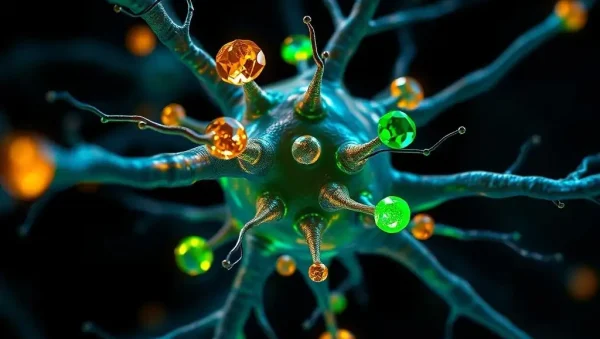
😊 Uncover the secrets of happiness! This article explores the crucial link between neurotransmitters like serotonin and dopamine, and your emotional well-being.…
Read article

Discover the science behind lasting well-being with Psychology Basics’ deep dive into happiness research—where psychology meets everyday life. Uncover what truly drives joy, from neuroscience and positive psychology to actionable habits like gratitude and mindfulness. No fluff, just evidence-backed insights that help you thrive. Perfect for curious minds eager to apply proven strategies for a more fulfilled, balanced life. Start your journey to real, measurable happiness today. ✨
😊 Uncover the secrets of happiness! This article explores the crucial link between neurotransmitters like serotonin and dopamine, and your emotional well-being.…
Read article
😊 Overwhelmed by academic pressure? Discover self-compassion techniques for students, learning practical strategies to manage stress, boost resilience, and foster a healthier…
Read article
🤔Unlock your potential! Learn proven goal-setting psychology strategies in this article. We explore psychological techniques to craft achievable goals, boosting motivation and…
Read articleWelcome to our deep dive into The Science of Happiness, a core subcategory within Psychology and Well-being here at Psychology Basics. This page is designed for students and curious readers who want to move beyond pop-culture clichés and understand what peer-reviewed research actually reveals about joy, life satisfaction, and emotional flourishing. You’ll discover evidence-based frameworks, psychological mechanisms, and practical strategies that bridge theory with everyday life. From hedonic adaptation to positive interventions, we break down complex studies into digestible insights. Whether you are writing a paper, preparing for a psychology exam, or simply seeking a more fulfilling life, this resource will equip you with scientifically grounded knowledge and actionable tools to cultivate genuine well-being.
Understanding happiness scientifically begins with three foundational models: the hedonic treadmill, eudaimonic well-being, and the PERMA model by Martin Seligman. The hedonic treadmill explains why sudden income boosts or life wins often fade in emotional impact, as our baseline adapts. Eudaimonic approaches focus on meaning, purpose, and self-realization rather than mere pleasure. PERMA, meanwhile, breaks happiness into five measurable pillars: Positive emotions, Engagement, Relationships, Meaning, and Accomplishment. Each theory offers a unique lens for why some people thrive despite adversity, while others struggle despite comfort. Knowing these models helps you identify which aspects of your own life need attention, moving from vague “being happy” goals to targeted improvements in specific psychological domains.
These theories also inform modern measurement tools like the Satisfaction with Life Scale (SWLS) and the Positive and Negative Affect Schedule (PANAS). Researchers use these instruments to quantify happiness, distinguishing between momentary affect and cognitive life evaluations. In practice, you can apply these frameworks by regularly reflecting on your engagement flow, relationship quality, and sense of purpose. Cognitive reframing—reinterpreting obstacles as challenges rather than threats—is a direct application from these theories. By internalizing the distinction between pleasure-driven and meaning-driven happiness, you can design a more resilient emotional baseline, reducing the risk of depression and anxiety while boosting overall life satisfaction. This foundational knowledge is essential for anyone new to positive psychology.
Happiness isn’t just an abstract feeling; it has a tangible biological signature in your brain. Key neurotransmitters—dopamine, serotonin, oxytocin, and endorphins—each contribute to different aspects of well-being. Dopamine drives motivation and reward-seeking, while serotonin stabilizes mood and impulse control. Oxytocin, the “bonding hormone,” enhances social trust and empathy, and endorphins act as natural painkillers during exercise or laughter. Neuroimaging studies show that certain regions, like the ventromedial prefrontal cortex and the nucleus accumbens, light up when we experience reward or anticipate pleasure. Furthermore, neuroplasticity allows these pathways to strengthen with repeated practice, meaning happiness is not a fixed trait but a trainable skill through habits like gratitude journaling or mindfulness.
Your lifestyle choices directly influence these neurochemical levels. Regular aerobic exercise boosts endorphins and serotonin, while quality sleep regulates cortisol (the stress hormone) to prevent happiness-sabotaging chronic stress. Dietary patterns rich in omega-3 fatty acids and fermented foods support gut-brain axis health, which is increasingly linked to mood regulation. Even simple acts like hugging someone for 20 seconds trigger oxytocin release, strengthening social bonds and lowering blood pressure. Understanding this biological substrate demystifies why “fake it till you make it” doesn’t work—your brain needs real environmental triggers. By aligning daily routines with practices that naturally elevate these neurotransmitters, you can engineer a more stable, joyful baseline, independent of external circumstances.
Positive psychology has developed dozens of empirically validated interventions (PVIs) to boost happiness. Among the most effective are gratitude letters, random acts of kindness, savoring, and the best possible self exercise. Gratitude letters involve writing a detailed note to someone who positively influenced you and delivering it, which has shown lasting increases in well-being for up to a month. Savoring teaches you to intentionally absorb positive moments—like a beautiful sunset or a warm conversation—by slowing down and using your senses. The best possible self exercise asks you to imagine your life in 10 years if everything went right, then write about it; this boosts optimism and future-oriented happiness. These interventions work because they redirect attention away from negativity bias and build lasting cognitive patterns of appreciation.
However, not all interventions work equally for everyone. Research indicates that person-activity fit is crucial—the same activity can be uplifting for one person and tedious for another. For example, extroverts benefit more from social kindness acts, while introverts may prefer solo reflective exercises like gratitude journaling. To maximize effectiveness, experiment with multiple PVIs over four to six weeks and track your mood ratings daily. Consistency matters more than intensity; even 5 minutes of daily practice yields measurable gains. Additionally, combining strategies—such as pairing mindfulness meditation with gratitude writing—creates synergistic effects. When you approach these exercises not as chores but as personalized experiments, you transform abstract science into tangible, repeatable habits that rewire your brain’s default mode toward positivity and resilience.
Decades of longitudinal research—including the famous Harvard Study of Adult Development—consistently show that warm relationships are the single strongest predictor of happiness and even physical health. People with close friendships, family bonds, and romantic partnerships report significantly higher life satisfaction and lower rates of depression. The mechanisms are multifaceted: relationships provide emotional support during stress, a sense of belonging that meets innate human needs, and opportunities for positive shared experiences that amplify joy. Furthermore, the broaden-and-build theory suggests that positive emotions expand your thought-action repertoire, leading you to seek more social connections—creating an upward spiral. Even introverts benefit enormously from a few high-quality bonds, though their preferred interaction frequency may be lower than extraverts’.
Practical metrics to assess your social well-being include perceived social support (how much you feel others would help), relationship satisfaction scores, and the frequency of meaningful conversations. Research shows that daily “high-quality connections”—brief moments of mutual attention and empathy—matter more than duration of time spent together. To boost this dimension, prioritize active listening, express gratitude verbally, and schedule regular “technology-free” interactions. Additionally, volunteering or joining community groups provides dual benefits of purpose and social bonding. Be mindful of “social comparison” traps on social media, which can undermine happiness despite superficial connection. Instead, invest in deep, authentic interactions one-on-one. Remember, you don’t need a huge network; the quality, not quantity, of relationships is what drives measurable well-being gains.
Happiness is not universal—its expression and pursuit vary dramatically across cultures. Western societies often emphasize individualistic happiness (personal achievement, self-esteem), whereas East Asian cultures prioritize interdependent well-being (social harmony, role fulfillment). For instance, Japanese concept of “ikigai” (reason for being) centers on daily meaning, while Scandinavian “lagom” (just enough) promotes contentment through balance and equality. Moreover, economic research reveals a diminishing marginal utility of wealth: beyond a baseline of ~$60,000–$75,000 annual income, additional money has minimal impact on daily happiness, yet extreme poverty severely reduces well-being. Age also plays a role—happiness often follows a U-curve, dipping in midlife (40s–50s) and rising again in later years as expectations adjust and priorities shift toward meaningful experiences.
Individual temperaments and genetic predispositions account for roughly 50% of happiness variance (the “set point”), but that doesn’t mean you’re stuck. Environmental factors contribute 10%, leaving ~40% for intentional activities and mindset changes—a huge margin for growth. Personality traits like extraversion and neuroticism predict baseline positivity, but even introverts can train positive reappraisal and optimism. Cultural context dictates how happiness is practiced; for example, in collectivist cultures, suppressing negative emotions may be more adaptive, whereas individualist cultures encourage open expression. Understanding these differences prevents us from imposing Western “happiness prescriptions” universally. Instead, tailor your happiness strategy to your cultural values, personality, and life stage. This nuanced view also helps you appreciate diverse well-being pathways, fostering empathy and reducing judgment of others’ choices.
Hedonic happiness is the experience of pleasure, comfort, and positive feelings, often short-lived and tied to external events like eating or entertainment. Eudaimonic happiness arises from living a purposeful life, realizing your potential, and contributing to something bigger than yourself, such as raising children or meaningful work. Research shows eudaimonic well-being is more strongly linked to long-term life satisfaction and physical health, whereas hedonic pursuits provide temporary boosts. Both are important, but sustainable happiness typically requires a blend, with eudaimonic activities providing deeper resilience during hard times.
Yes, happiness can be measured with validated psychometric tools like the Satisfaction with Life Scale (SWLS) and the Positive and Negative Affect Schedule (PANAS). These questionnaires ask about cognitive judgments of overall life satisfaction and recent frequency of positive versus negative emotions. Although self-report is inherently subjective, studies show moderate consistency over time and correlation with biological markers like cortisol levels and brain imaging. Researchers also use experience sampling, where participants report mood multiple times per day, to reduce recall bias. No measurement is perfect, but triangulating questionnaires, daily diaries, and physiological measures yields reliable scientific data.
Money can buy happiness up to a point. Research by Kahneman and Deaton (2010) found that emotional well-being plateaus at around $60,000–$75,000 annual household income in the US (adjusted for inflation). Below that threshold, additional income significantly reduces daily sadness and stress. However, life evaluation (how you view your life overall) continues to rise modestly with income beyond that level. The key nuance is that money matters most for cushioning basic needs—housing, food, healthcare—and becomes less impactful once those are secure. Spending money on experiences, time-saving services, and gifts for others tends to generate more sustained happiness than material purchases.
Absolutely, introverts can achieve equal or higher well-being than extraverts, but their pathways differ. Introverts often gain energy from solitude and deep one-on-one relationships, rather than large social gatherings. Strategies for introvert happiness include prioritizing low-stimulation activities like reading, creative hobbies, or nature walks, and building a few close, meaningful friendships instead of many casual ones. They might also benefit from assertiveness training to communicate needs for alone time, reducing conflict. Research shows that introverts who “self-congruently” pursue their preferred interactions—rather than forcing extraverted behavior—report high life satisfaction. The key is not mimicking extraversion, but honoring your natural temperament.
Your happiness has a genetic set point (around 50%), but it is not a ceiling. Thanks to neuroplasticity, intentional activities—gratitude, mindfulness, kindness, exercise—can shift your baseline upward, though the effect may require consistent practice. Studies on positive psychology interventions show meaningful gains lasting months, especially when integrated into daily routines. However, permanent increases require ongoing effort, akin to physical fitness—you must keep working out. Life events (marriage, promotion) cause temporary spikes, but adaptation pulls you back toward your set point. By building durable habits and adjusting your mindset, you can sustainably raise your “happiness floor,” making you more resilient to future setbacks.