Understanding Sigmund Freud: The Founder of Psychoanalysis
Welcome to our deep dive into Sigmund Freud, the father of psychoanalysis and one of the most influential—and controversial—figures in psychology. This subcategory explores his life, core theories, and enduring legacy. Whether you are a psychology student or a curious reader, you will discover how Freud’s ideas about the unconscious mind, dreams, and personality continue to shape modern therapy, culture, and our understanding of human behavior. Expect clear explanations, historical context, and practical applications of his work.
🧠 The Unconscious Mind and Freud’s Structural Model
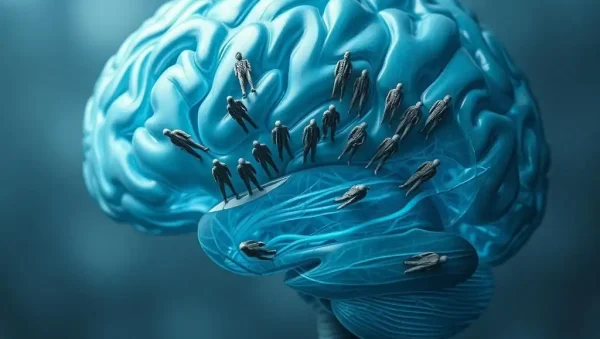
Freud revolutionized psychology by proposing that most of our mental life operates outside conscious awareness. His structural model divides the psyche into three parts: the id (primitive desires), the ego (rational mediator), and the superego (moral conscience). These forces constantly interact, creating internal conflicts that influence our thoughts, feelings, and actions. Understanding this model helps you recognize why you sometimes act irrationally or feel torn between duty and desire.
In this section, you will learn how the unconscious drives behaviors like slips of the tongue (Freudian slips) and defense mechanisms such as repression and projection. We will also explore how Freud used free association and dream analysis to access this hidden realm. By grasping these concepts, you will gain a foundational framework for interpreting human motivation, which remains valuable in clinical psychology and even in marketing and leadership studies today.
💤 Dream Interpretation: The Royal Road to the Unconscious
Freud famously called dreams the “royal road to the unconscious.” He believed that dreams are wish fulfillments, where repressed desires and unresolved conflicts surface in disguised form. His technique involved analyzing the manifest content (what you remember) to uncover the latent content (the hidden meaning). Symbols, puns, and condensation are key tools in this interpretation, making dream analysis a creative yet systematic process.
Here, you will find practical examples of common dream symbols (e.g., falling, flying, being chased) and how Freudian theory interprets them. We’ll also discuss the critique of this approach, including modern neuroscience’s skepticism. However, learning this method enhances your ability to reflect on personal narratives and emotional patterns, offering a unique lens for self-exploration that goes beyond surface-level thinking.
🛡️ Defense Mechanisms: How We Protect the Ego
Freud identified several unconscious strategies the ego uses to reduce anxiety from conflicts between the id and superego. These defense mechanisms include repression (forgetting painful memories), denial (refusing to accept reality), rationalization (creating logical excuses), and sublimation (channeling unacceptable impulses into productive activities). Each mechanism serves a protective function, but overuse can lead to psychological distress.
This section covers each major defense mechanism with relatable examples, such as a student blaming a poorly written exam on “unfair grading” (rationalization) or a person redirecting anger into intense exercise (sublimation). You will learn how these patterns appear in everyday life and in clinical settings. Recognizing these mechanisms in yourself and others can improve emotional intelligence, conflict resolution, and even communication in relationships, making this knowledge highly practical beyond academic study.
👶 Psychosexual Development: From Oral to Genital Stages
Freud proposed that personality develops through five psychosexual stages—oral, anal, phallic, latent, and genital—each centered on a different erogenous zone. Fixation at any stage, due to overgratification or frustration, leads to specific adult personality traits. For example, an oral fixation might result in smoking or overeating, while an anal fixation could manifest as extreme orderliness or messiness.
Here, we break down each stage, its conflicts (e.g., weaning, toilet training, Oedipus complex), and the potential adult outcomes. We also address the heavy criticism of this theory, particularly its male-centric focus and lack of empirical evidence. Still, understanding psychosexual stages gives you insight into early childhood influences and the origins of certain habits or anxieties. It also illustrates how Freudian thought paved the way for developmental psychology, even as later theorists like Erikson revised his ideas.
🛋️ Freud’s Therapeutic Legacy: Psychoanalysis in Practice
Freud’s clinical method—psychoanalysis—involves free association, transference, and resistance analysis, typically over several sessions per week. The goal is to bring unconscious conflicts into conscious awareness, allowing the patient to gain insight and resolve neuroses. Modern psychodynamic therapy has adapted these techniques into shorter, more focused formats, but the core principles remain influential in treating depression, anxiety, and personality disorders.
In this section, you will explore how a typical psychoanalytic session works, the role of the therapist (as a blank slate), and the concept of transference where patients project feelings onto their analyst. We also discuss empirical research on its effectiveness compared to cognitive-behavioral therapy. By understanding this legacy, you’ll appreciate how Freud’s clinical innovations laid the groundwork for talk therapy, and you’ll be better equipped to evaluate different therapeutic approaches for yourself or others seeking mental health support.
Frequently Asked Questions
What is Freud’s most famous theory?
Freud’s most famous theory is the psychoanalytic theory, which emphasizes the unconscious mind’s role in shaping behavior. His structural model (id, ego, superego) and psychosexual stages are central. While many parts are debunked, the idea that hidden mental processes influence us—now supported in modern cognitive psychology—remains his lasting contribution.
Why are Freud’s theories controversial?
Freud’s theories are controversial because they lack empirical validation, rely heavily on subjective interpretation, and often pathologize normal behaviors, especially regarding sexuality and gender. His case studies were small and biased. However, his ideas about defense mechanisms and unconscious motivation have inspired research that partially supports some concepts, though not in the original form.
How does dream interpretation work in psychoanalysis?
In psychoanalysis, dream interpretation decodes the manifest content (literal story) to find latent content (hidden meaning). Analysts look for symbols, puns, and emotional tones, then ask the dreamer for free associations. This process reveals repressed wishes or fears. It’s a collaborative, non-standardized approach, so interpretations vary by therapist and context.
Is Freud still relevant in modern psychology?
Yes, but in a modified way. His emphasis on childhood experiences, defense mechanisms, and therapeutic rapport has influenced modern psychodynamic therapy, which is evidence-based. Concepts like unconscious bias and emotional regulation echo Freudian ideas. However, modern psychology rejects the specific psychosexual stages and many of his speculative claims, favoring empirically testable models.
Can I apply Freud’s ideas to my daily life?
Absolutely. You can use concepts like defense mechanisms to self-reflect on why you procrastinate or avoid conflicts. Exploring your dreams can spark creative insights, though not as direct messages. Practicing free association—writing whatever comes to mind—can help you uncover hidden feelings. However, use these tools lightly, not as self-diagnosis, and seek professional help for serious psychological issues.