Other Influential Psychologists: Beyond the Giants of Psychology
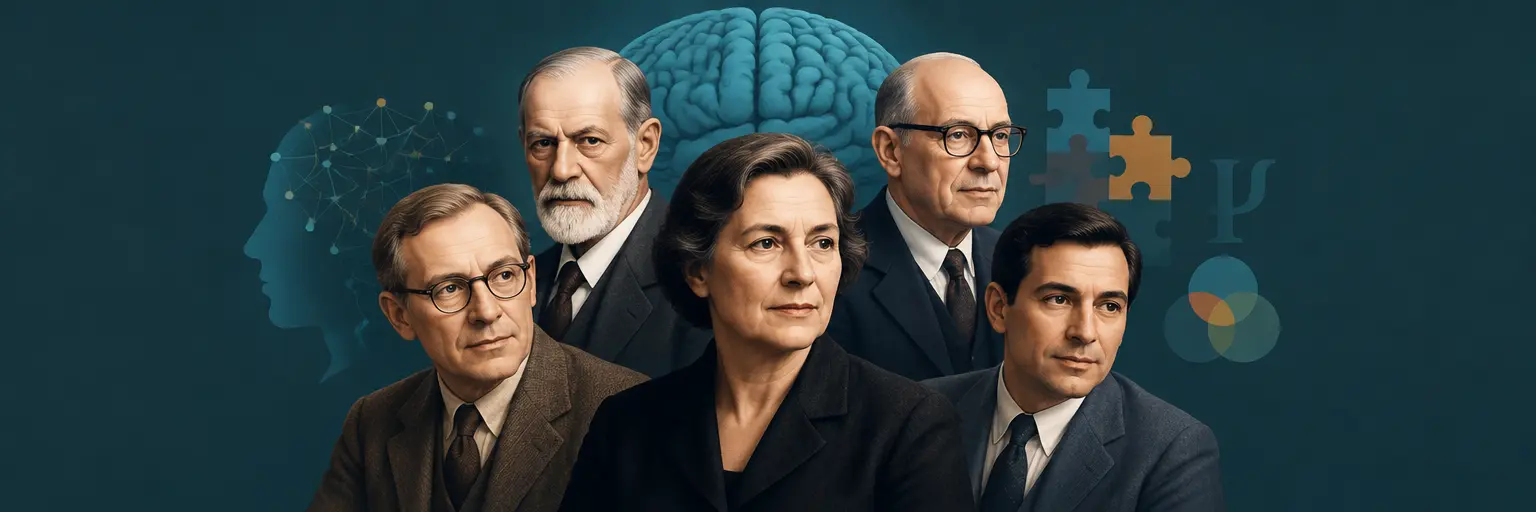
While names like Freud, Skinner, and Piaget dominate introductory textbooks, the field of psychology is a rich tapestry woven by dozens of brilliant minds whose contributions shaped modern thought. This subcategory, "Other Influential Psychologists," shines a spotlight on those pivotal figures who, though not always household names, provided foundational theories in social psychology, developmental stages, humanistic thought, and cognitive science. Whether you're a student seeking a broader perspective or a curious reader exploring the breadth of human behavior, understanding these thinkers is essential for grasping how contemporary psychology evolved. Here, you’ll discover the architects of concepts we use daily, from learned helplessness to the hierarchy of needs.
🧠 Pioneers of Social Psychology and Group Dynamics
Explore the minds that decoded how we influence and are influenced by others. This section introduces you to figures like Kurt Lewin, the "father of social psychology," whose field theory explained behavior as a function of both person and environment, and Solomon Asch, whose conformity experiments revealed the powerful pressure to fit in. You’ll also meet Muzafer Sherif, who demonstrated intergroup conflict and cooperation through his realistic conflict theory. These psychologists didn’t just theorize; they designed clever, often surprising experiments that remain cornerstones of social psychology courses today. Understanding their work helps you recognize the subtle social forces shaping your daily decisions, from workplace compliance to peer pressure.
Expect to learn how these researchers paved the way for modern studies on obedience, prejudice, and group identity. Their legacy is visible in everything from marketing strategies to organizational behavior consulting. By examining their methods and findings, you’ll gain a deeper appreciation for how social context—not just individual personality—drives human actions. This section is perfect for beginners who want to move beyond individual psychology and grasp the dynamics that occur when people interact.
🌱 Humanistic Thinkers Who Placed the Person First
Step into the world of humanistic psychology, a movement that rebelled against both behaviorism and psychoanalysis. Here, Abraham Maslow stands tall with his famous hierarchy of needs, which posits that self-actualization is the ultimate human goal, but only after basic needs like safety and belonging are met. Carl Rogers, another central figure, introduced client-centered therapy, emphasizing unconditional positive regard and empathy as healing forces. These thinkers believed in the inherent goodness and potential of every individual. Their optimistic view contrasts sharply with Freud’s focus on pathology, offering a refreshing perspective that emphasizes growth, choice, and personal responsibility.
Dive into their practical contributions, such as active listening and the concept of the "fully functioning person." You’ll see how their ideas underpin modern counseling techniques and positive psychology’s focus on well-being. For students and general readers, this section provides a compassionate framework for understanding human motivation, resilience, and the search for meaning. It’s not just theory—Rogers’ therapeutic methods are used in millions of therapy sessions worldwide today, making these thinkers incredibly relevant.
🧩 Cognitive and Developmental Trailblazers You Should Know
Beyond Piaget’s stage theory, other developmental giants expanded our understanding of how we think and grow. Lev Vygotsky, for instance, emphasized the social roots of cognitive development via the “zone of proximal development,” arguing that learning is inherently collaborative. Meanwhile, Ulric Neisser coined the term “cognitive psychology” and championed the study of mental processes like perception and memory. You’ll also encounter Elizabeth Loftus, a leading researcher on the malleability of human memory, whose work on false memories has profound legal and clinical implications. Her research reveals that our recollections are not perfect recordings but reconstructions, easily influenced by misinformation.
This section helps you connect early theories to current research in brain science and artificial intelligence. You’ll learn how Vygotsky’s ideas influence modern education, from peer tutoring to scaffolding. Loftus’s findings are critical for anyone interested in eyewitness testimony, therapy, or everyday memory errors. Expect clear explanations of their key concepts, complete with real-world examples that make abstract cognitive ideas immediately tangible. This is essential reading for those curious about how we learn, remember, and sometimes forget.
💡 The Revolutionaries of Behavior and Learning
Less famous than Pavlov or Skinner, but equally influential, are figures like Edward Thorndike, whose law of effect laid the groundwork for operant conditioning. His puzzle-box experiments with cats demonstrated that behaviors followed by satisfying outcomes are more likely to be repeated. Likewise, John B. Watson, often considered the founder of behaviorism, pushed for a psychology focused solely on observable behavior, famously demonstrating conditioned fear in “Little Albert.” These thinkers shifted the field from introspection to measurable actions. Their emphasis on learning principles transformed education, child rearing, and even advertising.
Here, you’ll grasp how reward and punishment shape habits, from daily routines to workplace productivity. You’ll also see the ethical boundaries that later researchers established, as Watson’s Little Albert experiment is now widely criticized. By understanding Thorndike and Watson, you’ll appreciate why behaviorism dominated psychology for decades and how its legacy persists in cognitive-behavioral therapy and behavioral economics. Whether you’re studying for an exam or just want to understand why you reach for a snack when stressed, this section provides the behavioral explanations you need.
🌍 Global Voices and Underrepresented Pioneers
Psychology’s history often centers on European and American white men, but many other influential psychologists made crucial contributions. This section introduces you to figures like Mamie Phipps Clark, whose research on racial identity and self-perception in children was cited in the landmark Brown v. Board of Education Supreme Court case. Also, you’ll meet Mary Whiton Calkins, the first woman president of the American Psychological Association, who founded a school of self-psychology, and B.F. Skinner’s lesser-known contemporary, Mary Cover Jones, who pioneered desensitization therapy for phobias. Their work broadens the narrative, showing that psychology’s growth is enriched by diverse perspectives and social justice concerns.
Expect to learn how these pioneers faced institutional barriers yet left lasting impacts on clinical practice, developmental research, and social policy. The Clark doll studies, for example, remain powerful demonstration of how segregation affects self-esteem. Calkins’ contributions to memory research are still cited in cognitive science. By exploring these voices, you’ll gain a more inclusive view of the discipline, recognizing that psychological knowledge arises from many cultural and personal contexts. This section is a call to broaden your reading beyond the typical canon.
Frequently Asked Questions
Who is considered the most influential psychologist besides Freud and Skinner?
Many would argue Carl Rogers stands out due to his transformative impact on therapy and education. His client-centered approach shifted focus from pathological behavior to personal growth and empathy. Also, Albert Bandura’s social learning theory and self-efficacy concept have shaped modern behavior research. Both are central to contemporary applications in counseling and organizational psychology.
What is the difference between Vygotsky and Piaget’s theories?
Piaget believed cognitive development unfolds in universal stages largely driven by the child’s solo exploration. Vygotsky argued that social interaction and cultural tools are primary, proposing the zone of proximal development where learning happens with guidance. In essence, Piaget focused on internal maturation, while Vygotsky stressed external social and cultural inputs as essential for learning.
Are there any influential female psychologists in this subcategory?
Absolutely. Mary Whiton Calkins was the first female APA president and a pioneer in self-psychology. Mamie Phipps Clark’s work on racial identity among children was crucial for civil rights. Karen Horney challenged Freud’s male-centric theories, offering a more socially oriented view of neurosis. Their contributions are now integral to understanding personality, development, and social justice.
Why is Elizabeth Loftus famous in cognitive psychology?
Loftus is renowned for her research on memory distortion and false memories. She demonstrated that language and misinformation can alter what people recall, greatly affecting eyewitness testimony reliability. Her work has profound implications for legal proceedings and clinical practice, leading to better protections against false accusations and more rigorous investigative methods.
Do these lesser-known psychologists still influence modern therapy today?
Yes, directly and indirectly. Carl Rogers’ person-centered therapy is widely used. Mary Cover Jones’ desensitization techniques evolved into modern exposure therapy for anxiety. Julian Rotter’s locus of control concept shapes cognitive-behavioral interventions. Even neglected figures like George Kelly inform personal construct therapy, proving that their foundational ideas remain vibrant in today’s clinical and counseling settings.