Understanding the Reliability of Eyewitness Testimony in Psychology
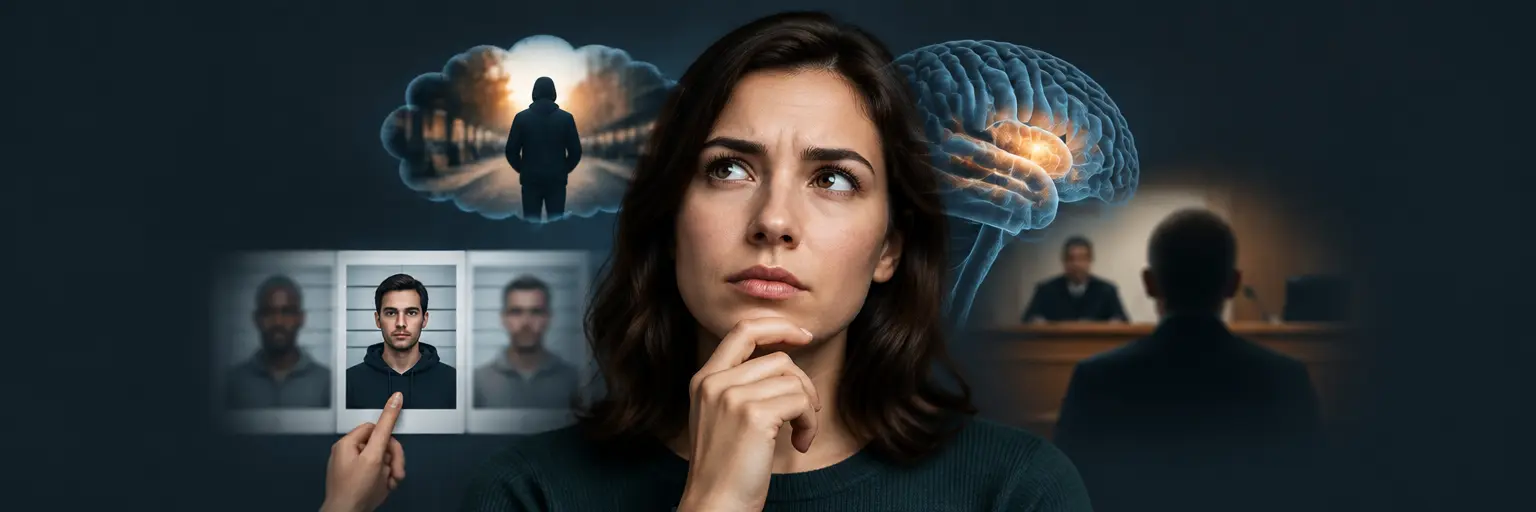
Eyewitness testimony has long been a cornerstone of criminal justice, yet psychological research reveals it is far from infallible. Memory is not a perfect recording; it is a reconstructive process influenced by perception, stress, and post-event information. This subcategory within Controversial Topics in Psychology explores the science behind memory errors, the factors that distort recall, and the real-world implications for legal systems. Whether you are a student, a psychology enthusiast, or a curious reader, you will uncover why even confident witnesses can be wrong—and how researchers work to improve investigative procedures.
🧠 The Science of Memory Reconstruction
Psychologists have demonstrated that memory is not a static snapshot but a dynamic, reconstructive process. When you recall an event, your brain fills in gaps using schemas, prior experiences, and expectations. This means two witnesses to the same crime can remember conflicting details—both sincerely believing their versions are accurate. Studies using the misinformation effect show that subtle wording, like asking “How fast were the cars going when they *smashed* into each other?” versus “*hit* each other,” can alter remembered speed and even fabricate broken glass. Understanding this malleability is foundational to evaluating testimony reliability.
For students, this highlights why research relies on controlled experiments rather than anecdotal confidence. Memory distortions occur at three stages: encoding (when you first perceive), storage (over time), and retrieval (when you recall). Stress, weapon focus, and cross-racial identification further degrade accuracy. By grasping these mechanisms, you can critically analyze real courtroom examples and recognize why expert testimony about memory is often necessary in trials.
⚖️ Factors That Increase or Decrease Accuracy
Not all eyewitness testimony is equally unreliable; certain conditions dramatically improve or worsen accuracy. High stress and the presence of weapons reduce attention to peripheral details, making identifications less trustworthy. Conversely, good lighting, longer exposure time, and familiar context enhance recall. Post-event information—like police discussions, news reports, or social media—can contaminate memory, a phenomenon known as source confusion. Research also shows that confidence at the time of identification is a poor predictor of accuracy, yet juries often treat confidence as gold.
Furthermore, lineup procedures matter. Sequential lineups (viewing suspects one by one) reduce false identifications compared to simultaneous lineups. Double-blind administration—where the officer doesn’t know who the suspect is—prevents unintentional cues. Age also matters: children and older adults are more suggestible, though genuine memories can still be reliable under proper interviewing. Learning these factors helps legal professionals and laypeople weigh testimony more judiciously.
📉 Famous Cases and Miscarriages of Justice
Historical wrongful convictions underscore the high stakes of unreliable testimony. The Innocence Project reports that mistaken eyewitness identification contributed to over 70% of DNA exonerations in the United States. Cases like that of Ronald Cotton, falsely convicted of rape based on a victim’s confident but flawed identification, illustrate how even sincere witnesses err. Jennifer Thompson, the victim in that case, later met Cotton and publicly advocated for reformed eyewitness practices. Another example, the Central Park Five, involved pressured teen confessions and faulty identifications that led to years of wrongful imprisonment.
These cases are not just historical footnotes—they drive ongoing legal reforms. States have implemented model policies like standardized instructions to witnesses, blind administration, and confidence statements at the moment of identification. For psychology students, these stories offer a powerful bridge between laboratory findings and societal impact. They remind us that errors are systemic, not individual failures, urging caution in courtroom reliance on memory alone.
🔍 Improving Eyewitness Procedures and Training
Psychologists have developed evidence-based interventions to enhance reliability without eliminating eyewitness use. The cognitive interview technique, developed by Fisher and Geiselman, encourages witnesses to mentally recreate the context, report everything, and recall events in different orders—boosting accurate details without increasing false ones. For lineups, the reformed sequential procedure ensures each photo is viewed once, reducing relative judgments. Additionally, educating jurors about memory fallibility through expert testimony or jury instructions can temper overreliance on identifications.
Practical training for police officers now includes avoiding leading questions and using neutral phrasing. Standardized administration protocols also document witness confidence immediately after choosing, preventing later suggestion from inflating certainty. While no procedure is perfect, these reforms have been shown to cut erroneous convictions. For general readers, understanding these improvements emphasizes that psychology doesn’t just critique—it offers actionable solutions. Advocacy for such policies remains a key area where psychological science meets criminal justice reform.
📚 The Role of Expert Witnesses in Court
Expert witnesses on eyewitness reliability are now frequently permitted in trials, but their admissibility varies by jurisdiction. These experts explain to juries why memory is malleable, how stress affects perception, and why confidence is not proof of accuracy. In some courts, judges allow expert testimony only when the identification is suspect, while others require it in all cases. Research shows that expert testimony helps jurors weigh evidence more carefully, reducing convictions based solely on questionable IDs without making them skeptical of all testimony.
However, experts must remain impartial, not advocating for guilt or innocence. They highlight estimator variables (e.g., race, lighting) and system variables (e.g., lineup instructions) that affect reliability. For psychology students, this field illustrates applied cognition in high-stakes settings. It also raises ethical questions: Should an expert testify if the identification is strong? The consensus is that providing balanced, scientific context advances justice, ensuring that memory errors are acknowledged but not exaggerated. This nuanced role is a model for how psychological knowledge informs public policy.
Frequently Asked Questions
Why is eyewitness testimony considered unreliable?
Memory is reconstructive, not fixed. Perception, stress, and post-event information can distort recall, leading to confident but inaccurate identifications. Research shows that memory errors occur across all demographics, making corroborating evidence essential.
Can eyewitness confidence indicate accuracy?
No. Confidence at the moment of identification is weakly correlated with accuracy. Over time, confidence can inflate due to rehearsal or suggestive feedback. Courts now recommend recording confidence immediately to reduce later bias.
How can police reduce false identifications?
Use double-blind sequential lineups, where the officer doesn’t know the suspect’s position. Provide clear instructions that the perpetrator may not be present, and record the witness’s confidence statement right after selection.
What is the misinformation effect?
It occurs when exposure to incorrect information after an event—through questions, media, or conversations—contaminates memory. For example, asking about “the broken headlight” can lead witnesses to recall damage that never existed.
Are child eyewitnesses less reliable than adults?
Children are more suggestible and may confabulate details, especially under repeated questioning. However, with neutral, non-leading interviews, they can provide accurate recollections. Their reliability depends heavily on interviewing methods, not just age.