Understanding Cognitive Behavioral Therapy (CBT) in Psychology Basics
Welcome to our focused guide on Cognitive Behavioral Therapy (CBT), a cornerstone within the broader category of Therapeutic Approaches on Psychology Basics. This page is designed for students and curious readers who want to grasp how thoughts, feelings, and behaviors interconnect to shape mental health. CBT is one of the most evidence-based and widely practiced therapies today, offering practical tools for managing anxiety, depression, stress, and more. Here, you’ll explore its core principles, techniques, real-world applications, and limitations—all explained in clear, accessible language. Whether you're preparing for an exam, starting therapy, or simply expanding your psychological knowledge, this resource will demystify CBT’s mechanics and benefits. Let’s dive into how restructuring your thinking can transform your emotional and behavioral patterns.
🔍 Core Principles of CBT: The Cognitive Triangle
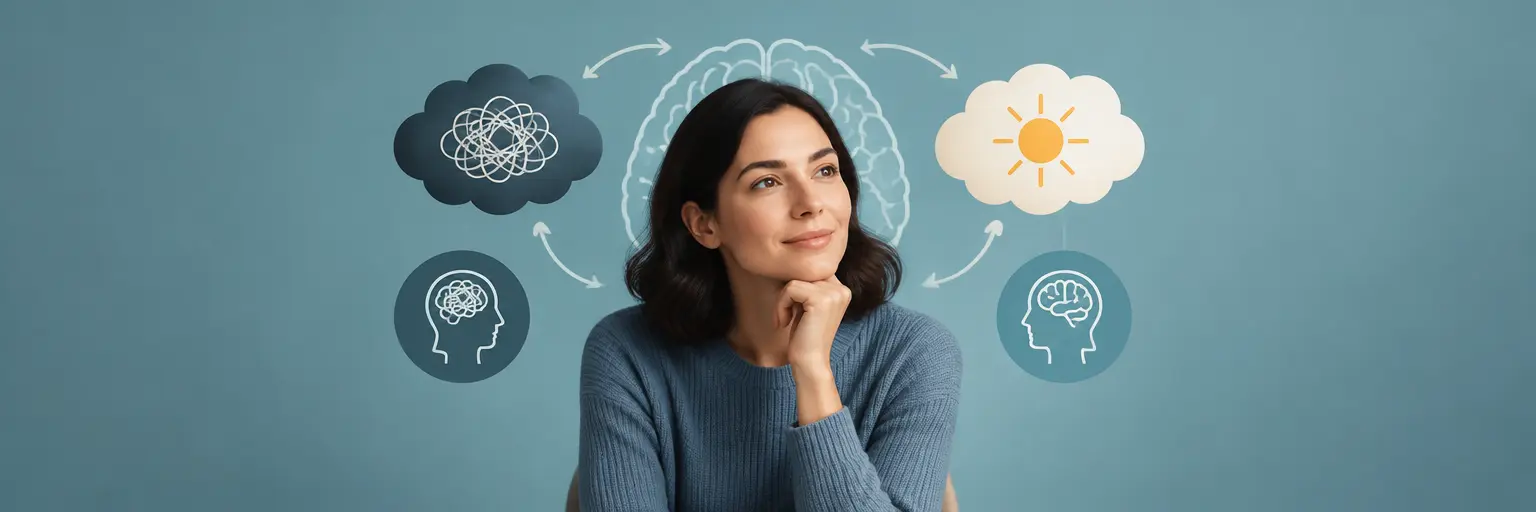
At the heart of Cognitive Behavioral Therapy lies the cognitive triangle, a model illustrating how thoughts, emotions, and behaviors continually influence one another. For example, a negative automatic thought like “I’ll fail this test” triggers anxiety (emotion) and leads to avoidance or procrastination (behavior), which then reinforces the negative belief. CBT teaches you to identify these automatic thoughts, evaluate their accuracy, and replace them with balanced, realistic alternatives. This process, known as cognitive restructuring, breaks unhelpful cycles. By understanding this triangle, you gain a framework for analyzing your own mental patterns, making CBT a practical skill beyond the therapist’s office.
In Psychology Basics, we emphasize that the cognitive triangle is not just theory—it’s a tool you can use daily. Recognizing that your interpretation of an event, not the event itself, drives your emotional response is a powerful shift. For instance, a friend’s delayed reply may trigger thoughts of rejection, but CBT encourages you to consider alternative explanations (e.g., they’re busy). This reframing reduces distress and fosters healthier reactions. Through guided practice, you’ll learn to spot cognitive distortions like catastrophizing or all-or-nothing thinking, replacing them with nuanced, evidence-based perspectives. This foundational principle is your first step toward mastering CBT’s practical applications.
🧠 Core CBT Techniques: From Thought Records to Behavioral Experiments
CBT offers a toolbox of structured techniques designed to shift thinking and behavior. A thought record is a classic exercise where you log a triggering situation, your automatic thoughts, the emotions felt, and then generate alternative, balanced responses. This written practice enhances self-awareness and reduces the intensity of negative emotions. Another key method is behavioral activation, especially effective for depression—it involves scheduling enjoyable or meaningful activities to break cycles of withdrawal and low mood. Additionally, exposure therapy, a subtype of CBT, gradually confronts feared situations in a safe, graded manner, helping reduce avoidance and anxiety over time.
These techniques are not passive reading exercises; they require active engagement. For example, in a behavioral experiment, you test a negative belief (e.g., “If I speak up, people will laugh at me”) by conducting a real-life experiment, such as sharing an opinion in a group, and observing the actual outcome. This evidence-gathering approach often reveals that feared predictions are exaggerated. By practicing these skills, students and readers can see how CBT moves from abstract theory to tangible change. Each technique builds self-efficacy, making you your own therapist over time. On this page, we highlight practical steps for applying these methods, ensuring you leave with actionable insights, not just definitions.
💡 Applications of CBT: Anxiety, Depression, and Beyond
CBT’s versatility makes it effective for a wide range of mental health conditions. For anxiety disorders, including generalized anxiety, panic, and social anxiety, CBT helps identify irrational fears and teaches coping skills like relaxation and cognitive reframing. In depression, CBT addresses negative thought patterns and promotes behavioral activation to re-engage with life’s rewarding activities. Beyond these, CBT is used for obsessive-compulsive disorder (OCD), post-traumatic stress disorder (PTSD), insomnia, chronic pain, and even eating disorders. Its problem-focused, goal-oriented nature makes it adaptable to individual needs, often producing measurable improvements within 12–20 sessions.
For Psychology Basics readers, understanding these applications demystifies how therapy works in real life. For instance, someone with social anxiety might learn to challenge the belief that others are constantly judging them, then practice attending social events with heightened confidence. CBT’s structured approach also empowers clients to maintain progress after therapy ends, reducing relapse rates. In academic settings, CBT’s principles are foundational for many other therapeutic modalities, making this knowledge essential for psychology students. By exploring these applications, you’ll appreciate why CBT is often the first-line treatment recommended by clinicians and health organizations worldwide.
📖 What to Expect in a CBT Session: A Step-by-Step Overview
A typical CBT session is collaborative and structured, often starting with reviewing the previous week’s homework assignments. The therapist and client jointly set an agenda, focusing on specific problems like a recent panic attack or a negative self-critical thought. Together, they identify distortions, test their validity, and develop new cognitive and behavioral responses. Sessions are usually 50–60 minutes, occurring weekly or biweekly, with the client actively practicing skills between sessions. This homework is integral, as it cements learning and promotes real-world application. Over time, the therapist’s role shifts from active guide to coach, empowering you to become self-sufficient in managing your mental health.
For those new to therapy, this roadmap reduces anxiety about the process. You’ll learn that therapists are not passive listeners but active collaborators who provide direct feedback and psychoeducation. Clients are expected to be goal-oriented—for example, “reduce public speaking anxiety” rather than “feel better.” This specificity ensures measurable progress. Also, CBT is time-limited, typically lasting 5–20 sessions, depending on the issue’s severity. Understanding this structure helps students see why CBT is often preferred in clinical settings due to its efficiency and empirical backing. Whether you plan to become a therapist or a client, knowing what to expect prepares you for a productive therapeutic journey.
⚖️ Strengths and Limitations of CBT: A Balanced Perspective
No therapy is perfect, and CBT has both robust strengths and notable limitations. Its strengths include a strong evidence base, short treatment duration, and skills that persist long after therapy ends. It’s highly structured, making it ideal for research and replication, and it empowers clients to “own” their progress through concrete techniques. However, limitations exist: CBT requires active participation and may not suit individuals with severe cognitive deficits or those who prefer a deeper exploration of past trauma—areas where psychodynamic therapy might excel. Critics argue that CBT focuses on symptom relief rather than root causes, which some find superficial for complex issues.
In Psychology Basics, we present this balanced view to help readers make informed decisions. For example, someone with chronic, childhood-based trauma might find CBT’s present-focused approach limiting, whereas a person with situational stress may thrive on its practical tools. Also, CBT’s reliance on cognitive ability means that individuals with intellectual disabilities may need adapted versions. Recognizing these limitations doesn’t diminish CBT’s value; rather, it encourages a nuanced understanding of therapeutic matching. As a student, this awareness is crucial for critical thinking—you’ll learn that “best” therapy depends on individual context, therapist skill, and therapeutic alliance, not just the label. This balanced perspective enriches your overall psychological literacy.
Frequently Asked Questions
How long does CBT take to work?
Most people notice significant improvements within 6 to 12 sessions, though this varies by issue and engagement. For example, mild anxiety may resolve in fewer sessions, while complex trauma might require longer. CBT is designed to be time-limited, with skills building over time. Consistency with homework and active participation greatly speeds progress.
Can I practice CBT on my own without a therapist?
Yes, self-guided CBT is possible using workbooks, apps, and online courses, especially for mild symptoms. However, a qualified therapist ensures proper guidance, helps identify blind spots, and provides accountability. For moderate to severe conditions, professional support is strongly recommended to avoid misapplication of techniques.
Is CBT only for talk-therapy, or does it include action?
CBT is highly action-oriented, blending cognitive work with behavioral experiments and homework. You’ll practice new behaviors, test fears, and schedule activities outside sessions. This hands-on approach makes CBT distinctly practical, moving beyond mere discussion to real-world change.
What is the difference between CBT and typical talk therapy?
While traditional talk therapy (e.g., psychodynamic) often explores past experiences and unconscious patterns, CBT is present-focused and problem-specific. It uses structured techniques, goal-setting, and measurable outcomes. CBT sessions are collaborative and directive, often including skill-building and homework, unlike more free-flowing analytical conversation.
Who should not use CBT?
CBT may not be suitable for individuals with severe cognitive impairments, active psychosis, or those who need crisis intervention. It can also be less effective for clients who prefer exploring deep-rooted historical causes. A thorough assessment by a qualified professional determines if CBT is a good fit, often combining it with other modalities when needed.