Explore Personality Traits and Assessment
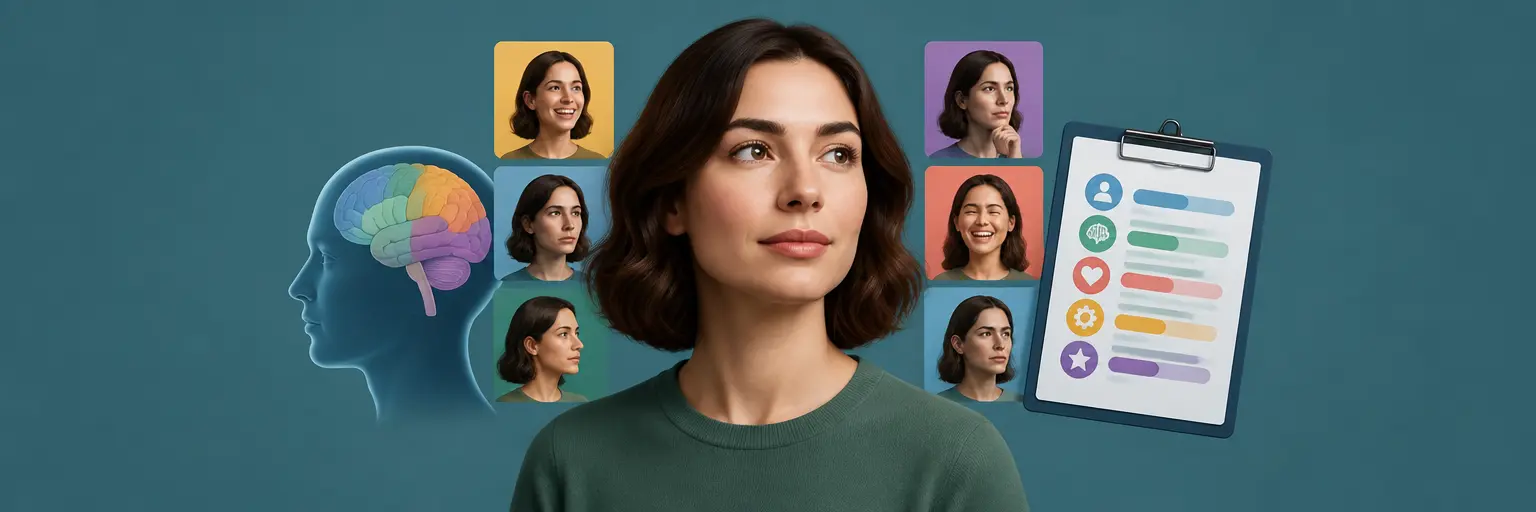
Understanding personality is like decoding the unique fingerprint of the human mind. In this subcategory of Personality Psychology, we dive into the science behind personality traits, measurement tools, and theoretical frameworks that explain why people think, feel, and behave differently. Whether you're a student beginning your psychology journey or a curious reader, this section offers clear, evidence-based insights into the Big Five, trait models, and assessment methods.
🧠 The Big Five Personality Model
The Big Five—Openness, Conscientiousness, Extraversion, Agreeableness, and Neuroticism (OCEAN)—is the most widely accepted trait framework in modern psychology. Here, you will learn how each dimension influences daily behavior, career choices, and relationships. This model is grounded in decades of cross-cultural research, making it a robust tool for understanding individual differences.
Expect to see practical examples of how high or low scores on each trait manifest in real life. For instance, high conscientiousness often predicts academic and occupational success, while high neuroticism may relate to anxiety proneness. This section also clarifies common misconceptions, such as the idea that traits are fixed—research shows they can evolve slightly with life experiences, but remain relatively stable across adulthood.
📝 Self-Report Inventories vs. Projective Tests
Personality assessment isn’t just about quizzes; it’s a rigorous scientific process. Self-report inventories, like the MMPI-2 or NEO PI-R, ask individuals to rate their own behaviors and feelings. In contrast, projective tests like the Rorschach inkblot or TAT rely on ambiguous stimuli to uncover unconscious motives. This subcategory explains the strengths and limitations of each method, especially in clinical and occupational settings.
You’ll understand why self-reports are favored for their reliability and ease of scoring, while projective tests, though controversial, offer rich qualitative data. We also discuss response biases, such as social desirability and faking, plus how modern assessments use validity scales to detect them. This knowledge is essential for interpreting any personality test you encounter in research or practice.
🎭 Trait Theories: From Allport to Eysenck
Historical foundations shape today’s assessment tools. Gordon Allport highlighted the uniqueness of each individual with his trait taxonomy, while Hans Eysenck proposed biological dimensions of introversion-extraversion and neuroticism. This section walks you through the evolution of these ideas, showing how they paved the way for the dimensional, data-driven models we use now.
You’ll discover why Eysenck linked extraversion to cortical arousal and how that explains why some people crave stimulation. Meanwhile, Allport’s cardinal, central, and secondary traits offer a more idiographic approach, focusing on personal narratives. By comparing these theories, you will gain a deeper appreciation for the blend of biology, learning, and cognition that shapes personality—key for advanced studies in psychology.
📊 Reliability and Validity in Personality Tests
No test is useful unless it measures consistently and accurately. This facet covers test-retest reliability, internal consistency, and construct validity, using clear examples from popular assessments. You’ll learn how coefficients are calculated and what threshold (e.g., 0.70) is considered acceptable for research or clinical use.
We also demystify criterion-related validity—how well a test predicts outcomes like job performance or relationship satisfaction. Understanding these psychometric properties is crucial for anyone evaluating the quality of a personality questionnaire. Additionally, we discuss the ethics of assessment, including informed consent, confidentiality, and the danger of labeling individuals based solely on scores. This knowledge empowers you to be a smarter consumer of psychological research.
🌍 Cultural and Contextual Issues in Assessment
Personality is expressed differently across cultures, yet many tests are developed in Western contexts. This section explores cultural bias, translation challenges, and the emic-etic debate—whether traits are universal or culture-specific. For example, the Big Five dimensions appear across 50+ countries, but the expression of agreeableness may vary in collectivist vs. individualist societies.
You’ll also examine how socioeconomic status, age, and gender influence test performance. Practitioners must adapt norms and interpretation guidelines to avoid misdiagnosis. This subsection emphasizes the importance of cultural competence in psychology, offering practical tips for a balanced assessment approach that respects diversity. By understanding these nuances, you can appreciate why a one-size-fits-all test is rarely appropriate.
❓ Frequently Asked Questions
What is the most reliable personality test for clinical use?
The MMPI-2 (Minnesota Multiphasic Personality Inventory-2) is widely considered the gold standard for clinical assessment due to its extensive validation and built-in validity scales. However, reliability also depends on context; the NEO PI-R is better for normal-range trait measurement. Always consult a licensed psychologist for proper administration and interpretation.
Can personality traits change over time?
Yes, but gradually. Longitudinal studies show that conscientiousness and agreeableness tend to increase with age—known as the “maturity principle.” Major life events, therapy, and deliberate practice can shift trait levels, yet genetic influences keep personality relatively stable. Change is possible but usually slow and requires sustained effort.
Are projective tests like the Rorschach scientifically valid?
Projective tests are controversial. The Rorschach has low inter-rater reliability in unstructured scoring, but the Exner Comprehensive System improves validity. They are useful for building rapport and exploring unconscious themes, yet they should not be the sole basis for diagnosis. Modern psychologists prefer structured self-reports for objective measurement.
How do I know if an online personality quiz is accurate?
Check whether the quiz is based on validated models (e.g., Big Five) and reports psychometric properties like reliability and validity. Be wary of quizzes that claim to reveal your perfect career or relationship match—they often lack scientific backing. For educational purposes, reputable platforms like the IPIP provide free, evidence-based tests.
What are the ethical concerns in personality assessment at workplaces?
Key concerns include invasion of privacy, potential for discrimination, and misuse of results. Employers must use tests that are job-relevant, validated, and administered consistently. Candidates have the right to know how data will be stored and used. Ethical guidelines also prohibit using personality tests to exclude individuals without clear, documented job relevance.