Sleep Patterns in Children: A Guide for Each Developmental Stage
😊 Understanding child sleep patterns by age is crucial for healthy development. This guide explores the unique sleep needs of children across…
Read article
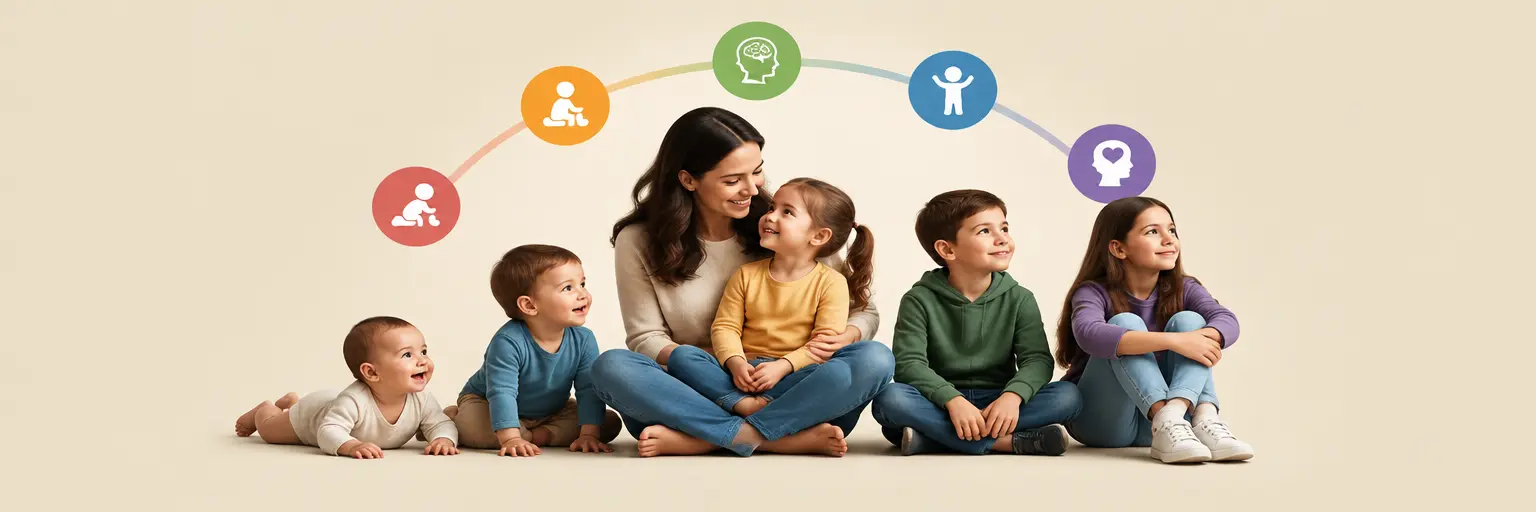
Understanding child development stages is a cornerstone of effective parenting, offering a roadmap for what to expect as your child grows from infancy through adolescence. This guide breaks down the physical, cognitive, emotional, and social milestones that shape each phase, empowering you to respond with patience, insight, and confidence. By recognizing the key developmental windows—from sensorimotor exploration to abstract reasoning—you’ll better interpret your child’s behavior, nurture their strengths, and address challenges early. Whether you’re a new parent or navigating the teenage years, this foundation helps you build a secure, stimulating environment that fosters resilience and curiosity. Dive in to connect psychological theory with real-world parenting, making every stage a stepping stone for lifelong well-being and healthy family dynamics.
😊 Understanding child sleep patterns by age is crucial for healthy development. This guide explores the unique sleep needs of children across…
Read article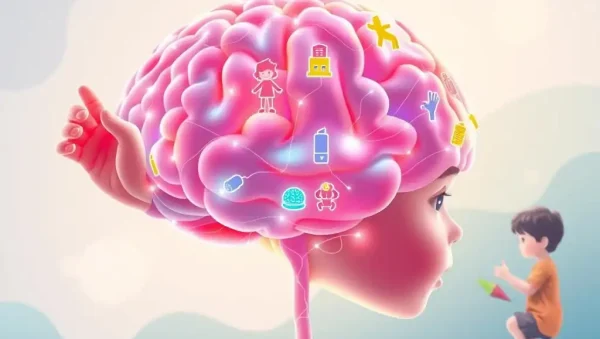
😊Unlock the fascinating world of child cognitive development milestones! This article explores key stages in children's thinking and learning, from infancy to…
Read articleWelcome to Psychology Basics, where we break down complex psychological concepts into practical, parent-friendly insights. This subcategory focuses on the fascinating journey of child development—from infancy to adolescence—offering evidence-based guidance to help you recognize milestones, support emotional growth, and navigate challenges with confidence. Whether you're a new parent, a caregiver, or a student of psychology, you'll find clear explanations rooted in developmental theory (Piaget, Erikson, Vygotsky) and real-world applications. Let's explore what each stage truly means for your child’s brain, behavior, and bonding.
During the first year, your baby’s brain develops at an astonishing rate—synapses form at over 1 million per second. According to Erikson’s first psychosocial stage, trust vs. mistrust, responsive caregiving (feeding, comforting, eye contact) lays the foundation for secure attachment. Here, you’ll learn how to read cues like crying, cooing, and gaze patterns, and why serve-and-return interactions (e.g., imitating sounds) are critical for language and social wiring. Expect practical tips on tummy time, sensory play, and recognizing red flags like delayed smiling or lack of tracking.
Beyond milestones, this stage shapes your child’s stress response system. Consistent, warm routines help regulate cortisol, reducing later anxiety risk. We also debunk common myths—like “spoiling” a baby by picking them up—and cite research from Bowlby and Ainsworth’s strange situation experiments. By understanding infant perception (Piaget’s sensorimotor substage), you’ll see why peek-a-boo isn’t just fun; it teaches object permanence. Use this guide to turn everyday moments into developmental wins, from mealtime to bath time.
Now your child declares “no!” with gusto—that’s Erikson’s autonomy vs. shame in action. This stage is about balancing independence with safety, as toddlers explore, climb, and test limits. We’ll walk you through language explosions (vocabulary jumps from 50 to 300 words), parallel play dynamics, and why tantrums are normal neurological storms, not bad behavior. Key strategies include offering limited choices (“blue cup or red cup?”), using “first/then” language, and validating feelings without capitulating—all backed by positive discipline research.
Cognitive flexibility also emerges: toddlers begin symbolic play (using a block as a phone), which underpins creativity and problem-solving. You’ll learn how to scaffold learning via Vygotsky’s zone of proximal development—providing just enough help to make tasks achievable. We also cover sleep regressions, picky eating, and early toilet training readiness, emphasizing that each child progresses at their own pace. Practical activities like sorting objects, singing action songs, and simple cause-effect games (water pouring) strengthen neural pathways while keeping frustration low.
Preschoolers become little explorers—Erikson calls this initiative vs. guilt. They invent games, ask endless “why” questions, and begin to understand rules and fairness. Here, we dive into preoperational thinking (Piaget): egocentrism, centration, and magical thinking. You’ll learn why your child might believe the moon follows them, and how to gently correct misconceptions without dampening wonder. Socially, cooperative play replaces parallel play, so we share tips on friendship skills, sharing, and conflict mediation—key for emotional intelligence.
Moral development shifts from obedience to simple reciprocity, as seen in Kohlberg’s early stages. We’ll help you nurture empathy through role-playing, storytelling, and modeling kind behavior. Additionally, this stage is prime for pre-literacy: phonetic awareness, print recognition, and narrative skills. Expect guidance on screen time limits (AAP recommends no more than 1 hour/day of quality programming) alongside offline activities like building with blocks, drawing, and pretend play—which boost executive function, working memory, and self-regulation. You’ll also spot early ADHD or autism signs here without jumping to conclusions.
School age ushers in Erikson’s industry vs. inferiority—kids strive to master skills and earn recognition. This subcategory helps you support homework routines, extracurricular choices, and healthy self-esteem. Piaget’s concrete operational stage means children can now conserve (understand that pouring water into a taller glass doesn’t change its volume) and classify objects. We translate this into math games, science experiments, and critical-thinking prompts. Socially, friendships become more complex: loyalty, cliques, and bullying. You’ll get actionable advice on fostering resilience, active listening, and conflict resolution without hovering.
As cognitive abilities expand, so does a sense of industry—praise effort over outcome to avoid learned helplessness (Dweck’s growth mindset). We discuss how to handle sibling rivalry, peer pressure, and increasing independence (e.g., walking to a park alone). This stage also sees the onset of formal operational thinking near age 11–12, so you can introduce abstract debates and hypothetical scenarios. Furthermore, we cover mental health basics: recognizing anxiety, depression, or ADHD symptoms, and when to consult a pediatric psychologist. Parent-teacher partnerships are highlighted as a critical buffer against academic stressors.
Teenagers face Erikson’s identity vs. role confusion—a search for “Who am I?” alongside rapid brain remodeling. The prefrontal cortex (decision-making) lags behind the amygdala (emotional reactivity), explaining impulsive choices. Here, we demystify teenage brain science and normalize mood swings. You’ll explore identity formation across gender, culture, and values, plus how to foster open communication without lecturing. Piaget’s formal operational stage enables hypothetical-deductive reasoning—so encourage debates, ethics discussions, and future planning tools.
Risk-taking isn’t rebellion; it’s exploration. We provide harm-reduction strategies (e.g., supervised driving practice, open dialogues about substances) rather than strict prohibitions. Social media’s influence on self-image and peer validation is examined with research-backed limits. We also address academic pressures, college readiness, and mental health crises—with clear red flags (withdrawal, sleep changes, self-harm) and referral pathways. Positive youth development frameworks (e.g., Search Institute’s 40 developmental assets) guide you in building identity capital, mentoring relationships, and purpose. Finally, we emphasize staying warm but not overbearing, allowing natural consequences to teach accountability while keeping the safety net strong.
Milestones offer a rough timeline, but every child’s pace varies. Use CDC’s checklists (e.g., walking by 12–18 months, first words by 12–15 months) as a baseline. Missing one milestone often isn’t concerning—missing multiple or losing skills warrants a pediatrician or child psychologist evaluation. Trust your instincts; early intervention yields the best outcomes.
Responsive, consistent caregiving tops the list. Secure attachment formed in infancy predicts better emotional regulation, social competence, and cognitive outcomes. This doesn’t mean perfection—just being physically and emotionally present, attuned to cues, and repairing ruptures. Nutrition, sleep, and safe environments matter too, but relationships are the core vehicle.
Label feelings (e.g., “You look frustrated”), validate without judgment, and model coping strategies (deep breaths, taking breaks). For toddlers, use books about emotions; for teens, practice active listening and avoid dismissing their feelings. Create a family culture where any emotion is acceptable; behavior still has limits, but feelings never need shaming.
Tantrums are normal between 1–3 years; defiance peaks in preschool and early adolescence. However, seek help if tantrums last 15+ minutes, occur 5+ times daily, include aggression toward others, or persist past age 4. For teens, if defiance is accompanied by school failure, self-harm, or substance misuse, consult a mental health professional promptly.
Excessive screen time (especially passive viewing) can delay language, reduce sleep, and impair attention. For under 18 months, avoid screens except video chatting; for toddlers, limit to high-quality, interactive content. After age 5, co-view and discuss content to enhance critical thinking. Face-to-face interaction, outdoor play, and reading remain irreplaceable for brain growth.