Exploring the Intersection of Psychology and Philosophy
Welcome to our deep dive into Psychology and Philosophy, a fascinating subcategory within Intersections with Other Fields on Psychology Basics. Here, we bridge the gap between empirical science and abstract reasoning, showing how philosophical questions shape psychological inquiry and vice versa. Whether you are a student, a curious reader, or a lifelong learner, this page unpacks the symbiotic relationship between mind, behavior, and existence. You will discover how ancient thinkers like Aristotle prefigured modern cognitive theories, how ethics influences clinical practice, and how debates on free will impact our understanding of mental health. Expect a blend of historical context, contemporary research, and practical insights, all designed to enrich your foundational knowledge of psychology.
🧠 The Roots of Psychology in Ancient Philosophy
Psychology did not emerge as a separate science until the late 19th century; before that, it was a branch of philosophy. Greek philosophers such as Socrates, Plato, and Aristotle asked foundational questions about the nature of the soul, memory, perception, and motivation. For example, Aristotle’s treatise De Anima (On the Soul) explored how senses and thought operate, laying groundwork for later empirical studies. Understanding these philosophical roots helps you see why psychology still debates whether the mind is a blank slate or pre-structured, and why introspection was an early method. By tracing this lineage, you gain a richer appreciation for modern psychological theories as extended conversations with ancient wisdom.
Moreover, philosophical schools like Stoicism and Epicureanism offered practical advice on emotional regulation and well-being—topics that today’s positive psychology revisits. The Stoic emphasis on cognitive reframing (changing interpretations of events) directly parallels cognitive-behavioral therapy (CBT). By studying these connections, you learn that many “new” psychological interventions have deep philosophical ancestry. This subcategory helps you identify these threads, making psychological concepts more intuitive and historically coherent for your studies or personal growth.
⚖️ Free Will, Determinism, and Moral Responsibility
One of the most enduring debates at the psychology-philosophy intersection concerns free will. Philosophers argue whether human actions are freely chosen or determined by prior causes; psychologists test this empirically through studies on decision-making, implicit biases, and neuroscientific correlates of choice. For psychologists, this matters because concepts like accountability, blame, and rehabilitation hinge on assumptions about volition. For instance, if behavior is largely determined by genetics and environment, how can we justify punishment? In contrast, if free will exists, then personal responsibility is central to therapy and legal systems. Here, you will explore compatibilist, libertarian, and hard-determinist positions and their implications for clinical practice, forensic psychology, and everyday self-understanding.
Additionally, research by thinkers like Daniel Wegner (The Illusion of Conscious Will) suggests that our sense of agency may be a post-hoc narrative, not a direct cause. This challenges intuitive beliefs yet coexists with practical approaches to change. You will learn how therapists navigate this paradox—encouraging clients to act “as if” free will exists to foster motivation, while acknowledging contextual constraints. This section equips you with nuanced vocabulary and arguments to critically evaluate media claims about brain scans “proving” determinism, making you a more informed consumer of psychological science.
🧭 Ethics in Psychological Research and Practice
Philosophical ethics provides the backbone for professional psychology. Deontological (duty-based) ethics, utilitarianism (greatest good), and virtue ethics each inform codes of conduct. For example, the American Psychological Association’s principles—beneficence, fidelity, integrity, justice, and respect—are deeply rooted in these traditions. As a reader, you will learn why informed consent, confidentiality, and debriefing are not mere formalities but ethical imperatives derived from philosophical reasoning about harm and autonomy. This is crucial for anyone considering a psychology career or participating in studies, as it clarifies the moral landscape of human experimentation and therapy.
Beyond formal codes, philosophical case studies—such as the Milgram obedience experiments or the Stanford prison study—raise ethical dilemmas that psychologists continually revisit. You will explore how the tension between scientific knowledge and participant welfare is resolved (or remains unresolved). This section also addresses contemporary issues like cultural competence, AI in mental health, and neuroethics, showing how philosophical frameworks must evolve with technology. By understanding these ethics, you become better equipped to evaluate research findings critically and advocate for humane psychological services.
💭 Phenomenology and the Subjective Experience
Phenomenology, a philosophical movement initiated by Edmund Husserl, emphasizes first-person experience as the foundation of knowledge. In psychology, this translates into qualitative research methods—interviews, diaries, and experiential sampling—that capture the “lived experience” of mental states. This subcategory shows how phenomenology contrasts with behaviorism’s exclusive focus on observable actions. For example, studying depression through phenomenology means understanding the patient’s sense of time, bodily heaviness, and social withdrawal, not just symptom checklists. This approach enriches clinical empathy and the design of patient-centered interventions.
Moreover, existential phenomenology, as developed by Jean-Paul Sartre and Maurice Merleau-Ponty, influences humanistic psychology (e.g., Carl Rogers, Abraham Maslow). Concepts like authenticity, meaning-making, and the “body-subject” are central to existential therapy. You will discover how these philosophical ideas translate into practical counseling techniques—such as focusing on present-moment awareness and personal agency. For students, grasping phenomenology helps bridge the gap between quantitative data and the messy, rich reality of human experience, making psychology both a science and a humanistic discipline.
🧩 Philosophy of Mind and Cognitive Science
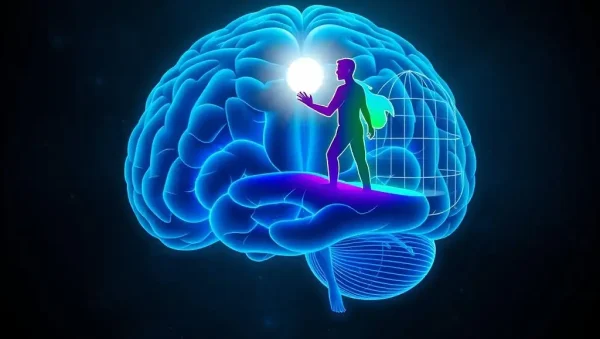
The philosophy of mind addresses questions like: What is consciousness? How do mental states relate to brain states? These questions directly drive cognitive psychology and neuroscience. You will explore theories such as dualism (mind and body separate), physicalism (mind is brain activity), and functionalism (mind is defined by causal roles). This is essential for understanding debates on artificial intelligence—can machines be conscious?—and on mental disorders—are they purely biological or also socially constructed? By integrating philosophical logic with empirical findings, you learn to analyze assumptions behind brain imaging studies, memory models, and theories of emotion.
Furthermore, this subcategory introduces you to “the hard problem of consciousness” as articulated by David Chalmers, contrasting it with easier questions about neural correlates. You will see how psychologists approach this through altered states (meditation, psychedelics) and developmental studies. For example, how does an infant’s understanding of self emerge? This section gives you a robust framework to evaluate whether consciousness is an illusion or fundamental, and how that matters for treating disorders like schizophrenia or dissociative identity disorder. It also prepares you for interdisciplinary careers where philosophy and neurotech converge.
Frequently Asked Questions
Is psychology just applied philosophy?
No, psychology is a distinct empirical science, but many of its foundational questions stem from philosophy. While philosophy relies on reasoning and argumentation, psychology uses experiments, observations, and statistical analyses to test hypotheses. However, philosophical assumptions—about mind, causality, and ethics—shape how psychologists design studies and interpret results. So psychology is not just applied philosophy, but it remains philosophically informed at its core.
Why do psychology students need to study philosophy?
Studying philosophy improves critical thinking, conceptual clarity, and ethical reasoning—all vital for psychological practice and research. It helps students question assumptions in theories, understand historical origins of terms like “psyche,” and navigate complex debates on topics like consciousness and free will. Moreover, philosophy teaches you to argue logically and consider multiple perspectives, which is invaluable for interpreting conflicting research findings and communicating with clients.
Can philosophical therapy help with mental health issues?
Yes, philosophical therapy—such as Stoic counseling, existential therapy, or logotherapy—can be effective for issues like anxiety, meaninglessness, and life transitions. These approaches focus on changing interpretations, finding purpose, and accepting what is beyond control. While not a replacement for evidence-based treatments like CBT or medication, they offer complementary tools. Many modern therapists integrate philosophical exercises to help clients build resilience and reflective self-awareness.
What is the difference between a psychologist and a philosopher in practice?
A psychologist typically holds a doctoral degree in psychology, is licensed to diagnose and treat mental disorders, and uses standardized assessments and therapeutic techniques. A philosopher often works in academia, focusing on abstract reasoning and argumentation, and is not licensed to provide clinical care. However, philosophers may contribute to psychology through theoretical research, bioethics committees, or teaching critical thinking. Some people become “philosophical counselors” but are not typically recognized as healthcare providers.
How does the free will debate affect criminal justice systems?
The free will debate influences legal concepts like criminal responsibility, sentencing, and rehabilitation. If behavior is determined by genes and environment, then punishment may be seen as less justifiable, favoring treatment over retribution. If free will is accepted, then individual blame and moral desert remain central. Many legal systems adopt a pragmatic middle ground—acknowledging mitigating factors (e.g., mental illness) while assuming general capacity to choose. Psychological research on impulsivity and bias informs these legal adjustments.