Health Psychology: Bridging Mind and Body for Better Well-Being
Health psychology is a dynamic subcategory within the Applications of Psychology that explores how biological, psychological, and social factors influence health, illness, and recovery. On Psychology Basics, this section is designed for students and general readers seeking to understand why our thoughts, emotions, and behaviors directly impact our physical health. From stress management to chronic illness coping, health psychology offers practical, evidence-based insights for everyday life.
🧠 The Biopsychosocial Model of Health
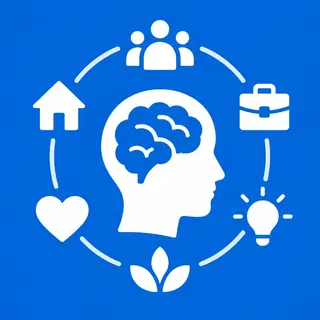
At the core of health psychology lies the biopsychosocial model, which argues that health is not merely the absence of disease but a complex interaction between biological predispositions (genetics, pathogens), psychological states (stress, beliefs, coping strategies), and social factors (support networks, socioeconomic status). Unlike the traditional biomedical model that focuses only on physical symptoms, this approach helps explain why two people exposed to the same virus may have vastly different outcomes.
Readers will learn how this model is applied in clinical settings, public health campaigns, and personal wellness routines. For example, understanding that chronic loneliness can elevate cortisol levels—a hormonal stress response—shows how social isolation is not just an emotional issue but a physiological risk factor. This foundational concept equips you to critically evaluate health advice and design more holistic interventions.
😰 Stress, Coping, and Its Physical Toll
Stress is a central topic in health psychology because it directly activates the hypothalamic-pituitary-adrenal (HPA) axis, releasing cortisol that, over time, can impair immune function, increase blood pressure, and accelerate aging. This subcategory explains the difference between acute stress (which can be motivating) and chronic stress (which is harmful), and introduces key coping strategies such as problem-focused coping, emotion-focused coping, and mindfulness-based stress reduction.
You’ll explore real-world applications like workplace burnout interventions and academic stress management. The section emphasizes that stress resilience is not a fixed trait but a skill that can be developed through cognitive reappraisal—changing how you interpret stressors. Expect practical tips like progressive muscle relaxation and guided imagery, supported by research from institutions like the American Psychological Association.
🛡️ Health Behaviors and Change Models
Why do people smoke, overeat, or skip exercise despite knowing the risks? Health psychology answers this through behavior change models such as the Health Belief Model, the Theory of Planned Behavior, and the Transtheoretical Model (stages of change). These frameworks help predict and modify behaviors by addressing perceived susceptibility, benefits, barriers, and self-efficacy.
This section breaks down each model with simple examples—like why a teenager might start vaping despite warnings, or why an adult finally commits to quitting after a health scare. You’ll also learn about motivational interviewing and nudge techniques used in public health. By the end, you’ll be able to design personal behavior-change plans based on scientific principles rather than willpower alone.
🩺 Chronic Illness and Patient Adherence
Living with diabetes, heart disease, or autoimmune disorders involves more than medical treatment—it requires daily psychological management. Health psychology examines patient adherence, emotional adjustment to diagnosis, and the social stigma that often accompanies chronic conditions. This subcategory addresses topics like illness perceptions, self-management skills, and the role of family caregivers.
Readers will discover why patients often skip medications or therapies, and how clinicians use communication and shared decision-making to improve compliance. Real case studies show how cognitive-behavioral interventions, such as acceptance and commitment therapy (ACT), reduce depression in chronic pain patients. This content is invaluable for future healthcare professionals, patients, or anyone supporting a loved one.
⚖️ Health Disparities and Social Determinants
Health psychology also confronts uncomfortable truths: your zip code often determines your lifespan more than your genes. This section examines social determinants of health—poverty, education, racism, environmental exposures—that create disparities in illness rates and access to care. Psychologists work at community and policy levels to design culturally sensitive interventions that reduce these gaps.
You’ll explore how socioeconomic stress alters epigenetic expression, and why minority communities face higher rates of hypertension not just due to genetics but chronic discrimination-related stress. Practical strategies include community health worker programs and telehealth outreach. Understanding these systemic factors empowers you to advocate for equitable health policies and recognize obstacles beyond individual responsibility.
❤️ Psychological Interventions in Medical Settings
Hospitals and clinics increasingly integrate psychologists into care teams. This subcategory highlights health psychology interventions such as pre-surgical preparation, pain management, addiction counseling, and cardiac rehabilitation. Techniques like biofeedback, imagery, and relaxation training are used to reduce anxiety, lower pain perception, and speed recovery.
Readers will see how brief psychological screens help detect depression in cancer patients or PTSD after myocardial infarction. Case examples show how psychologists collaborate with doctors to address “psychosomatic” symptoms, which are real physical symptoms worsened by psychological factors. This integrative approach is evidence-based—studies show that psychological care reduces hospital readmission rates and overall healthcare costs.
Frequently Asked Questions
What is the main goal of health psychology?
The primary goal is to understand how psychological, behavioral, and social factors influence physical health and illness. Health psychologists develop interventions to promote healthy behaviors, manage chronic conditions, and improve patient outcomes, aiming to prevent disease and enhance quality of life.
How is health psychology different from general psychology?
General psychology studies all mental processes and behaviors, while health psychology specifically focuses on the intersection of psychology with physical health, illness, and healthcare. It applies psychological principles to medical settings, disease prevention, and health promotion, making it more applied and medically oriented.
Can health psychology help with weight loss or smoking cessation?
Yes, absolutely. Health psychologists use behavior change models like the Transtheoretical Model and motivational interviewing to help individuals modify habits. They address underlying emotional triggers, build self-efficacy, and create structured plans that significantly improve long-term success compared to willpower alone.
Is health psychology only for people with serious illnesses?
No, health psychology is relevant for everyone. It helps healthy individuals adopt preventative lifestyles, manage daily stress, and improve sleep and nutrition. It also supports those with mild conditions, like occasional insomnia or work-related anxiety, teaching coping skills that prevent progression to serious chronic diseases.
What career can I pursue with a degree in health psychology?
You can become a clinical health psychologist, wellness coach, public health researcher, or behavioral specialist in hospitals. Other options include corporate wellness program manager, health policy analyst, or patient education coordinator. The skills are versatile, applicable in healthcare, corporate, and community settings.