Forensic Psychology in Civil Cases: Custody, Personal Injury, and More
😊 Explore the fascinating intersection of forensic psychology and civil cases. This article introduces the key roles of forensic psychologists in custody…
Read article
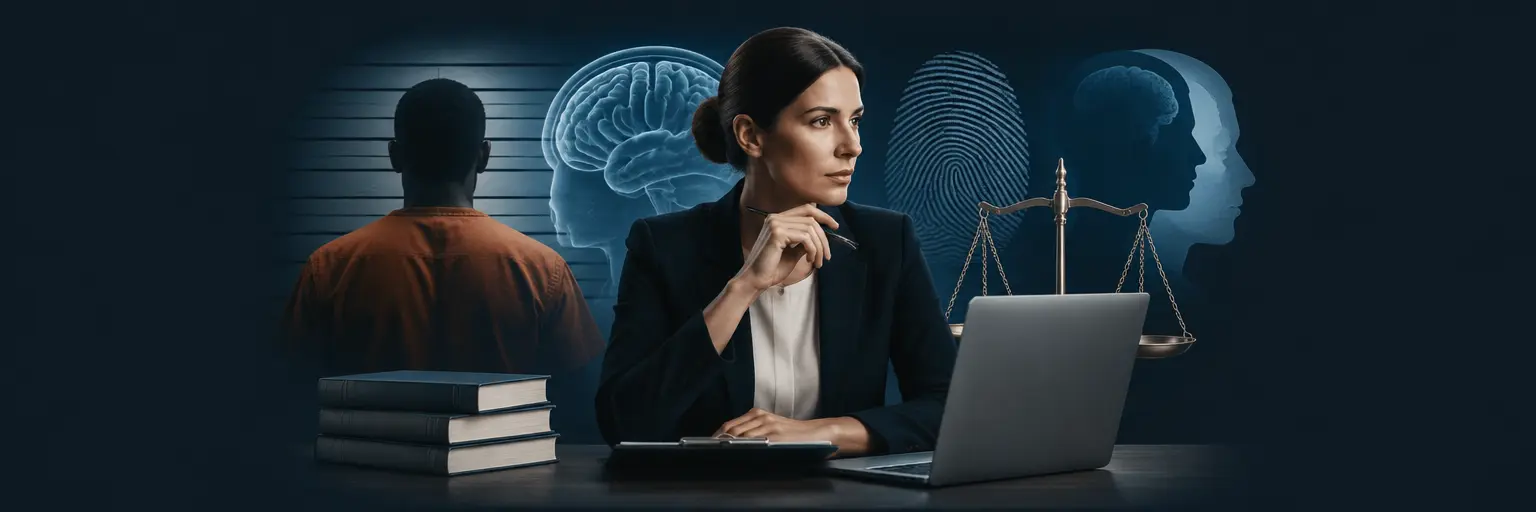
Forensic Psychology sits at the fascinating crossroads of human behavior and the legal system, applying psychological principles to understand criminal minds, improve courtroom procedures, and aid in rehabilitation. Whether you’re a student, true-crime enthusiast, or budding professional, this field reveals how mental processes shape eyewitness memory, jury decisions, and offender profiling. Dive into the science behind credibility assessment, risk evaluation, and the ethics of expert testimony—all crucial for making justice more accurate and humane. Unlock the secrets of why people commit crimes and how psychology helps reweave the fabric of society.

😊 Explore the fascinating intersection of forensic psychology and civil cases. This article introduces the key roles of forensic psychologists in custody…
Read article
🤔 Delve into the fascinating world of the psychology of criminal behavior. This article explores key psychological theories applied in forensic settings,…
Read articleForensic psychology is the fascinating intersection of psychological science and the legal system. Within our "Applications of Psychology" category on Psychology Basics, this subcategory dives deep into how mental health professionals assist courts, law enforcement, and correctional facilities. You’ll learn how clinical insights help solve crimes, assess defendants, and support victims, making it a vital field for anyone curious about human behavior under pressure. Here, we break down complex theories into clear, practical knowledge for students and general readers alike.
Forensic psychologists wear many hats, from evaluators to consultants. They perform competency evaluations to determine if a defendant can stand trial, assess criminal responsibility, and provide expert testimony in court. Another key role involves risk assessment—predicting the likelihood of reoffending, which guides sentencing and parole decisions.
Beyond the courtroom, they work with law enforcement on criminal profiling and hostage negotiation, using psychological patterns to narrow suspect pools. In correctional settings, they design rehabilitation programs and treat inmates with mental health issues. Each role demands a blend of clinical training and legal knowledge, making this a uniquely challenging yet rewarding career path. Understanding these roles helps you see how psychology directly shapes justice outcomes.
To explain why people commit crimes, forensic psychology relies on several established theories. Social learning theory suggests that criminal behavior is modeled from observing others, especially in environments with violence or neglect. Cognitive theories focus on distorted thinking patterns, such as rationalizing harm or blaming victims.
Biological perspectives examine genetics, brain structure, and neurochemical imbalances that may predispose individuals to antisocial actions. Meanwhile, psychodynamic approaches explore unresolved childhood conflicts that manifest as aggression. By synthesizing these frameworks, forensic psychologists can better understand motives and craft targeted interventions. This theoretical foundation is essential for students analyzing case studies and for practitioners designing prevention strategies in schools and communities.
Popularized by TV shows, criminal profiling actually involves meticulous data analysis rather than intuition. Profilers use crime scene evidence, victimology, and behavioral patterns to create a suspect’s psychological and demographic profile. This helps prioritize leads and connect seemingly unrelated offenses.
Techniques like geographic profiling map crime locations to deduce an offender’s likely residence or workplace. Forensic psychologists also analyze modus operandi—the method of committing a crime—and signature behaviors, which are unique rituals satisfying emotional needs. While profiling is not an exact science, it narrows investigations significantly. Our content walks you through real-world applications, clarifying misconceptions about “mind reading” and emphasizing systematic, evidence-based approaches that law enforcement trusts.
Eyewitness testimony is often the most persuasive yet least reliable evidence. Forensic psychology investigates how memory is reconstructive, influenced by stress, weapon focus, and post-event information. Misleading questions during interviews can implant false memories, leading to wrongful convictions.
Research on cognitive interviews has developed methods to enhance accurate recall—like letting witnesses narrate freely and then probing with open-ended cues. Additionally, lineup procedures now use sequential presentation and blind administrators to reduce suggestibility. Understanding these findings helps jurors weigh testimony critically and helps police improve investigative protocols. We break down landmark studies, such as the innocence project exonerations, to illustrate why reforming memory-based evidence is a central concern in forensic psychology today.
Prisons and jails house a disproportionate number of individuals with severe mental illness. Forensic psychologists assess inmates upon intake, managing crises like suicide risk and self-harm. They provide individual and group therapy for conditions such as PTSD, depression, and substance use disorders, which are rampant among incarcerated populations.
Counseling also targets specific challenges like anger management and sexual offending. Moreover, forensic psychologists work with parole boards, preparing psychological reports that inform release decisions. They implement violence prevention programs, teaching conflict resolution and emotional regulation. This section highlights ethical dilemmas—like balancing privacy with institutional security—and emphasizes the goal of rehabilitation over punishment. You’ll gain insight into how psychological care can reduce recidivism and foster safer communities.
Ethics are paramount in forensic psychology, where dual roles can create conflicts. Practitioners must avoid acting as both therapist and evaluator for the same person, as roles require different confidentiality rules. They adhere to standards from the APA and specialty boards, ensuring assessments are valid, reliable, and culturally sensitive.
Legal standards like the Daubert criterion require that expert testimony be scientifically grounded. Forensic psychologists must therefore stay updated on empirical research, avoiding overreach beyond their expertise. They also navigate sensitive issues like child custody evaluations, where their recommendations have life-altering consequences. We discuss real-world ethical breaches and how they shaped current guidelines, offering a cautionary yet constructive perspective for aspiring professionals. This knowledge is crucial for maintaining public trust in the legal-psychological interface.
Forensic psychology focuses on the individual mind—assessing mental state, competency, and treatment—while criminology examines broader societal patterns, such as crime rates, social causes, and policy. Forensic psychologists work directly with offenders, victims, and the legal system, whereas criminologists often study statistics and sociological theories. They complement each other, but the former is clinical and applied, the latter is research-focused.
No, they work in many settings. Beyond courtrooms, forensic psychologists work in police departments, prisons, mental health hospitals, rehabilitation centers, and private practices. They also consult for law firms, correctional training programs, and victim advocacy groups. Some focus on research or teaching. Each environment applies different skills, but all involve applying psychological principles to legal or justice-related issues.
They use structured interviews, validated psychometric tests (like the MMPI-2), and behavioral observation. They look for inconsistencies between reported symptoms and observed behavior, exaggerated responses, and atypical symptom patterns. They also compare performance on symptom validity tests, which check if the person is overclaiming or underperforming. No single method is perfect, so clinicians triangulate multiple data points to reach a defensible conclusion.
Generally, no—this creates a dual role conflict. Ethical guidelines prohibit serving as both evaluator and therapist for the same person in legal contexts. Treatment requires confidentiality and trust, while evaluation demands objectivity and transparency, often sharing findings with courts. Mixing roles can compromise impartiality and harm the client. Forensic psychologists refer therapy back to other clinicians, maintaining clear boundaries.
Typically, a doctoral degree (PhD or PsyD) in clinical or counseling psychology with a specialization in forensic psychology is required. Afterward, candidates complete supervised clinical hours, a postdoctoral fellowship, and pass state licensure exams. Some pursue board certification in forensic psychology, which requires additional practice and examination. Strong backgrounds in research, law, and ethics are essential throughout this rigorous journey.