Psychotherapy: Exploring Talk Therapy and Its Benefits
😊 Uncover the power of talk therapy! This article explores how psychotherapy, particularly its benefits for students, provides a safe space to…
Read article
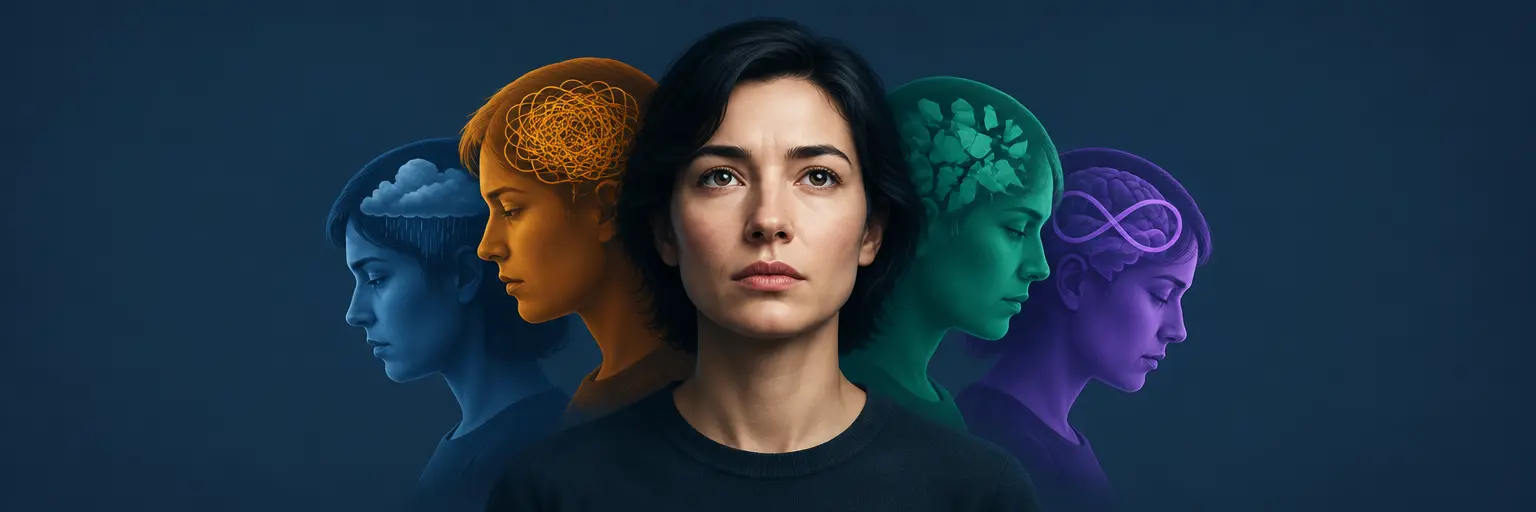
Understanding Psychological Disorders is your gateway to decoding the complexities of mental health—why behaviors, thoughts, and emotions sometimes veer off course, and what that means for daily life. This subcategory demystifies diagnostic criteria, symptom patterns, and the biopsychosocial factors behind conditions like anxiety, depression, and schizophrenia. By exploring evidence-based frameworks and real-world examples, you’ll move beyond stigma to grasp how disorders are identified, classified, and treated. Perfect for students and curious minds, this content bridges clinical insights with accessible explanations, empowering you to recognize warning signs, understand prevalence, and appreciate the resilience of those affected. Dive in to build a solid foundation in mental health literacy—essential for psychology coursework, professional practice, or simply making sense of human experience.

😊 Uncover the power of talk therapy! This article explores how psychotherapy, particularly its benefits for students, provides a safe space to…
Read article
🤔 This beginner's guide demystifies common psychological disorders, offering clear explanations of various mental health challenges and their impact on individuals. Gaining…
Read article
😊 Explore the fascinating world of mind-body connection psychology! Discover how thoughts, emotions, and behaviors directly impact physical health, and vice versa,…
Read articleWelcome to Understanding Psychological Disorders, a core subcategory within Abnormal Psychology on Psychology Basics. Here, we demystify the clinical definitions, classification systems, and lived realities of mental health conditions. Whether you're a student starting your psychology journey or a curious reader seeking reliable knowledge, this section provides a clear, research-backed roadmap. We cover the Diagnostic and Statistical Manual (DSM-5-TR), the biopsychosocial model, and the crucial difference between “normal” distress and diagnosable illness. Expect plain-language explanations, real-world examples, and an emphasis on reducing stigma while increasing empathy.
In this section, we unpack the four D’s: Deviance, Distress, Dysfunction, and Danger. A behavior or experience is considered a disorder when it significantly deviates from cultural norms, causes personal suffering, impairs daily functioning (work, relationships, self-care), or poses a risk to self or others (though danger is not always present). We also discuss the harmful dysfunction framework, which balances biological evolution with social expectations. You’ll learn why occasional sadness or anxiety is not a disorder, but persistent, overwhelming patterns that disrupt life may be. This foundational clarity helps you critically evaluate media portrayals and personal experiences without jumping to conclusions.
Here, we explain the two major diagnostic manuals: the DSM-5-TR (used widely in the US) and the ICD-11 (international standard). You’ll see how they categorize disorders by symptoms, duration, and severity, and why such standardization matters for treatment and research. We walk you through a hypothetical diagnostic criteria set (e.g., Major Depressive Disorder) to show how clinicians make decisions. Importantly, we also address critiques—such as overdiagnosis, cultural bias, and the medicalization of normal grief—so you get a balanced view. This equips you to read a diagnosis with both clinical awareness and critical thinking.
Disorders rarely have a single cause. This section dives into the biopsychosocial model, which integrates genetic predispositions (biology), cognitive and emotional patterns (psychology), and environmental stressors like poverty, trauma, or family dynamics (social). For example, schizophrenia has a strong genetic component, but a supportive environment can delay or soften symptoms. Conversely, a person with no genetic risk can develop PTSD after severe trauma. You’ll learn how this model guides holistic treatment—therapy changes thought patterns, medication balances neurochemistry, and social support builds resilience. This prevents simplistic “chemical imbalance” myths and promotes a compassionate, multi-level understanding.
We provide a concise tour of major disorder families. Anxiety disorders (generalized anxiety, panic, phobias) involve excessive fear and avoidance. Mood disorders (depression, bipolar) affect emotional states and energy. Psychotic disorders (schizophrenia) involve hallucinations, delusions, and disorganized thinking. Personality disorders (borderline, antisocial) are enduring patterns of inner experience and behavior that deviate from cultural expectations. For each family, we give 2-3 hallmark symptoms and a common misconception (e.g., “depression is just sadness” or “schizophrenia means split personality”). This overview helps you recognize clinical pictures without diagnosing yourself or others—it’s about literacy, not labeling.
Understanding disorders is incomplete without addressing stigma—the prejudice and discrimination that prevent millions from seeking help. In this section, we explore how cultural narratives shape what is considered “abnormal” (e.g., hearing voices may be spiritual in some cultures) and how Western diagnostic systems sometimes impose their own biases. We discuss labeling theory and the danger of self-fulfilling prophecies. Most importantly, we offer practical advice: how to talk about mental health responsibly, when to recommend professional help, and why early intervention dramatically improves outcomes. You’ll leave this section feeling empowered to support yourself and others with knowledge and kindness.
Finally, we explore what happens after a diagnosis. Evidence-based treatments include cognitive-behavioral therapy (CBT), dialectical behavior therapy (DBT), medications like SSRIs, and newer options like transcranial magnetic stimulation. But recovery is more than symptom relief—it’s about rebuilding identity, relationships, and purpose. We introduce the recovery model, which emphasizes hope, personal agency, and peer support over the older “cure or chronic disability” binary. You’ll also learn about protective factors (exercise, social connection, sleep) that build resilience against relapse. This section shifts the narrative from pathology to possibility, showing that many people lead fulfilling lives with management and support.
A mental health condition is a broad term for any emotional, psychological, or behavioral state that causes dysfunction or distress, ranging from mild stress to diagnosable illness. A psychological disorder specifically meets established criteria (e.g., DSM-5-TR) for duration, severity, and impairment. All disorders are conditions, but not all conditions are disorders—like a week of low mood vs. clinical depression lasting months.
Some disorders, like specific phobias or acute stress reactions, can be fully resolved with treatment. Chronic conditions such as bipolar disorder or schizophrenia often require ongoing management, but symptoms can become minimal. The recovery model emphasizes that many people achieve remission and live fulfilling lives, though “cure” may not mean the disorder never returns—it means you have tools to manage it effectively.
Yes, self-diagnosis often leads to misinterpretation, anxiety, or missing a more accurate condition. Many symptoms overlap (e.g., fatigue in depression vs. thyroid issues). Online tools lack clinical nuance, cultural context, and professional guidance. Instead, use them as a prompt to seek a proper evaluation from a licensed mental health professional who can provide an accurate diagnosis and treatment plan.
Culture shapes both symptom expression and diagnostic norms. For example, certain anxiety symptoms may present as physical complaints (e.g., “fire in the chest”) in some cultures. Also, behaviors like hearing ancestors’ voices may be culturally accepted, not disordered. Ethically, clinicians are trained to use cultural formulation interviews to avoid misdiagnosis, making cross-cultural competence essential in abnormal psychology.
Stigma discourages people from seeking help, causes social isolation, and worsens outcomes. When we label someone as “crazy” or “attention-seeking,” they internalize shame and delay treatment. Reducing stigma involves using person-first language (e.g., “person with schizophrenia”), normalizing mental health discussions, and recognizing that disorders are medical conditions, not character flaws. This shifts society toward empathy and early intervention.