
The Role of Probability in Psychological Research: Understanding the Likelihood of Events


Welcome to Psychology Basics, your gateway to understanding the fascinating world of human behavior. Are you curious about how psychologists unravel the complexities of the mind? Then delve into the critical role of probability in psychological research. Our exploration of "Psychology research probability understanding" will illuminate how researchers navigate uncertainty and draw meaningful conclusions from seemingly random events. Discover how understanding probability is key to interpreting research findings and making sense of the human experience – read on to unlock these insights!
- Introduction to Probability in Psychology Research
- Understanding Statistical Significance and Probability
- Probability Distributions and Their Application
- Probability and Different Research Designs
- Practical Applications of Probability in Psychology Research
- Conclusion: The Essential Role of Probability in Understanding Psychological Data
-
Frequently Asked Questions
- What is the importance of probability in psychological research?
- How is probability used to determine statistical significance?
- Can you give an example of probability in a psychological experiment?
- What are some common probability distributions used in psychology?
- How does understanding probability improve my interpretation of psychological research findings?
- Final Reflection: Embracing Uncertainty in Psychological Research
- Unlock the Power of Probability in Your Research Journey!
Introduction to Probability in Psychology Research
Understanding the role of probability in psychological research is crucial for interpreting findings and drawing valid conclusions. This article provides a foundational understanding of probability's application within psychological studies, equipping readers with the knowledge to critically evaluate research and appreciate the inherent uncertainties involved in studying human behavior. We will explore the definition of probability in a psychological context, delve into the reasons why probability is paramount in psychological research, and examine various types of probability relevant to the field.
This exploration will enhance your comprehension of research methodologies and empower you to interpret psychological data with greater confidence and nuance. Mastering probability concepts is key to navigating the complexities of psychological research and understanding the limitations and strengths of various study designs.
This is essential for anyone aiming to interpret psychological findings accurately and contribute meaningfully to the field. The application of probability in psychology is not merely a statistical exercise; it's a fundamental aspect of understanding the very nature of human behavior and its variability.
Defining Probability in a Psychological Context
Probability, in its simplest form, represents the likelihood of an event occurring. However, within the context of psychology research, this definition takes on a more nuanced meaning. We're not just dealing with simple coin flips; we're considering the probability of complex human behaviors, attitudes, and cognitive processes. For example, what is the probability that a participant in a memory experiment will correctly recall a specific word after a certain delay?
Or, what is the probability that an individual diagnosed with depression will respond positively to a specific treatment? These questions highlight the need for precise and reliable methods of quantifying uncertainty in psychological phenomena. We employ statistical tools to estimate these probabilities, acknowledging the inherent variability and complexity of human behavior.
Understanding this variability is central to interpreting research results and avoiding overgeneralizations. The field of psychology often deals with populations, and probability helps us bridge the gap between observations from a sample and making inferences about the larger population. A strong grasp of probability allows researchers to determine the confidence they can place in their findings and to understand the margins of error inherent in their conclusions.
Why Probability Matters in Psychological Studies
Probability is not just a mathematical formality in psychological research; it's the cornerstone of drawing meaningful conclusions. Without a solid understanding of probability, researchers risk misinterpreting data and making incorrect inferences. Consider the following:
- Statistical Significance: Probability helps determine if observed results are statistically significant, meaning they are unlikely to have occurred by chance alone. This is crucial for differentiating true effects from random fluctuations. A low probability of observing a result by chance suggests a stronger effect.
- Hypothesis Testing: Probability plays a central role in hypothesis testing, allowing researchers to evaluate the plausibility of their hypotheses given the obtained data. Statistical tests, based on probability principles, enable researchers to determine whether to reject or fail to reject their null hypothesis.
- Confidence Intervals: Probability is crucial in constructing confidence intervals, which provide a range of plausible values for a population parameter based on sample data. These intervals quantify the uncertainty associated with estimates, providing a more realistic picture of the findings.
- Effect Sizes: While statistical significance indicates the likelihood of an effect, effect size measures the magnitude of that effect. Probability helps in interpreting effect sizes, providing context for understanding the practical implications of research findings. A statistically significant effect might be small and lack practical relevance, a point often missed without a clear understanding of probability.
Types of Probability Relevant to Psychology Research
Several types of probability are particularly relevant to psychological research:
- Classical Probability: This approach relies on equal likelihood, often used in situations where all possible outcomes have an equal chance of occurring. For example, the probability of flipping heads on a fair coin is 0.5. While straightforward, this type of probability is less frequently directly applicable to the complexities of human behavior.
- Empirical Probability: This is based on observed frequencies. For example, the probability of a participant scoring above a certain point on a test can be calculated based on the actual scores observed in a sample. This is a more practical approach for many psychological studies.
- Subjective Probability: This reflects an individual's belief or judgment about the likelihood of an event. While less precise than other types, it's relevant in areas like clinical psychology where predicting a patient's response to treatment may involve subjective judgment based on experience and observation. It's important to acknowledge the limitations of subjective probability in formal research.
- Conditional Probability: This involves the probability of an event occurring given that another event has already occurred. For instance, what is the probability of a student succeeding in a course given that they attended all lectures? Conditional probability is vital for understanding relationships between variables in psychological research.
The understanding of these different types of probability is crucial for selecting appropriate statistical methods and for accurately interpreting the results of psychological research. The correct application of probability principles is essential for ensuring the validity and reliability of research findings within the field of psychology.
Understanding Statistical Significance and Probability
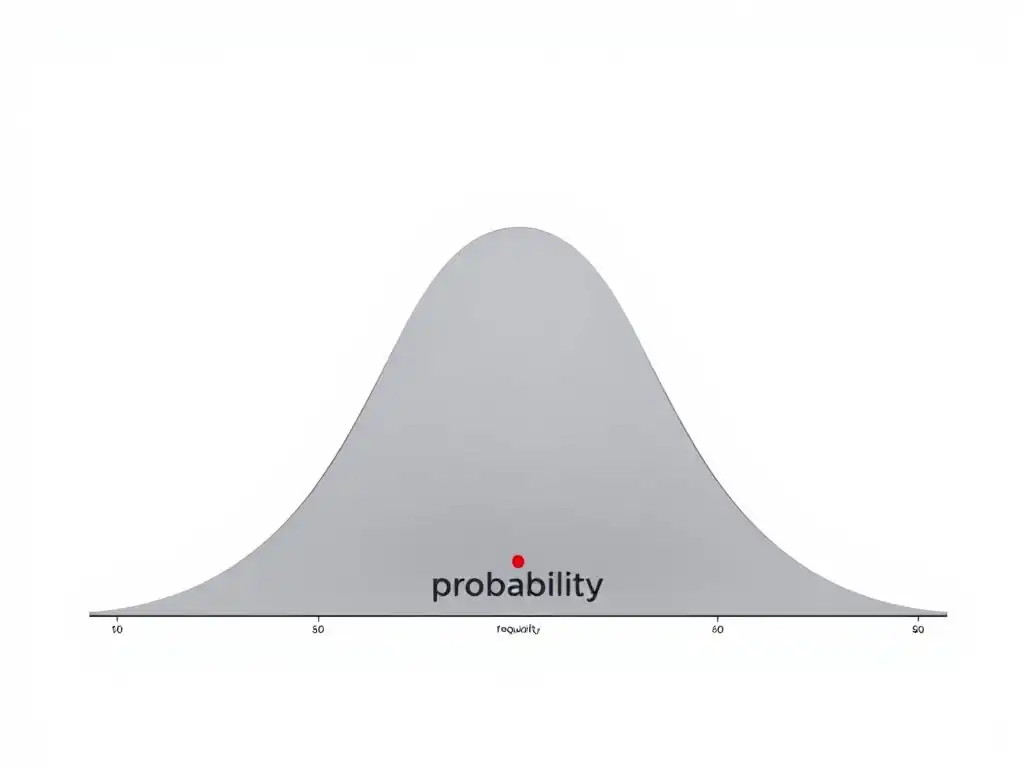
This section delves into the crucial role of probability in interpreting the results of psychological research. Understanding probability allows researchers to move beyond simply observing relationships between variables and instead assess the likelihood that observed effects are genuine and not due to chance. This is paramount for drawing valid conclusions and advancing our knowledge of human behavior.
The field relies heavily on inferential statistics, which uses probability to make inferences about populations based on sample data. Without a grasp of probability, interpreting research findings in psychology becomes exceedingly difficult, if not impossible. Successfully navigating the complexities of psychological research necessitates a solid understanding of statistical significance and its associated concepts.
The Concept of Statistical Significance
Statistical significance is a cornerstone of psychological research. It quantifies the probability that an observed effect (e.g., a correlation between two variables, a difference between group means) occurred by random chance alone. In simpler terms, it helps us determine if the results we see are real or simply the product of random variation.
A statistically significant result indicates that the observed effect is unlikely to have arisen purely by chance. Researchers typically set a significance level (alpha), often at 0.05 (5%). This means there's a less than 5% probability that the observed results are due to chance.
If the calculated probability (p-value) is less than alpha, the result is deemed statistically significant. This doesn't guarantee the effect is important or meaningful, only that it's unlikely to be due to random error. For instance, a statistically significant finding might show a tiny, yet reliable, difference between two groups, a finding that might lack practical significance despite its statistical significance.
P-values and their Interpretation in Psychological Research
The p-value is the probability of obtaining results as extreme as, or more extreme than, the observed results, assuming the null hypothesis is true. The null hypothesis typically states there is no effect or no relationship between the variables being studied. A small p-value (e.g., p < 0.05) suggests strong evidence against the null hypothesis, leading researchers to reject it in favor of the alternative hypothesis (which proposes an effect or relationship).
However, it’s crucial to understand that a p-value doesn't measure the size or importance of an effect, only its likelihood of occurring by chance. A p-value of 0.01 indicates stronger evidence against the null hypothesis than a p-value of 0.04, but neither inherently speaks to the practical implications of the findings. Misinterpretations of p-values are common, leading to flawed conclusions.
It's essential to consider the p-value in conjunction with effect size and other relevant factors when interpreting research findings. For example, a small p-value coupled with a small effect size might indicate a statistically significant but practically insignificant result.
Type I and Type II Errors in Hypothesis Testing
Hypothesis testing, a core component of psychological research, involves the risk of making two types of errors: Type I and Type II errors. A Type I error (false positive) occurs when we reject the null hypothesis when it is actually true. This means we conclude there's an effect when there isn't one. The probability of committing a Type I error is equal to the significance level (alpha), usually set at 0.05. A Type II error (false negative) occurs when we fail to reject the null hypothesis when it is actually false.
This means we conclude there's no effect when there actually is one. The probability of committing a Type II error is denoted by β (beta), and its complement (1-β) is the power of the test. Power represents the probability of correctly rejecting a false null hypothesis. Researchers strive to minimize both Type I and Type II errors, but there's often a trade-off between them.
Lowering the significance level (alpha) reduces the chance of a Type I error but increases the chance of a Type II error. Adequate sample size and careful experimental design are crucial in minimizing both types of errors and ensuring the reliability and validity of psychological research findings. Understanding these errors is vital for a nuanced interpretation of research in psychology. The balance between minimizing these errors often involves considering the cost of each type of error within the specific context of the research question.
Confidence Intervals and Probability in Psychological Data Analysis
Confidence intervals are crucial in psychological research because they provide a range of values within which the true population parameter is likely to fall. Understanding confidence intervals requires grasping the concept of probability. A 95% confidence interval, for example, doesn't mean there's a 95% chance the true population mean lies within that specific interval.
Instead, it means that if we were to repeatedly sample from the population and calculate a confidence interval for each sample, 95% of those intervals would contain the true population mean. This is a subtle but important distinction. The probability is associated with the process of constructing the intervals, not with a single interval's certainty.
The width of the confidence interval reflects the precision of our estimate. A narrower interval indicates a more precise estimate, while a wider interval suggests more uncertainty. Several factors influence the width of the confidence interval, including sample size and the variability within the sample. Larger sample sizes generally lead to narrower intervals, as they provide more information about the population. Conversely, high variability within the sample data results in wider intervals, reflecting greater uncertainty in our estimate.
Consider a study investigating the effectiveness of a new therapy for anxiety. Researchers might calculate a 95% confidence interval for the mean reduction in anxiety scores after treatment. Let's say the interval is (5.2, 7.8). This means that based on their sample data, they are 95% confident that the true mean reduction in anxiety scores in the population lies somewhere between 5.2 and 7.8 points.
This interval provides a more nuanced understanding of the treatment's effectiveness than simply reporting a point estimate of the mean reduction. It acknowledges the inherent uncertainty associated with estimating population parameters from sample data. The interpretation of this confidence interval directly relates to the probability of capturing the true population parameter within repeated sampling. A smaller confidence interval demonstrates greater precision and a higher level of certainty in the findings, while a larger interval reflects greater uncertainty and suggests the need for further research, potentially with a larger sample size.
The careful calculation and interpretation of confidence intervals are therefore essential for drawing valid conclusions in psychological research. It’s critical to remember that the probability is inherently linked to the method and the repeated sampling aspect, not a single event.
Probability Distributions and Their Application
This section delves into the crucial role of probability distributions in psychological research. Understanding these distributions is fundamental to interpreting data and drawing meaningful conclusions. We'll explore several key distributions and how they are applied in analyzing psychological phenomena, focusing on how probability informs our understanding of psychological research. The accurate application of these statistical tools is key to advancing our knowledge in the field of psychology research probability understanding.
Normal Distribution and its Importance in Psychology
The normal distribution, also known as the Gaussian distribution, is arguably the most important probability distribution in statistics, and by extension, psychology. Its bell-shaped curve represents the probability of a continuous random variable falling within a particular range of values. Many psychological attributes, such as IQ scores, reaction times, and personality traits, often approximate a normal distribution. This is due to the central limit theorem, which states that the average of many independent random variables tends toward a normal distribution, regardless of the original distributions of those variables.
This characteristic makes the normal distribution invaluable for several reasons:
- Hypothesis testing: Many statistical tests, such as t-tests and ANOVA, assume that the data follows a normal distribution or can be transformed to approximate one. Deviation from normality can affect the validity of these tests.
- Estimating probabilities: Knowing the mean and standard deviation of a normally distributed variable allows us to estimate the probability of observing a particular score or range of scores. For example, we can determine the probability of a randomly selected individual scoring above a certain IQ threshold.
- Standardization: The normal distribution allows for standardization using z-scores, enabling comparisons across different variables with different scales. This is crucial when comparing results from diverse studies or using different measurement tools.
For instance, consider a study investigating the effectiveness of a new therapy for anxiety. If anxiety scores are assumed to be normally distributed, researchers can use the normal distribution to determine the probability of observing a reduction in anxiety scores after treatment that is unlikely to have occurred by chance.
Binomial and Poisson Distributions in Psychological Research
While the normal distribution is widely used, other probability distributions are essential for analyzing specific types of psychological data. Two notable examples are the binomial and Poisson distributions.
The binomial distribution models the probability of getting a certain number of successes in a fixed number of independent trials, each with the same probability of success. In psychology, this might be used to analyze the number of correct responses on a multiple-choice test, or the number of participants who show a specific behavioral response. For example, if a researcher is studying the effectiveness of a persuasive message, they might use a binomial distribution to model the probability of participants agreeing with the message. The probability of agreement (success) on each trial remains constant, and trials are independent.
The Poisson distribution, on the other hand, models the probability of a certain number of events occurring in a fixed interval of time or space when the events are rare and independent. In psychology, this could be applied to the analysis of the number of aggressive behaviors observed in a classroom over a specific period, or the number of errors made during a cognitive task.
Imagine a study looking at the frequency of panic attacks experienced by individuals with panic disorder. If the attacks are relatively infrequent and independent events, a Poisson distribution might be used to model the distribution of attack frequency among participants.
Applying Probability Distributions to Analyze Psychological Data
Choosing the appropriate probability distribution is crucial for accurate data analysis. The selection depends on the nature of the data and the research question. Incorrectly applying a distribution can lead to misleading conclusions. For example, applying a normal distribution to data with a highly skewed distribution will yield inaccurate results.
Several steps are involved in applying probability distributions:
- Data exploration: Initially, analyze the data to understand its characteristics, including its shape, central tendency, and variability. Visualizations like histograms and box plots are helpful.
- Distribution selection: Based on the data exploration, select the most appropriate probability distribution. Consider the type of variable (continuous or discrete), the shape of the distribution, and the research question.
- Parameter estimation: Estimate the parameters of the chosen distribution (e.g., mean and standard deviation for the normal distribution).
- Hypothesis testing and confidence intervals: Use the chosen distribution to conduct hypothesis tests and calculate confidence intervals to draw inferences about the population based on the sample data. This helps determine the likelihood of observed results occurring by chance.
Accurate application of probability distributions is paramount in ensuring the reliability and validity of psychological research findings. Understanding these distributions enhances the ability to interpret data, draw sound conclusions, and contribute meaningfully to the field of psychology research probability understanding. Further research into specific applications within various psychological subfields will deepen this understanding.
Probability and Different Research Designs

Understanding the role of probability in psychological research is crucial for interpreting results and drawing valid conclusions. Probability, in its simplest form, quantifies the likelihood of an event occurring. This section will explore how probability manifests in various research designs, highlighting its importance in ensuring the rigor and reliability of psychological studies. The effective application of probability helps researchers to understand the meaning of their findings within the context of chance and error. This is key to navigating the complexities inherent in the "Psychology research probability understanding".
Probability in Experimental Research Designs
Experimental research designs, known for their ability to establish cause-and-effect relationships, heavily rely on probability. The manipulation of independent variables and the measurement of dependent variables are subject to random variation. Probability helps us determine whether observed differences between groups are likely due to the manipulation (the treatment) or simply due to chance.
For example, consider a study investigating the effect of a new therapy on anxiety levels. Researchers might randomly assign participants to either a treatment group (receiving the new therapy) or a control group (receiving a placebo). After the intervention, they measure anxiety levels in both groups.
Statistical tests, rooted in probability theory, are then used to determine the probability of observing the obtained difference in anxiety levels if the therapy had no effect. A low probability (typically below a pre-determined threshold, like 0.05 or 5%) suggests that the observed difference is unlikely due to chance alone, supporting the conclusion that the therapy is effective. This process directly addresses the core concept of "Psychology research probability understanding."
The p-value, a cornerstone of hypothesis testing in experimental research, represents the probability of obtaining results as extreme as, or more extreme than, those observed, assuming the null hypothesis (no effect) is true. A low p-value strengthens the evidence against the null hypothesis. However, it's crucial to remember that a p-value doesn't directly indicate the magnitude of the effect, only the probability of observing the data under the null hypothesis. Misinterpretations of p-values are frequent sources of error in "Psychology research probability understanding."
Probability in Correlational Research Designs
Correlational research explores relationships between variables without manipulating them. While it doesn't establish causality, it provides valuable insights into associations. Probability plays a critical role in evaluating the strength and significance of correlations.
Correlation coefficients, such as Pearson's r, quantify the strength and direction of linear relationships. However, a correlation coefficient alone doesn't tell us if the observed relationship is meaningful or simply due to random chance. Statistical tests based on probability theory are used to assess the significance of the correlation. This involves determining the probability of observing a correlation as strong as, or stronger than, the one found, if there were no true relationship between the variables.
For example, a researcher might investigate the correlation between hours of sleep and academic performance. A significant positive correlation would suggest that increased sleep is associated with better academic performance. However, this doesn't prove that more sleep causes better grades; other factors could be involved. The probability analysis helps us understand the likelihood of this correlation arising by chance, contributing to a deeper "Psychology research probability understanding."
Understanding the limitations of correlational research in light of probability is essential. Even a statistically significant correlation doesn't imply causation. Spurious correlations, where an apparent relationship is due to chance or a confounding variable, highlight the importance of careful interpretation and consideration of alternative explanations. The proper use of probability helps mitigate these risks.
Probability and Qualitative Research Methods
While often associated with quantitative methods, probability's influence extends to qualitative research. Although not directly used in statistical hypothesis testing, probability informs the sampling strategies and the interpretation of findings in qualitative studies.
In qualitative research, researchers aim to gain in-depth understanding of experiences, perspectives, and meanings. Probability is relevant in the sampling process. For instance, in purposive sampling, researchers select participants based on specific characteristics relevant to the research question. While not random sampling, the probability of selecting a particular participant is still influenced by the selection criteria. The sample, while carefully chosen, still reflects a subset of the broader population. Understanding the limitations imposed by this non-random selection is crucial for generalizing findings.
Furthermore, even in qualitative data analysis, where themes and patterns are identified, probability plays a subtle but important role. The emergence of particular themes might be considered more or less probable depending on the data collected and the research question. A strong, well-supported theme is less likely to have emerged by chance than a weak, sparsely supported one.
This nuanced understanding contributes to the overall "Psychology research probability understanding". This indirect influence of probability ensures rigor and strengthens the credibility of qualitative findings. Interpreting the prevalence and salience of specific themes within the data collected requires a careful consideration of probability, albeit implicitly.
Practical Applications of Probability in Psychology Research

This section delves into the practical applications of probability within the field of psychology research. Understanding probability isn't just a theoretical exercise; it's fundamental to designing robust studies, interpreting results accurately, and drawing meaningful conclusions. Without a solid grasp of probability, researchers risk misinterpreting data, overstating findings, and ultimately hindering the advancement of psychological knowledge. The psychology research probability understanding is crucial for navigating the complexities of scientific inquiry.
Interpreting Research Findings Using Probability
Probability plays a critical role in interpreting the results of statistical tests commonly used in psychology research. For instance, the p-value, a ubiquitous concept in research papers, represents the probability of obtaining results as extreme as, or more extreme than, those observed, assuming the null hypothesis is true. A low p-value (typically below 0.05) leads researchers to reject the null hypothesis and conclude that there's a statistically significant effect.
However, it's crucial to understand that a p-value doesn't indicate the probability of the null hypothesis being true. It only reflects the probability of the data given the null hypothesis. This subtle but crucial distinction is often misunderstood. Furthermore, relying solely on p-values can be misleading, especially with large sample sizes where even small effects can yield statistically significant results that lack practical significance. Researchers should always consider the effect size alongside the p-value for a more comprehensive interpretation of their findings. A nuanced understanding of probability is essential to avoid misinterpreting these statistical measures and drawing unwarranted conclusions.
Generalizability of Research Results and Probability
The generalizability of research findings, that is, the extent to which results from a specific study can be applied to a broader population, is intrinsically linked to probability. Sampling methods, which are crucial for ensuring a representative sample, rely heavily on probabilistic principles. Random sampling, for example, aims to give every member of the population an equal probability of being selected, thus increasing the likelihood that the sample accurately reflects the characteristics of the population.
However, even with random sampling, there's always a degree of sampling error – the difference between the sample and the population. Probability theory allows researchers to estimate the magnitude of this error and quantify the uncertainty associated with generalizing findings to the larger population. Confidence intervals, for example, utilize probability distributions to provide a range of values within which the true population parameter is likely to fall, acknowledging the inherent uncertainty in generalizing from a sample to a population.
A deeper understanding of probability enhances the researcher's ability to evaluate the generalizability of their findings and make more informed conclusions about the broader implications of their work. This is a vital aspect of psychology research probability understanding.
Probability and the Replication Crisis in Psychology
The replication crisis in psychology, characterized by the difficulty in replicating many published findings, highlights the importance of a robust understanding of probability. Many studies with statistically significant results might be due to chance alone, particularly if the studies had low statistical power or employed questionable research practices.
Statistical power, the probability of correctly rejecting a false null hypothesis, is directly related to sample size, effect size, and the significance level. Studies with low power are more likely to produce false negatives (failing to detect a real effect), leading to underestimation of effects. Conversely, studies with high power are more likely to accurately detect real effects.
Furthermore, questionable research practices, such as p-hacking (selectively reporting results that meet a pre-defined p-value threshold), can inflate the probability of obtaining false positive results. A thorough understanding of probability and statistical power is essential to design studies that are less susceptible to these issues and contribute to a more reliable and reproducible body of psychological research. Ultimately, a strong grasp of psychology research probability understanding is essential to address the ongoing challenges of reproducibility in the field.
Making Predictions and Inferences Using Probability
Understanding probability is crucial for making accurate predictions and drawing valid inferences in psychological research. Researchers rarely observe the entire population of interest; instead, they work with samples. Probability helps bridge the gap between sample findings and generalizations about the broader population. For example, imagine a researcher studying the effectiveness of a new therapy for anxiety. They might randomly assign participants to either a treatment group or a control group. After the treatment period, they measure anxiety levels in both groups.
The observed differences between the groups are unlikely to be perfectly identical to the true difference in the population. Probability allows researchers to quantify the likelihood that the observed difference is due to the treatment itself, rather than just random chance. This is where concepts like p-values and confidence intervals become essential. A low p-value (typically below 0.05) suggests that the observed result is unlikely to have occurred by chance alone, increasing our confidence in the treatment's effectiveness. Similarly, a confidence interval provides a range of values within which the true population difference likely falls. A narrower confidence interval indicates greater precision in our estimate.
Therefore, probability allows researchers to move beyond simply observing differences and to make informed statements about the likelihood of those differences reflecting real effects. This process is fundamental to establishing the reliability and validity of research findings. Without a solid grasp of probability, interpreting research data accurately and making sound conclusions would be extremely challenging. The use of statistical tests, which are fundamentally based on probability, is essential for determining the significance of research findings and the validity of conclusions drawn from the research. This is especially important in clinical psychology and other areas where decisions with real-world consequences are based on research findings.
Probability is not merely a statistical tool; it is a fundamental concept that shapes the way psychological research is conducted and interpreted, allowing for more accurate predictions and inferences about human behavior and cognition.
Conclusion: The Essential Role of Probability in Understanding Psychological Data
Understanding probability is not merely a mathematical exercise for psychologists; it's the bedrock upon which much of our research and interpretation are built. Without a firm grasp of probability, the conclusions drawn from studies, no matter how meticulously designed, risk being misleading or inaccurate. This section will reiterate the critical role probability plays in interpreting psychological data and suggest avenues for further exploration.
Mastering probability allows researchers to move beyond simple observation and delve into the realm of statistical significance, enabling a more nuanced and robust understanding of psychological phenomena. The ability to assess the likelihood of obtaining results by chance versus a true effect is paramount in drawing valid conclusions and advancing the field of psychology.
This is crucial for ensuring the reliability and validity of psychological research, ultimately contributing to the wider understanding of human behavior. The application of probability allows for more accurate predictions and the development of more effective interventions.
Strengthening Research through Probability Understanding
The application of probability significantly strengthens psychological research in several ways. First, it allows researchers to determine the statistical significance of their findings. Statistical significance helps determine whether observed effects are likely due to chance or reflect a genuine relationship between variables.
For example, imagine a study investigating the effectiveness of a new therapy for anxiety. If the results show a reduction in anxiety symptoms in the treatment group compared to a control group, probability calculations determine whether this difference is statistically significant, meaning it's unlikely to have occurred by chance. Without such calculations, the findings would be inconclusive and potentially misleading.
Second, probability helps researchers to understand the limitations of their studies. No study is perfect, and there's always a degree of uncertainty associated with any research findings. Probability allows researchers to quantify this uncertainty and express the confidence they have in their results. This is often represented by confidence intervals or p-values. A smaller p-value (typically below 0.05) suggests stronger evidence against the null hypothesis (the hypothesis that there is no effect).
Finally, probability plays a vital role in designing effective research studies. Researchers use probability to determine the appropriate sample size for their studies, ensuring they have enough participants to detect a meaningful effect if one exists. Understanding power analysis, which uses probability, helps researchers avoid studies that are underpowered (too few participants to detect a real effect) or overpowered (too many participants, leading to potentially unnecessary expense and resources). Proper sample size calculations, informed by probability, are therefore crucial for the efficiency and effectiveness of psychological research.
Further Exploration of Probability in Psychological Research
The applications of probability in psychological research extend far beyond the basics covered here. More advanced concepts such as Bayesian statistics offer alternative frameworks for interpreting data, considering prior knowledge and updating beliefs in light of new evidence. Bayesian methods are particularly useful in situations with limited data or when incorporating prior research findings.
Another area for further exploration involves the use of probability in modeling complex psychological phenomena. For example, probabilistic models are increasingly used to understand decision-making processes, learning, and cognitive development. These models utilize probabilities to represent the likelihood of different cognitive processes or outcomes. Understanding these models requires a deeper dive into probability distributions and their applications. Furthermore, understanding different types of probability distributions (e.g., normal distribution, binomial distribution) is essential for interpreting statistical analyses commonly used in psychology research.
Finally, a deeper understanding of probability helps in critically evaluating published research. By understanding the methods used to analyze data and interpret results, readers can better assess the validity and reliability of psychological findings. This critical evaluation is essential for responsible consumption and application of psychological knowledge. The ability to discern sound research from flawed research based on a strong grasp of probability is a critical skill for any student or professional in the field. Understanding probability isn't just about numbers; it's about informed decision-making in the pursuit of knowledge about the human mind.
Frequently Asked Questions
What is the importance of probability in psychological research?
Probability is crucial in psychological research because it helps researchers understand and interpret the likelihood of obtaining certain results. It allows for the evaluation of statistical significance and the drawing of valid conclusions.
How is probability used to determine statistical significance?
Researchers use probability to determine if observed results are likely due to chance or represent a true effect. Statistical significance is determined by calculating the probability of obtaining the results if there were no real effect (the p-value). A low p-value suggests a statistically significant result.
Can you give an example of probability in a psychological experiment?
Imagine a study testing a new therapy. Probability helps determine if the observed improvement in the treatment group is significantly greater than what would be expected by random chance alone, indicating the therapy's effectiveness.
What are some common probability distributions used in psychology?
Normal distribution, t-distribution, and chi-square distribution are frequently used to analyze data and test hypotheses in psychological research. The choice depends on the type of data and the research question.
How does understanding probability improve my interpretation of psychological research findings?
Understanding probability allows you to critically evaluate research claims. You can assess the strength of evidence, differentiate between statistically significant and meaningful effects, and avoid misinterpreting chance occurrences as genuine findings.
Final Reflection: Embracing Uncertainty in Psychological Research
The understanding of probability isn't merely a statistical tool; it's the bedrock upon which reliable psychological research is built. Without a rigorous grasp of likelihood and chance, our interpretations of human behavior risk being skewed, leading to inaccurate conclusions and potentially harmful interventions. The implications of this are far-reaching, impacting everything from clinical diagnoses to public policy decisions based on psychological findings.
The pervasive influence of probability on our understanding of the human mind is undeniable. From the subtle biases in our decision-making to the complex interplay of genetic and environmental factors shaping personality, chance plays a significant role. The greatest triumphs of science have often come from the unexpected, from the serendipitous discovery that arises from a willingness to embrace uncertainty.
This quote highlights the importance of acknowledging the probabilistic nature of our research and the potential for groundbreaking discoveries when we do so. Understanding this allows us to move beyond simplistic cause-and-effect narratives and embrace the nuanced complexities of human behavior.
Now, consider your own experiences. How often have you made assumptions based on limited data, only to be surprised by subsequent events? This article has hopefully equipped you with a deeper appreciation for the role of probability in interpreting research findings and, by extension, in navigating the uncertainties of life. I encourage you to critically evaluate the information you encounter, questioning the underlying assumptions and considering the range of possible outcomes before drawing conclusions. Let this newfound understanding guide your own critical thinking, fostering a more nuanced and informed perspective on the fascinating world of human psychology.
Unlock the Power of Probability in Your Research Journey!
Thank you for exploring the fascinating world of probability and its impact on psychological research! Understanding the likelihood of events provides valuable insights that enhance both your academic work and your everyday decisions. Now, let's put that knowledge to practical use!
Here are some actionable steps you can take:
- Integrate Probability into Your Research: Incorporate probability concepts into your next research project. Consider how understanding chance can refine your hypotheses and strengthen your conclusions.
- Engage with the Research Community: Connect with other researchers and students interested in probability and its applications in psychology. Collaborate, share your insights, and learn from others' experiences.
- Explore the Broader Implications of Probability: Investigate how probability influences areas such as decision-making, cognitive biases, and everyday life. You might be surprised by the connections you discover.
How will you apply probability to your research or daily decision-making? Share your thoughts below!