
The Alternative Hypothesis: What Researchers Aim to Support


Welcome to Psychology Basics, your gateway to understanding the fascinating world of human behavior. Are you curious about the scientific process behind psychological research? Then delve into our exploration of alternative hypothesis psychology explained. Discover how researchers formulate and test these crucial hypotheses, unraveling the mysteries of the mind and revealing the power of scientific inquiry. Uncover the complexities behind this key concept and unlock a deeper understanding of psychological research methods – your journey starts now!
- Understanding the Alternative Hypothesis in Psychology
- Differentiating the Alternative Hypothesis from the Null Hypothesis
- Formulating a Strong Alternative Hypothesis
- Testing the Alternative Hypothesis: Statistical Significance
- Examples of Alternative Hypotheses in Psychological Research
- The Importance of the Alternative Hypothesis in Psychology Research
-
Frequently Asked Questions
- What is an alternative hypothesis in psychology?
- How does the alternative hypothesis relate to the null hypothesis?
- What are some examples of alternative hypotheses in psychological research?
- Why is it important to formulate a strong alternative hypothesis?
- How is the alternative hypothesis tested in psychological studies?
- Final Reflection: Embracing the Unexpected in Psychological Inquiry
- Embrace Your Curiosity: Dive Deeper into Research!
Understanding the Alternative Hypothesis in Psychology
Psychology, as a scientific discipline, relies heavily on research to understand human behavior and mental processes. A cornerstone of this research is the formulation and testing of hypotheses. While the null hypothesis often takes center stage in introductory statistics, the alternative hypothesis is equally crucial, representing the researcher's genuine expectation about the relationship between variables.
This article will delve into the alternative hypothesis, explaining its definition, role in research design, and the different types that researchers employ. Understanding the alternative hypothesis is key to comprehending the logic and process of psychological research, and this explanation aims to clarify its importance for students and anyone interested in learning the basics of research methods in psychology.
We'll explore how researchers use this concept to move beyond simply disproving a null hypothesis and actively support a specific theory or prediction about human behavior. This exploration will help you understand the core of scientific inquiry within the field of psychology and provide a solid foundation for further study.
Defining the Alternative Hypothesis
The alternative hypothesis (often denoted as H 1 or H a ) is a statement that proposes a specific relationship between variables. Unlike the null hypothesis, which states there is no effect or relationship, the alternative hypothesis posits that there is a significant effect or relationship. It's the researcher's prediction, based on existing theory, prior research, or observations, about what they expect to find. For example, a researcher might hypothesize that "students who receive tutoring will score significantly higher on a standardized test than students who do not receive tutoring." This statement represents the alternative hypothesis. It's crucial to note that the alternative hypothesis is not simply the opposite of the null hypothesis; it's a specific, testable statement about the expected outcome of the research. The formulation of a strong and well-defined alternative hypothesis is essential for designing a robust and meaningful study. A poorly defined alternative hypothesis can lead to ambiguous results and hinder the interpretation of the findings. Therefore, precision and clarity are paramount when formulating this crucial element of the research process.
The Role of the Alternative Hypothesis in Research Design
The alternative hypothesis plays a pivotal role in guiding the entire research process. It dictates the type of statistical test to be used, the sample size needed, and the interpretation of the results. The choice of statistical test depends directly on the nature of the alternative hypothesis – whether it's directional (predicting the direction of the effect) or non-directional (simply predicting an effect without specifying the direction).
Furthermore, the power of the statistical test, the probability of correctly rejecting a false null hypothesis, is influenced by the strength of the alternative hypothesis. A stronger, more precisely formulated alternative hypothesis, backed by prior evidence, will generally lead to a more powerful test, increasing the chance of detecting a real effect if one exists.
In essence, the alternative hypothesis acts as a roadmap, guiding researchers through each step of the investigation, from the initial conceptualization to the final interpretation of the data. It's the driving force behind the entire research endeavor, providing a clear direction and focus for the study.
Types of Alternative Hypotheses: Directional vs. Non-directional
Alternative hypotheses can be categorized into two main types: directional and non-directional. A directional hypothesis specifies the direction of the expected effect. For example, "Participants who meditate daily will show significantly lower levels of anxiety than participants who do not meditate" is a directional alternative hypothesis. It predicts not only that there will be a difference but also that the difference will be in a specific direction (lower anxiety levels for meditators).
A non-directional hypothesis, on the other hand, simply predicts that there will be a difference between groups or variables, without specifying the direction of that difference. An example would be: "There will be a significant difference in anxiety levels between participants who meditate daily and those who do not." The choice between a directional and non-directional hypothesis depends on the existing literature and the researcher's prior knowledge. If there's strong evidence supporting a specific direction of the effect, a directional hypothesis is appropriate.
Otherwise, a non-directional hypothesis is more conservative and allows for the possibility of an effect in either direction. The selection of the appropriate type of alternative hypothesis significantly impacts the statistical analysis and the interpretation of the results. Choosing the wrong type can lead to inaccurate conclusions and misinterpretations of the research findings.
Differentiating the Alternative Hypothesis from the Null Hypothesis
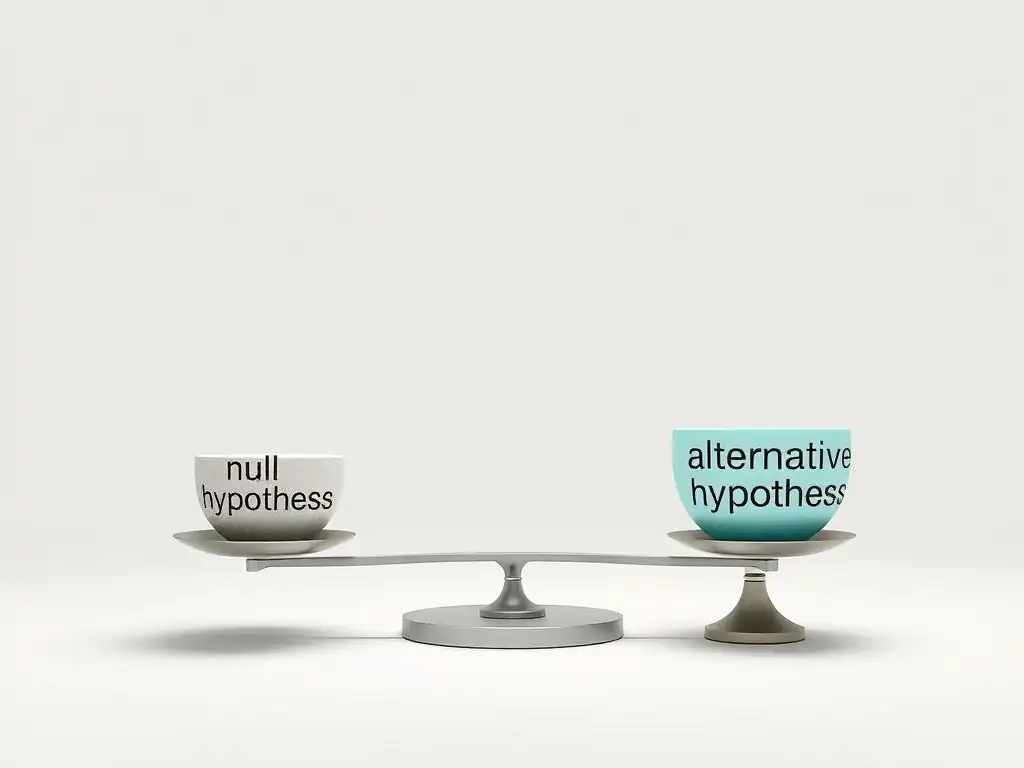
The alternative hypothesis, often denoted as H 1 or H a , is the cornerstone of any scientific investigation. It's the statement researchers actively seek to support with their data. Understanding its nuances is crucial for grasping the scientific method. This section focuses on clarifying the alternative hypothesis and differentiating it from its counterpart, the null hypothesis. We'll explore how these two hypotheses work together to drive the research process. This deep dive will help clarify the concept of "alternative hypothesis psychology explained."
The Null Hypothesis
The null hypothesis (H 0 ) proposes that there is no significant relationship between the variables being studied. It's a statement of no effect, no difference, or no association. For example, in a study examining the effect of a new drug on blood pressure, the null hypothesis might be: "There is no significant difference in blood pressure between the group receiving the new drug and the control group receiving a placebo." The null hypothesis serves as a baseline against which the alternative hypothesis is tested. Rejecting the null hypothesis provides evidence in favor of the alternative hypothesis. Failing to reject the null hypothesis doesn't necessarily mean it's true; it simply means there isn't enough evidence to reject it at the chosen significance level.
Contrasting the Alternative and Null Hypotheses
The key difference lies in their assertions: the null hypothesis claims no effect, while the alternative hypothesis proposes a specific effect. They are mutually exclusive; if one is true, the other must be false. Consider a study investigating the relationship between sleep deprivation and cognitive performance.
| Hypothesis Type | Statement Example | Implication |
|---|---|---|
| Null (H 0 ) | There is no significant relationship between sleep deprivation and cognitive performance. | No difference in cognitive performance between sleep-deprived and well-rested groups. |
| Alternative (H 1 ) | Sleep deprivation significantly impairs cognitive performance. | Sleep-deprived individuals will perform significantly worse on cognitive tasks. |
The alternative hypothesis can be directional (specifying the direction of the effect – e.g., "Sleep deprivation reduces cognitive performance") or non-directional (simply stating that there is an effect – e.g., "Sleep deprivation affects cognitive performance"). The choice depends on the researcher's prior knowledge and expectations. The directional hypothesis allows for a more powerful statistical test if the direction of the effect is correctly predicted.
The Importance of Both Hypotheses in Research
Both the null and alternative hypotheses are essential components of the scientific method. The null hypothesis provides a starting point, a benchmark against which to measure the results. The alternative hypothesis guides the research, outlining the anticipated outcome and the specific effect the researchers are interested in observing. The process of testing these hypotheses using statistical analysis allows researchers to draw meaningful conclusions based on empirical evidence.
Without both, the research process lacks a clear framework and objective criteria for evaluating the findings. The rigorous testing of these hypotheses is the essence of how "alternative hypothesis psychology explained" becomes a practical understanding within the field. The careful construction and testing of these hypotheses are vital for ensuring the validity and reliability of psychological research. This process helps to advance our understanding of human behavior and mental processes.
Formulating a Strong Alternative Hypothesis
This section delves into the crucial process of crafting a robust alternative hypothesis, a cornerstone of any impactful psychological research study. Understanding how to formulate a strong alternative hypothesis is paramount for ensuring the validity and reliability of your research findings. We'll explore the key steps involved, highlighting common pitfalls to avoid. Mastering this skill is essential for anyone seeking to understand and conduct psychological research effectively. The alternative hypothesis, often denoted as H 1 or H a , represents the researcher's prediction of a relationship between variables. It's the statement we aim to support with our data, contrasting with the null hypothesis (H 0 ), which proposes no effect or relationship.
Identifying the Research Question and Variables
Before even considering the wording of your alternative hypothesis, you must clearly define your research question. What specific aspect of human behavior or mental processes are you investigating? This question will directly guide the identification of your variables. For example, let's say your research question is: Does exposure to violent video games increase aggression in adolescents?
Here, we have two key variables:
- Independent Variable (IV): Exposure to violent video games (this is the variable you manipulate or observe). Operationalizing this requires specifying how exposure is measured (e.g., hours played per week, specific game titles played).
- Dependent Variable (DV): Aggression in adolescents (this is the variable you measure to see the effect of the IV). Again, precise operationalization is vital (e.g., score on an aggression questionnaire, observed aggressive behaviors in a controlled setting).
Clearly defining these variables, and how they will be measured, is the foundation upon which a strong alternative hypothesis is built. Failure to do so leads to vague and untestable hypotheses, rendering your research inconclusive. Remember, a well-defined research question and properly identified variables are prerequisites for a successful study. The clearer your variables, the easier it is to write a precise alternative hypothesis.
Writing a Clear and Testable Alternative Hypothesis
Once your variables are clearly defined, you can formulate your alternative hypothesis. It should be a concise statement predicting a specific relationship between your IV and DV. Returning to our example, a suitable alternative hypothesis could be: Adolescents exposed to violent video games will exhibit significantly higher levels of aggression than adolescents with minimal exposure.
Notice the following characteristics of a well-written alternative hypothesis:
- Directional: It specifies the direction of the predicted relationship (higher aggression with higher exposure). Not all alternative hypotheses need to be directional; sometimes a non-directional hypothesis (simply stating a difference exists) is appropriate.
- Testable: The hypothesis can be empirically tested using appropriate research methods. The variables are measurable and the relationship can be assessed statistically.
- Specific: The hypothesis avoids vague language and clearly states the expected outcome. It's precise and leaves no room for multiple interpretations.
A poorly written alternative hypothesis might be: "Violent video games affect aggression." This is too vague and doesn't specify the nature or direction of the effect. Always strive for clarity and precision in your hypothesis formulation. This precision is crucial for ensuring your research is rigorous and your findings are meaningful.
Avoiding Ambiguity and Ensuring Precision
Ambiguity is the enemy of a strong alternative hypothesis. To avoid it, ensure your hypothesis is free of vague terms and uses precise language. For instance, instead of "increased aggression," specify the type of aggression (physical, verbal, relational) and how it will be measured. Similarly, instead of "exposure," clarify the duration and intensity of exposure.
Consider these examples illustrating the importance of precision:
| Poorly Written Hypothesis | Improved Hypothesis |
|---|---|
| People who exercise are happier. | Individuals engaging in at least 30 minutes of moderate-intensity exercise daily report significantly higher levels of happiness on the Oxford Happiness Inventory than those who do not. |
| Studying improves test scores. | Students who dedicate at least 1 hour of focused study per subject per day achieve significantly higher scores on standardized tests than students who do not. |
| Therapy helps reduce anxiety. | Participants receiving Cognitive Behavioral Therapy (CBT) for 12 weeks will demonstrate a statistically significant reduction in anxiety scores (measured by the Beck Anxiety Inventory) compared to a control group receiving no treatment. |
The use of specific measures and quantifiable outcomes eliminates ambiguity and allows for objective evaluation of your hypothesis. Remember, the goal is to make your research easily replicable and your findings readily interpretable. A precisely worded alternative hypothesis is the first step toward achieving this goal. 🧐
Testing the Alternative Hypothesis: Statistical Significance
This section delves into the crucial process of testing the alternative hypothesis and determining its statistical significance. Successfully supporting an alternative hypothesis hinges on demonstrating that the observed results are unlikely to have occurred by chance alone. This involves employing appropriate statistical tests and correctly interpreting the resulting data. Understanding the nuances of statistical significance is paramount for accurate interpretation of research findings within psychology. We'll explore the practical application of these concepts, focusing on the critical role they play in drawing valid conclusions from psychological research.
Choosing Appropriate Statistical Tests
Selecting the right statistical test is a critical step in testing the alternative hypothesis. The choice depends heavily on several factors:
- The type of data: Is your data categorical (nominal or ordinal) or continuous (interval or ratio)? For example, if you're measuring participant anxiety levels on a continuous scale, a t-test or ANOVA might be appropriate. If you're analyzing the frequency of different responses in a survey (categorical data), a chi-square test would be more suitable.
- The number of groups: Are you comparing two groups, or more than two? A t-test is used for comparing two groups' means, while ANOVA (Analysis of Variance) is used for comparing the means of three or more groups.
- The type of hypothesis: Is your alternative hypothesis directional (one-tailed) or non-directional (two-tailed)? A one-tailed test is used when you predict the direction of the effect (e.g., Group A will score higher than Group B), while a two-tailed test is used when you only predict a difference without specifying the direction.
Consider this example: A researcher hypothesizes that exposure to violent video games increases aggression in adolescents (alternative hypothesis). They could use an independent samples t-test to compare the aggression scores (measured using a standardized aggression scale) of two groups: one exposed to violent video games and one exposed to non-violent games. The choice of a t-test is driven by the continuous nature of the aggression scores and the comparison of two groups.
Interpreting p-values and Statistical Significance
The outcome of a statistical test is often summarized by a p-value. The p-value represents the probability of obtaining the observed results (or more extreme results) if the null hypothesis were true. A small p-value (typically less than 0.05, often denoted as α) suggests that the observed results are unlikely to have occurred by chance alone, providing evidence against the null hypothesis and in favor of the alternative hypothesis. In such cases, the results are considered statistically significant.
However, it’s crucial to understand that statistical significance doesn't necessarily equate to practical significance. A statistically significant result might represent a small, practically insignificant effect, particularly with large sample sizes. Conversely, a non-significant result doesn't definitively prove the null hypothesis; it simply indicates that there isn't enough evidence to reject it. Careful consideration of the effect size alongside the p-value is essential for a comprehensive interpretation.
Understanding Type I and Type II Errors
When testing hypotheses, researchers risk committing two types of errors:
- Type I Error (False Positive): Rejecting the null hypothesis when it's actually true. This means concluding that there's a significant effect when there isn't one. The probability of committing a Type I error is denoted by α (alpha), and is typically set at 0.05.
- Type II Error (False Negative): Failing to reject the null hypothesis when it's actually false. This means concluding there's no significant effect when there actually is one. The probability of committing a Type II error is denoted by β (beta). The power of a statistical test (1-β) represents the probability of correctly rejecting a false null hypothesis.
The balance between Type I and Type II errors is a critical consideration in research design. Reducing the risk of one type of error often increases the risk of the other. A researcher must carefully weigh the consequences of each type of error when setting the significance level (α) and designing the study.
For example, in medical research, a Type II error (failing to detect a truly effective treatment) might be more serious than a Type I error (falsely claiming an ineffective treatment is effective). The acceptable level of risk for each error type varies depending on the specific research question and its implications.
Examples of Alternative Hypotheses in Psychological Research

This section provides concrete examples of alternative hypotheses within the field of psychology. Understanding how these hypotheses are formulated is crucial for grasping the core of psychological research. We'll explore diverse research scenarios, demonstrating the versatility and importance of the alternative hypothesis in testing psychological theories. Remember, the alternative hypothesis, often denoted as H 1 or H a , proposes a specific relationship or difference between variables that the researcher aims to support. It's the opposite of the null hypothesis (H 0 ), which states there's no relationship or difference. Mastering the distinction between these two is fundamental to understanding the logic of hypothesis testing in psychology.
Example 1: Investigating the Effect of Cognitive Behavioral Therapy (CBT) on Depression Severity
This study investigates the effectiveness of CBT in reducing depression severity. The null hypothesis (H 0 ) would state that CBT has no effect on depression scores. However, the alternative hypothesis (H1) would posit:
H1: Participants receiving Cognitive Behavioral Therapy will exhibit a significantly lower score on a standardized depression scale (e.g., the Beck Depression Inventory) compared to participants in a control group receiving no treatment.
This hypothesis is directional; it specifies the direction of the expected effect (lower depression scores in the CBT group). The research design would involve randomly assigning participants to either a CBT treatment group or a control group. Researchers would then compare the depression scores between the two groups after a set period of treatment.
Statistical analysis would determine if the difference in depression scores is statistically significant, providing evidence to either support or reject the alternative hypothesis. A non-significant result would lead to failing to reject the null hypothesis—not necessarily confirming that CBT is ineffective, but simply that the study lacked sufficient power to demonstrate an effect. Further research might be needed with a larger sample size or a more refined methodology.
Here, we explore the correlation between the level of social support an individual receives and their perceived stress levels. The null hypothesis (H 0 ) would suggest no relationship between these two variables. The alternative hypothesis (H1) might be formulated as:
H1: There is a significant negative correlation between the level of social support and perceived stress levels.
This hypothesis is also directional, predicting an inverse relationship: higher levels of social support are associated with lower levels of perceived stress. Researchers could collect data using validated questionnaires, measuring both social support and stress levels. Correlation analysis would then be used to determine the strength and direction of the relationship.
A significant negative correlation would support the alternative hypothesis, suggesting that stronger social support networks are associated with lower stress. It's crucial to remember that correlation does not imply causation; even if a significant negative correlation is found, it doesn't definitively prove that social support causes lower stress levels. Other factors could be involved.
Example 3: Comparing Individuals with Anxiety Disorders and a Control Group on Emotional Regulation
This study compares emotional regulation abilities between individuals diagnosed with anxiety disorders and a control group without such diagnoses. The null hypothesis (H 0 ) would state that there's no difference in emotional regulation between the two groups. The alternative hypothesis (H1) could be stated as:
H1: Individuals diagnosed with anxiety disorders will exhibit significantly lower scores on measures of emotional regulation compared to individuals in a control group.
This is a directional alternative hypothesis, predicting that the anxiety disorder group will score lower on emotional regulation tests. Researchers might utilize standardized emotional regulation scales (e.g., the Difficulties in Emotion Regulation Scale - DERS) to assess emotional regulation abilities in both groups. Statistical tests (e.g., t-test) would then compare the mean scores between the groups. A statistically significant difference would provide evidence supporting the alternative hypothesis, indicating potential impairments in emotional regulation among individuals with anxiety disorders.
However, it's essential to consider potential confounding variables and the limitations of the chosen assessment tools. The results should be interpreted cautiously, acknowledging the complexity of anxiety disorders and the multifaceted nature of emotional regulation. Further research might explore specific types of anxiety disorders or delve deeper into the mechanisms underlying emotional regulation difficulties.
The Importance of the Alternative Hypothesis in Psychology Research
The alternative hypothesis, often denoted as H 1 or H a , forms the cornerstone of any robust psychological research study. It's not simply a statement opposing the null hypothesis; it's a testable prediction derived from existing theory or observation, proposing a specific relationship between variables. Understanding its significance is crucial for interpreting research findings and advancing our comprehension of human behavior. Without a well-defined alternative hypothesis, research becomes directionless, hindering the ability to draw meaningful conclusions and contribute to the field's knowledge base. The strength of the alternative hypothesis lies in its specificity; it guides the research design, the choice of statistical tests, and ultimately, the interpretation of results. A poorly formulated alternative hypothesis can lead to flawed research and inaccurate conclusions, potentially misinforming both practitioners and the public. Therefore, crafting a strong and precise alternative hypothesis is paramount for rigorous psychological research. This section will delve deeper into the role of the alternative hypothesis within the scientific method and its contribution to theory development.
Alternative Hypothesis and the Scientific Method
The alternative hypothesis sits at the heart of the scientific method in psychology. It represents the researcher's prediction about the outcome of the study, a prediction that challenges the status quo (represented by the null hypothesis). The scientific method, in essence, involves formulating a testable hypothesis, designing a study to test it, collecting data, analyzing the data, and drawing conclusions based on the evidence. The alternative hypothesis provides the direction for this process.
Consider a study investigating the effect of cognitive behavioral therapy (CBT) on anxiety levels. The null hypothesis (H 0 ) might state: "There is no significant difference in anxiety levels between participants receiving CBT and a control group receiving no treatment." The corresponding alternative hypothesis (H 1 ) would be: "Participants receiving CBT will show significantly lower anxiety levels compared to the control group." This alternative hypothesis is directional; it specifies the direction of the expected effect. Non-directional alternative hypotheses also exist, stating simply that there will be a difference, without specifying the direction.
The choice between a directional and non-directional alternative hypothesis depends on the existing literature and the researcher's prior knowledge. A strong, well-supported alternative hypothesis, based on previous research and theoretical frameworks, increases the likelihood of a successful and impactful study. Conversely, a weak or poorly defined alternative hypothesis can lead to inconclusive results and a failure to contribute meaningfully to the field. The process of formulating the alternative hypothesis is iterative, often refined through pilot studies and consultations with experts.
Alternative Hypothesis and Theory Building
The alternative hypothesis isn't merely a tool for individual studies; it plays a crucial role in the broader process of theory building in psychology. Successful confirmation of alternative hypotheses strengthens existing theories or leads to the development of new ones. Repeatedly supported alternative hypotheses contribute to the cumulative body of knowledge within a particular area of psychology, leading to more refined and comprehensive understandings of human behavior.
For instance, numerous studies supporting the alternative hypothesis that "Exposure therapy reduces symptoms of phobias" have contributed significantly to our understanding of anxiety disorders and the efficacy of specific treatment approaches. This cumulative evidence strengthens the theoretical framework underlying exposure therapy and helps refine its application in clinical settings. Conversely, the failure to confirm an alternative hypothesis can lead to revisions or refinements of existing theories, prompting further research to investigate alternative explanations.
The process is cyclical: theory informs the alternative hypothesis, the study tests the hypothesis, and the results either support or challenge the theory, leading to further iterations. This iterative process is what drives progress in psychological research and contributes to a continually evolving understanding of the human mind and behavior. The alternative hypothesis, therefore, acts as a critical bridge between theory and empirical evidence, shaping our understanding of psychological phenomena.
Frequently Asked Questions
What is an alternative hypothesis in psychology?
An alternative hypothesis (H1) in psychology proposes a relationship between variables. It suggests that there's a meaningful effect or difference, contrary to the null hypothesis (H0). It's what researchers are trying to prove.
How does the alternative hypothesis relate to the null hypothesis?
The alternative and null hypotheses are opposing statements. The null hypothesis (H0) states there's no effect or relationship, while the alternative hypothesis (H1) proposes there is an effect or relationship. They are mutually exclusive.
What are some examples of alternative hypotheses in psychological research?
Examples include: "Exposure to violence increases aggression in children" or "Cognitive Behavioral Therapy is more effective than a control group in reducing anxiety." These posit a specific relationship between variables.
Why is it important to formulate a strong alternative hypothesis?
A well-defined alternative hypothesis guides the research design and data analysis. A clear statement ensures the study tests the intended relationship and allows for accurate interpretation of results.
How is the alternative hypothesis tested in psychological studies?
Researchers test the alternative hypothesis by collecting and analyzing data. Statistical tests determine the probability of observing the data if the null hypothesis were true. If this probability is low enough (typically below a set significance level), the null hypothesis is rejected in favor of the alternative hypothesis.
Final Reflection: Embracing the Unexpected in Psychological Inquiry
Understanding the alternative hypothesis is not merely an academic exercise; it's the very engine driving progress in psychological research. The ability to formulate a compelling alternative hypothesis, one that offers a plausible explanation beyond the null, is crucial for uncovering the complexities of the human mind and behavior. Without this crucial step, our understanding would remain stagnant, trapped within the confines of what we already believe to be true.
The exploration of alternative hypotheses has profoundly shaped our understanding of psychological phenomena, constantly challenging established norms and pushing the boundaries of knowledge. This process of questioning and refining our theories is what allows us to move beyond simplistic explanations and delve into the nuanced realities of human experience. The greatest discoveries are often made by those who dare to question the accepted wisdom.
This quote perfectly encapsulates the spirit of inquiry that drives the search for alternative explanations. The ongoing evolution of psychological theory, fueled by the constant testing and refinement of alternative hypotheses, is a testament to the power of this approach.
Consider the implications of this for your own life. Are you willing to challenge your own assumptions and explore alternative explanations for the behaviors you observe in yourself and others? Embrace the unexpected. By actively seeking out alternative hypotheses, not only in your academic pursuits but also in your daily interactions, you can cultivate a more nuanced understanding of the world around you and unlock new possibilities for personal growth and insight. The journey of discovery begins with a single question, a single alternative hypothesis waiting to be explored.
Embrace Your Curiosity: Dive Deeper into Research!
Thank you for exploring the fascinating world of alternative hypotheses with us! We hope you gained valuable insights and are now inspired to think critically about research and its impact. Let's put that knowledge into action!
- Share your insights: Discuss this concept with friends or colleagues, exploring how alternative hypotheses apply to your daily lives.
- Expand your knowledge: Deepen your understanding of psychological concepts by reading more research articles on the subject. Many excellent resources are available online.
- Design your own study: Identify a question that sparks your curiosity. Formulate a hypothesis and consider practical ways to test it. Even a small-scale experiment can be incredibly revealing.
What research question intrigues you most, and how do you anticipate it might shift your perspective?