
Wilhelm Wundt and the Dawn of Experimental Psychology: A Deep Dive

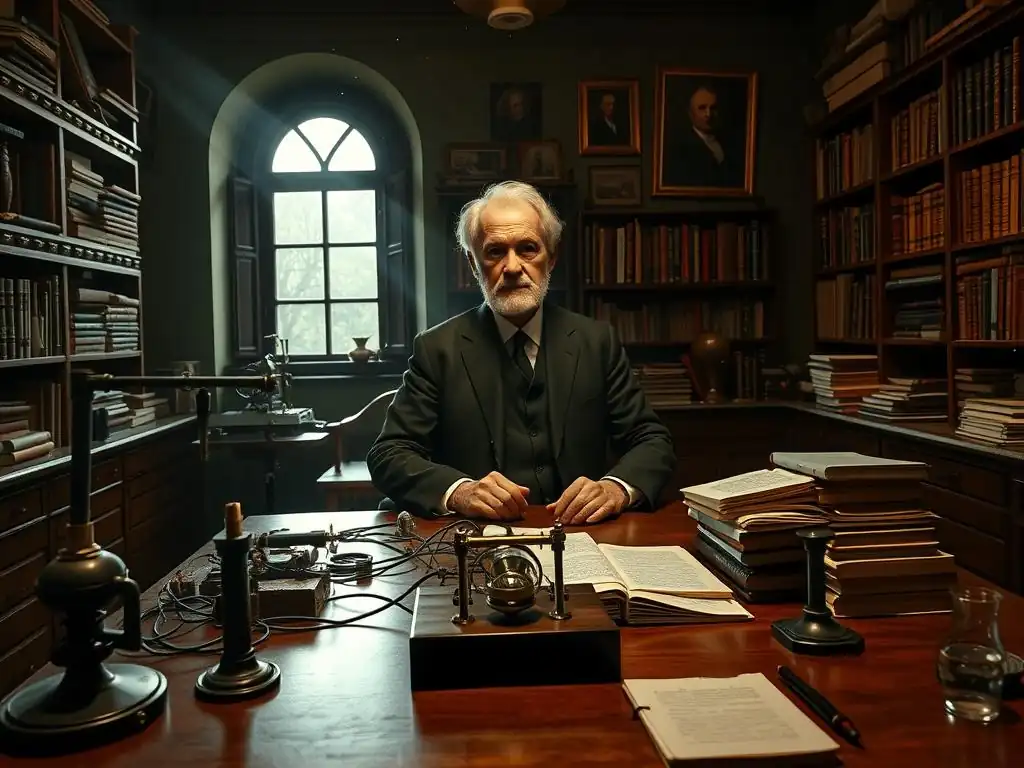
Welcome to Psychology Basics, your gateway to understanding the fascinating world of the human mind. Are you curious about the very origins of experimental psychology? Then prepare to be captivated by our deep dive into Wilhelm Wundt and his groundbreaking work. Discover how Wundt's revolutionary methods laid the foundation for the field we know today, and unlock the secrets behind his experimental psychology introduction. Explore the journey with us and unravel the mysteries of the mind!
- Wundt's Experimental Psychology: A Revolutionary Approach
- Wundt's Methods: Introspection and the Search for the Elements of Consciousness
- The Impact of Wundt's Experimental Psychology: Legacy and Influence
- Beyond Introspection: Exploring Other Aspects of Wundt's Work
- Understanding Wundt's Experimental Psychology Today: Relevance and Applications
-
Frequently Asked Questions
- What is experimental psychology, and how did Wilhelm Wundt contribute to its development?
- What was Wundt's primary method for studying consciousness?
- How did Wundt's work differ from earlier philosophical approaches to the study of the mind?
- What are some criticisms of Wundt's methods, particularly introspection?
- What is the lasting legacy of Wundt's contributions to psychology?
- Final Reflection: Echoes of Wundt: The Enduring Legacy of Experimental Psychology
- **Embrace the Legacy of Wundt and Transform Your Mindset! **
Wundt's Experimental Psychology: A Revolutionary Approach
Wilhelm Wundt, a name often synonymous with the birth of experimental psychology, stands as a pivotal figure in the history of the field. This article delves into Wundt's groundbreaking work, exploring the context of his contributions, the establishment of the first psychology laboratory, and the core principles that shaped his revolutionary approach to understanding the human mind. Understanding Wundt's contributions is crucial for grasping the foundational elements of modern psychology and appreciating the evolution of psychological thought from philosophical speculation to empirical investigation. We will explore how Wundt's experimental methods, particularly his focus on introspection and structuralism, laid the groundwork for future advancements and diverse schools of psychological thought that continue to shape our understanding of the human psyche today. This deep dive into Wundt's experimental psychology will provide a solid foundation for anyone seeking a comprehensive introduction to the subject, particularly those interested in the "Wundt experimental psychology introduction".
The Birth of a New Science: Contextualizing Wundt's Work in 19th-Century Germany
Wundt's emergence as a pioneering figure in experimental psychology wasn't a spontaneous event; it was deeply rooted in the intellectual and scientific climate of 19th-century Germany. This era witnessed significant advancements in various scientific disciplines, fostering a spirit of empirical inquiry and a growing interest in understanding the workings of the human mind. Philosophical debates regarding consciousness and the nature of experience provided fertile ground for Wundt's work.
The burgeoning field of physiology, with its emphasis on measurable and observable phenomena, also significantly influenced his approach. Wundt skillfully synthesized philosophical insights with physiological methods, paving the way for a more scientific and systematic study of psychology. He aimed to move psychology beyond mere philosophical speculation and establish it as a distinct scientific discipline, capable of generating verifiable knowledge about mental processes.
This ambition, coupled with his rigorous methodology, marked a watershed moment in the history of psychology. The intellectual ferment of the time, characterized by a move towards scientific positivism, provided the perfect conditions for Wundt's revolutionary ideas to flourish.
Wundt's Leipzig Laboratory: The First Psychology Lab and its Impact
In 1879, a momentous event took place that irrevocably altered the course of psychology: Wilhelm Wundt established the first experimental psychology laboratory at the University of Leipzig. This wasn't merely a symbolic gesture; it represented a concrete commitment to establishing psychology as an empirical science. The laboratory provided a controlled environment for conducting experiments, meticulously designed to investigate fundamental aspects of human consciousness.
Wundt and his students employed various techniques, meticulously documenting their findings and establishing standardized procedures. The Leipzig laboratory quickly became a hub for psychological research, attracting scholars from across the globe and fostering a new generation of researchers trained in Wundt's rigorous methodology. The establishment of this laboratory is widely considered the official birth of psychology as an independent scientific discipline, separating it from its philosophical and physiological roots.
Its impact extended far beyond Leipzig, influencing the development of psychological laboratories worldwide and shaping the future direction of the field. The impact of this laboratory continues to resonate in modern psychology, highlighting the enduring legacy of Wundt's vision.
Key Principles of Wundt's Experimental Psychology: Introspection and Structuralism
Wundt's experimental psychology was characterized by two central principles: introspection and structuralism. Introspection, a method involving the systematic examination of one's own thoughts and feelings, was a cornerstone of his approach. However, Wundt's introspection wasn't simply casual self-reflection; it was a highly structured and controlled process, requiring extensive training and demanding rigorous adherence to specific guidelines.
Participants were trained to report their immediate conscious experiences in response to carefully controlled stimuli. This meticulous approach aimed to identify the basic elements of consciousness, paving the way for a systematic analysis of mental processes. Wundt's structuralism, the attempt to analyze the structure of consciousness by breaking it down into its basic components—sensations, feelings, and images—was directly linked to the method of introspection.
By identifying these fundamental elements and their relationships, Wundt hoped to achieve a comprehensive understanding of the human mind. While introspection has faced criticisms regarding its subjectivity and limitations, its influence on the development of psychology is undeniable, paving the way for future approaches to studying consciousness and mental processes. The legacy of Wundt's structuralism continues to inform discussions about the nature of consciousness and the methods used to study it.
Wundt's Methods: Introspection and the Search for the Elements of Consciousness

Wilhelm Wundt, considered by many as the father of experimental psychology, revolutionized the field by introducing rigorous, controlled methods for studying the human mind. His primary approach, introspection, aimed to uncover the fundamental building blocks of consciousness. This wasn't simply casual self-reflection; Wundt's introspection was a highly structured and trained process, demanding meticulous attention to detail and rigorous self-reporting.
The goal wasn't to explore the subjective interpretations of experiences, but rather to identify the basic sensory elements – the "atoms of the mind" – that combined to create complex mental states. Understanding Wundt's methods is crucial to understanding the genesis of experimental psychology and its subsequent evolution. His work represents a pivotal moment in the shift from philosophical speculation about the mind to scientific investigation.
This section will delve into the specifics of his methodology, exploring both its strengths and limitations. His legacy, while debated, undeniably shaped the future of psychological research and its pursuit of objectivity and quantifiable data. The keyword "Wundt experimental psychology introduction" accurately reflects the core subject matter.
The Method of Introspection: Strengths and Limitations
Wundt's method of introspection involved training participants to carefully observe and report their own conscious experiences in response to controlled stimuli. Participants, often highly trained researchers themselves, underwent extensive practice to ensure reliable and consistent responses. This rigorous training aimed to minimize biases and individual differences in reporting. A key strength of this approach was its focus on controlled observation.
Unlike previous philosophical discussions of the mind, Wundt's method attempted to bring scientific rigor to the study of consciousness, utilizing standardized procedures and quantitative analysis of introspective reports. For example, researchers might be presented with a simple tone and asked to describe its pitch, loudness, and timbre, or shown a simple geometric shape and asked to detail its perceived color, size, and form. This structured approach allowed for a degree of replicability and comparison across participants.
However, the method also faced significant limitations. The subjective nature of introspection inherently introduced challenges. Even with rigorous training, individual differences in perception and reporting remained. Furthermore, the act of introspection itself could potentially alter the conscious experience being observed.
The very process of focusing on one's internal mental states might change those states, leading to inaccurate or incomplete reporting. Another limitation was the difficulty in verifying the accuracy of introspective reports. There was no objective measure to confirm the validity of participants' self-reports, making it challenging to establish the reliability and generalizability of the findings. This inherent subjectivity became a major point of criticism for Wundt's approach and contributed to the rise of alternative methodologies in psychology.
Analyzing Sensations, Feelings, and Images: Wundt's Approach to Mental Structure
Wundt believed that conscious experience could be broken down into three basic elements: sensations, feelings, and images. Sensations were the basic elements of perception, arising from stimulation of the sense organs. Feelings, on the other hand, were subjective experiences associated with sensations, such as pleasure or displeasure, tension or relaxation. Images were mental representations of past experiences. Wundt believed that these elements combined in various ways to create complex conscious experiences.
His analysis wasn’t merely descriptive; he attempted to identify the laws governing the combination of these elements, aiming to create a systematic and comprehensive understanding of mental structure. He categorized sensations according to their modality (visual, auditory, tactile, etc. ), intensity, and quality. Similarly, he analyzed feelings along dimensions like pleasantness-unpleasantness and tension-relaxation.
The systematic approach to combining these elements was a critical aspect of Wundt's work. He proposed that the elements of consciousness were not merely passively combined, but actively synthesized by the mind. This process, he argued, followed certain laws or principles, which he sought to identify through his experimental methods.
The complexity of this synthesis, however, presented challenges in terms of accurately describing and measuring the interactions between the basic elements. This aspect of Wundt's theory highlights his ambition to move beyond simply describing conscious experience, towards a more explanatory model of mental processes. This ambition, although ambitious given the constraints of his methodology, is a hallmark of his significant contribution to the field.
Criticisms and Challenges to Wundt's Introspection Method
Despite its groundbreaking nature, Wundt's introspection method faced considerable criticism. The most prominent challenge centered on the lack of objectivity and replicability. As mentioned previously, the subjective nature of introspection made it difficult to compare results across different participants and to verify the accuracy of self-reports.
Critics argued that introspection was too prone to bias and individual differences to be considered a truly scientific method. Furthermore, the complexity of conscious experience made it difficult to break it down into simple, basic elements as Wundt proposed. Many argued that the conscious mind is far more dynamic and holistic than could be captured by analyzing isolated sensations, feelings, and images.
Another major critique focused on the potential for experimenter bias. The researcher's expectations and interpretations could inadvertently influence participants' responses. This potential for bias further undermined the objectivity and reliability of the results. The rise of behaviorism in the early 20th century directly challenged Wundt's introspective approach.
Behaviorists argued that psychology should focus exclusively on observable behaviors, rather than on unobservable mental processes, a direct rejection of the core principle underlying Wundt's experimental psychology. Despite these criticisms, Wundt's pioneering work laid the groundwork for future developments in psychology, demonstrating the potential of applying scientific methods to the study of the human mind. His legacy continues to shape the field, even if his specific methods have largely been superseded by more objective and sophisticated techniques.
The Impact of Wundt's Experimental Psychology: Legacy and Influence
Wilhelm Wundt's establishment of the first psychology laboratory in Leipzig in 1879 marked a pivotal moment, transforming psychology from a philosophical pursuit into an empirical science. His impact reverberates even today, shaping the field's methodology and theoretical frameworks. Understanding his legacy requires examining how his ideas spread, the schools of thought they inspired, and their continued relevance in contemporary psychology. The keyword phrase "Wundt experimental psychology introduction" accurately reflects the core of his contribution: introducing rigorous experimental methods to the study of the human mind.
Wundt's Students and the Dissemination of his Ideas
Wundt's influence wasn't solely confined to his own research. His laboratory became a training ground for a generation of psychologists, many of whom went on to establish their own labs and spread his experimental approach across the globe. These individuals acted as vectors for disseminating Wundt's ideas and methodologies, significantly accelerating the growth of experimental psychology.
Notable examples include Edward Titchener, who brought Wundt's structuralist approach to the United States, and Oswald Külpe, who challenged some of Wundt's assumptions, leading to the development of the Würzburg school. The sheer number of students trained under Wundt – estimates range from hundreds to over a thousand – underscores the magnitude of his influence on the field's early development. This network of trained researchers became a critical catalyst for the rapid expansion of experimental psychology during the late 19th and early 20th centuries.
They didn't just replicate Wundt's work; they adapted and extended his methods, paving the way for new discoveries and perspectives. This global network of researchers, trained in Leipzig, ensured that Wundt's legacy extended far beyond the walls of his laboratory.
The Development of Schools of Thought: Structuralism and Functionalism
Wundt's emphasis on introspection and controlled experimentation directly influenced the emergence of two prominent schools of thought: structuralism and functionalism. Structuralism, championed by Titchener, sought to analyze the basic elements of consciousness through introspection. This involved meticulously documenting subjective experiences in response to controlled stimuli.
While ultimately superseded by other approaches, structuralism provided a crucial early framework for investigating the contents of the mind, laying the groundwork for future research. Functionalism, on the other hand, took a more pragmatic approach, focusing on the purpose and function of mental processes in adapting to the environment.
While not directly a product of Wundt's lab, functionalism's emphasis on observable behavior and practical applications was partly a reaction to the limitations of pure introspection, a methodology significantly associated with Wundt's early work. The contrasting approaches of structuralism and functionalism highlight the diverse interpretations and extensions of Wundt's foundational work, demonstrating the enduring impact of his experimental approach on shaping the landscape of psychological thought.
Wundt's Lasting Contribution to the Field of Psychology: A Modern Perspective
Despite the criticisms leveled at some of his specific methods, such as introspection's inherent subjectivity, Wundt's contribution to psychology remains undeniable. His emphasis on rigorous experimentation and the establishment of psychology as an independent scientific discipline are his most significant legacies. The scientific method, central to modern psychological research, owes a considerable debt to Wundt's pioneering efforts.
Even contemporary research, which often employs sophisticated techniques like fMRI and EEG, relies on the foundational principles of controlled experimentation and objective measurement that Wundt championed. Moreover, his focus on the study of consciousness, although approached differently today, continues to be a central theme in cognitive psychology and related fields. Wundt's work serves as a powerful reminder that even seemingly outdated methodologies can have a profound and lasting impact, shaping the very foundation upon which modern psychology is built.
His legacy is not just in specific theories, but in the establishment of a scientific approach to understanding the human mind, a contribution that continues to shape the field today. The enduring influence of Wundt's experimental psychology is a testament to the power of rigorous methodology and the importance of establishing a scientific framework for the study of human behavior and mental processes.
Beyond Introspection: Exploring Other Aspects of Wundt's Work

While Wilhelm Wundt is primarily remembered for his pioneering work in experimental psychology and his emphasis on introspection, his contributions extend far beyond this singular focus. Understanding the full scope of Wundt's influence requires examining other significant aspects of his intellectual endeavors. His work encompassed a broader understanding of human consciousness and its relationship to cultural and social phenomena, a perspective often overlooked in simplified accounts of his legacy.
This nuanced understanding is crucial for a comprehensive grasp of Wundt's impact on the development of psychology as a scientific discipline. He wasn't solely focused on the meticulous, controlled experiments in his Leipzig laboratory; his intellectual curiosity spanned a wider terrain. This section delves into these often-underappreciated facets of Wundt's work, enriching our appreciation of his multifaceted contributions to the field.
Wundt's Völkerpsychologie: A Focus on Cultural Psychology
Wundt's Völkerpsychologie, often translated as "folk psychology" or "cultural psychology," represents a crucial, yet distinct, aspect of his theoretical framework. Unlike his experimental psychology, which relied heavily on controlled laboratory settings and introspection, Völkerpsychologie explored higher-level mental processes that were considered inaccessible to experimental methods. This branch of his work investigated the collective products of human consciousness, such as language, myths, customs, and social institutions.
Wundt argued that these cultural artifacts reflected fundamental aspects of the human mind, offering insights into cognitive processes beyond the reach of his experimental techniques. He believed that studying these collective phenomena provided a crucial complement to experimental psychology, offering a holistic understanding of the human mind within its social and cultural context. This approach laid the groundwork for future developments in cultural and social psychology, highlighting the interconnectedness of individual consciousness and cultural experience.
The methodology differed significantly; instead of controlled experiments, Wundt utilized historical analysis, comparative methods, and the study of existing cultural products to understand the development of higher mental functions within a societal framework. This emphasis on the social and cultural dimensions of the human mind was a groundbreaking contribution, enriching the nascent field of psychology with a vital perspective often missing from purely experimental approaches.
Comparing Wundt's Experimental and Cultural Psychology Approaches
A key point of comparison between Wundt's experimental psychology and his Völkerpsychologie lies in their methodologies and the types of mental processes they sought to understand. Experimental psychology, as practiced in Wundt's laboratory, focused on simple mental processes like sensation and perception, utilizing controlled experiments and introspection to analyze immediate conscious experience. The goal was to identify the basic elements of consciousness and understand their interactions.
In contrast, Völkerpsychologie employed a different approach, focusing on higher-level mental functions that were considered difficult, if not impossible, to study experimentally. Language acquisition, for example, is a complex process involving social interaction and cultural transmission, which could not be easily replicated or controlled in a laboratory setting. Wundt's methodology in Völkerpsychologie was more interpretive and comparative, drawing upon historical and anthropological data to understand the development of cultural products as reflections of underlying mental processes.
The contrast highlights Wundt's intellectual versatility and his recognition of the limitations of a purely experimental approach in understanding the full spectrum of human consciousness. His dual approach – the rigorous experimentation alongside the broader cultural analysis – demonstrates a holistic vision that foreshadowed the later integration of different psychological perspectives.
The Broader Significance of Wundt's Contributions to Psychology
Wundt's impact on psychology extends far beyond the establishment of the first psychology laboratory. His establishment of the first dedicated psychology laboratory in Leipzig in 1879 is often cited as the formal birth of psychology as an independent scientific discipline. However, his influence is also evident in his contributions to the development of various subfields. His experimental psychology provided a foundation for the later development of schools of thought such as structuralism and functionalism, both of which built upon and reacted against his initial work.
Furthermore, his Völkerpsychologie anticipated the development of cultural and social psychology, emphasizing the importance of social and cultural contexts in shaping human behavior and mental processes. The rigorous methodology he championed in his experimental work established a standard for scientific research in psychology, profoundly shaping the field's trajectory. His emphasis on controlled experimentation and the systematic collection of data laid the groundwork for the development of sophisticated research methods, which continue to be used in contemporary psychological research.
Therefore, Wundt's legacy is not just about a specific theoretical framework, but about the establishment of psychology as a scientific discipline with rigorous methods and a commitment to empirical investigation. His multifaceted contributions continue to resonate within the field, solidifying his position as a foundational figure in the history of psychology. The keyword "Wundt experimental psychology introduction" accurately reflects his foundational role and the significance of his experimental work in shaping the field.
Understanding Wundt's Experimental Psychology Today: Relevance and Applications
Wilhelm Wundt's pioneering work in experimental psychology, though over a century old, continues to resonate profoundly within contemporary psychological thought and practice. While his specific methods might seem antiquated by today's standards, the fundamental principles he established – the importance of controlled experimentation, the systematic observation of conscious experience, and the search for universal laws governing mental processes – remain cornerstones of the field. Understanding Wundt's contributions is crucial for grasping the historical development of psychology and appreciating the sophisticated methodologies used today.
The enduring relevance of Wundt's work is not simply historical; it's actively shaping current research and applications. This section will explore the continuing influence of Wundt's experimental psychology on modern fields, demonstrating its ongoing significance.
Wundt's Influence on Modern Cognitive Psychology
Wundt's emphasis on introspection, while criticized for its subjectivity, laid the groundwork for the development of modern cognitive psychology. His focus on breaking down conscious experience into its basic elements (sensations, feelings, images) paved the way for subsequent research exploring the structure and processes of the mind. Although introspection is no longer the primary method, the core principle of carefully examining mental processes remains central to cognitive psychology.
Contemporary researchers utilize more objective methods like reaction-time studies, brain imaging techniques (fMRI, EEG), and computational modeling to investigate cognitive processes, but the underlying goal – understanding how the mind works – directly stems from Wundt's foundational work. For instance, research on attention, memory, and perception—all key areas within cognitive psychology—owes a debt to Wundt's early attempts to systematically analyze these mental functions.
His work provided the initial impetus for the scientific study of these processes, even if the methods have evolved considerably. The legacy of Wundt's structuralist approach is evident in the continued interest in understanding the building blocks of consciousness, albeit through more sophisticated and rigorous techniques.
The Enduring Legacy of Wundt's Rigorous Scientific Approach
Beyond his specific theories, Wundt's lasting contribution lies in his unwavering commitment to establishing psychology as a rigorous scientific discipline. His insistence on controlled experimentation, meticulous data collection, and the systematic analysis of results set a precedent that continues to shape psychological research. The emphasis on replicable experiments and the use of statistical analysis to interpret findings are direct descendants of Wundt's pioneering approach. Before Wundt, psychology was largely philosophical speculation.
He transformed it into an empirical science, paving the way for the development of more sophisticated research methodologies. This rigorous scientific approach is arguably Wundt's most significant and enduring legacy. His influence can be seen in the standardized procedures, statistical analyses, and peer-review processes that are now integral to modern psychological research. The scientific method, as applied in psychology, owes a considerable debt to Wundt's foundational work in establishing its principles and practical applications.
Contemporary Applications of Wundt's Ideas in Cognitive Science and Experimental Design
Wundt's impact is not confined to historical significance; his ideas find practical applications in contemporary cognitive science and experimental design. The principles of controlled experimentation, precise measurement, and the systematic manipulation of variables, all hallmarks of Wundt's approach, are fundamental to modern experimental designs across numerous subfields within psychology. For instance, studies exploring the effects of different learning strategies on memory performance, the impact of cognitive biases on decision-making, or the influence of stress on attention all rely on the basic principles of experimental design established by Wundt.
Furthermore, the focus on isolating and analyzing specific mental processes, a core tenet of Wundt's structuralism, continues to inform research in cognitive neuroscience, where researchers use brain imaging techniques to investigate the neural correlates of cognitive functions. The development of sophisticated experimental methodologies and the application of rigorous scientific standards in contemporary psychology are a direct result of Wundt’s pioneering efforts to establish psychology as a scientific discipline.
His legacy is not simply a historical footnote; it is a living force shaping the field today. The pursuit of understanding the human mind through scientific experimentation remains a direct testament to Wundt’s enduring influence.
Frequently Asked Questions
What is experimental psychology, and how did Wilhelm Wundt contribute to its development?
Experimental psychology is the scientific study of behavior and mental processes using empirical methods. Wilhelm Wundt is considered the father of experimental psychology, establishing the first psychology laboratory in 1879 and pioneering methods like introspection to study consciousness.
What was Wundt's primary method for studying consciousness?
Wundt primarily used introspection, a process where trained individuals carefully reported their own conscious experiences in response to controlled stimuli. While limited, it was a crucial first step in making psychology a scientific discipline.
How did Wundt's work differ from earlier philosophical approaches to the study of the mind?
Unlike earlier philosophical approaches that relied on reason and speculation, Wundt emphasized empirical observation and measurement. His focus on controlled experiments marked a paradigm shift in the study of psychology.
What are some criticisms of Wundt's methods, particularly introspection?
Introspection's subjectivity and potential for bias were major criticisms. The results were often difficult to replicate and verify, limiting the generalizability of findings.
What is the lasting legacy of Wundt's contributions to psychology?
Wundt's establishment of the first psychology laboratory and his emphasis on empirical methods laid the foundation for modern experimental psychology. His work helped establish psychology as a distinct scientific field separate from philosophy.
Final Reflection: Echoes of Wundt: The Enduring Legacy of Experimental Psychology
The scientific study of the mind, pioneered by Wilhelm Wundt, remains as vital today as it was in 1879. His establishment of the first psychology laboratory marked not just a beginning, but a paradigm shift, fundamentally altering how we understand the human experience and paving the way for countless advancements in fields ranging from neuroscience to artificial intelligence.
Wundt's legacy extends far beyond the confines of academic psychology; his emphasis on empirical observation and controlled experimentation continues to shape our understanding of human behavior across various disciplines. His meticulous approach, though seemingly simple in retrospect, revolutionized the way we approach the complexities of the mind. The task of experimental psychology is to determine the facts of consciousness by means of experiment and observation.
This simple statement encapsulates the power and enduring relevance of Wundt's contribution. His influence resonates even in modern debates about the nature of consciousness and the ethical implications of psychological research.
Consider Wundt's legacy as a springboard for your own exploration. What aspects of your own experience can you analyze through the lens of scientific inquiry? How can you apply the principles of rigorous observation and controlled experimentation to better understand yourself and the world around you? Embrace the spirit of Wundt's pioneering work, and embark on your own journey of discovery – a journey that begins with a single, curious question, just as it did for the father of experimental psychology himself.
**Embrace the Legacy of Wundt and Transform Your Mindset! **
Thank you for exploring the fascinating world of Wilhelm Wundt and the origins of experimental psychology! Understanding his groundbreaking work is a significant step towards grasping the foundations of human behavior and thought. Now, let's put that knowledge to practical use!
Here are **some ways to engage further with this rich field:**
- **Conduct your own observations:** Design simple experiments to observe psychological principles in action within your daily life. Witness firsthand how Wundt's work manifests in your own experiences.
- **Connect with fellow psychology enthusiasts:** Join a local or online psychology group to share insights and learn about the latest research from like-minded individuals.
- **Share your newfound knowledge:** Discuss Wundt's enduring relevance with friends and colleagues, sparking conversations about how his methods continue to inform modern psychology.
What steps will you take to further explore psychology and its impact on your life?