
The Gambler's Fallacy: Why We Think Past Events Influence Future Ones


Welcome to Psychology Basics, your gateway to understanding the fascinating world of the human mind. Are you curious about the cognitive biases that shape our decisions? Then prepare to be intrigued by our exploration of the Gambler's fallacy. Discover why we often mistakenly believe past events influence future probabilities, even when they are entirely independent. This exploration into cognitive psychology will leave you questioning your own assumptions – and ready to learn more.
- Understanding the Gambler's Fallacy Psychology Explained
- Examples of the Gambler's Fallacy in Action
- The Cognitive Mechanisms Behind the Gambler's Fallacy
- Consequences of the Gambler's Fallacy
- Overcoming the Gambler's Fallacy
- The Gambler's Fallacy in Different Contexts
- Frequently Asked Questions
- Final Reflection: Unraveling the Illusion of Control
- Transform Your Thinking: Break Free from the Gambler's Fallacy!
Understanding the Gambler's Fallacy Psychology Explained
The gambler's fallacy is a fascinating cognitive bias that highlights how our brains can misinterpret probability, leading to flawed decision-making, particularly in situations involving chance. This article delves into the psychological mechanisms behind this fallacy, exploring why we often believe that past events can influence independent future events. Understanding the gambler's fallacy is crucial not only for improving decision-making in games of chance but also for recognizing its influence in various aspects of life, from investing to medical diagnoses.
We'll unpack the core concepts, illustrating with real-world examples how this bias affects our perception of randomness and probability, ultimately impacting our choices. This exploration of "gambler's fallacy psychology explained" will provide a clear and comprehensive understanding of this prevalent cognitive bias.
Defining the Gambler's Fallacy: A Cognitive Bias
The gambler's fallacy, also known as the Monte Carlo fallacy, is a cognitive bias where individuals mistakenly believe that past events can influence the probability of future independent events. For example, if a coin has landed on heads five times in a row, many people incorrectly assume that the next flip is more likely to be tails. This is because they intuitively believe that the sequence must "even out" or "regress to the mean," but this is a misconception.
Each coin flip is an independent event; the outcome of one flip has absolutely no bearing on the outcome of the next. The probability of getting heads or tails remains consistently 50% regardless of previous results. This misunderstanding stems from our brain's tendency to seek patterns and predictability even where none exist.
It's a prime example of how our intuitive thinking can clash with objective probability. The gambler's fallacy is not simply a misunderstanding of statistics; it’s a deep-seated cognitive bias that influences how we process information and make judgments under uncertainty.
The Role of Randomness in Independent Events
A key element in understanding the gambler's fallacy is grasping the concept of randomness and independent events. Independent events are those where the outcome of one event does not affect the outcome of another. Think of rolling a die: each roll is independent; the result of one roll doesn't influence the next. Similarly, the spins of a roulette wheel or the drawing of lottery numbers are all independent events.
However, our brains struggle to process true randomness. We tend to see patterns and streaks where none truly exist, leading us to believe that a "run" of a particular outcome (e.g., several heads in a row) makes the opposite outcome more likely. This belief is the heart of the gambler's fallacy.
The human mind is wired to search for causality and order, making it difficult to accept the inherent unpredictability of truly random events. This innate bias leads to incorrect predictions and ultimately, poor decision-making. The lack of understanding of this fundamental principle fuels the misinterpretations at the core of the gambler's fallacy.
Misinterpreting Probability: The Core of the Fallacy
The gambler's fallacy arises from a fundamental misinterpretation of probability. People often confuse the law of large numbers with the idea of short-term predictability. The law of large numbers states that over many trials, the observed frequency of an event will approach its true probability.
However, this doesn't mean that short-term deviations from the expected probability are somehow "corrected" in subsequent trials. For example, while it’s true that over many coin flips, the number of heads and tails will roughly equalize, this doesn’t imply that after a streak of heads, tails is somehow "due." The probability of getting tails on any single flip remains 50%, unaffected by past results.
This misinterpretation leads gamblers (and others) to make poor decisions, believing they can predict the future based on past events in a situation governed by chance. The crucial takeaway is that the probability of each independent event remains constant, regardless of past outcomes. This persistent misinterpretation forms the core of the gambler's fallacy and underscores the powerful influence of cognitive biases on our judgments.
Examples of the Gambler's Fallacy in Action

The gambler's fallacy, a cognitive bias deeply rooted in our perception of probability, manifests in various situations beyond the casino floor. Understanding these real-world examples helps solidify the concept and illustrates how easily we fall prey to this flawed thinking. This section will explore several scenarios demonstrating how the belief in non-existent patterns impacts our decision-making. The core misunderstanding lies in believing that past independent events influence future independent events. This misinterpretation of randomness leads to inaccurate predictions and potentially costly mistakes. The term "Gambler's fallacy psychology explained" perfectly encapsulates this cognitive bias and its impact on our judgment.
The Coin Toss Experiment: Illustrating Independent Probabilities
Imagine flipping a fair coin ten times. The results might be a sequence like HTHTHTHTTT, where H represents heads and T represents tails. Someone exhibiting the gambler's fallacy might, after observing five consecutive heads, predict that the next few tosses will be tails, believing the probability of heads has somehow "used up" its quota. This is incorrect. Each coin toss is an independent event; the probability of heads remains 50% regardless of previous outcomes. The sequence of heads does not influence the probability of the next toss being heads or tails. To emphasize this point, consider the following:
| Toss Number | Outcome | Expected Probability of Heads | Actual Probability of Heads (over many trials) |
|---|---|---|---|
| 1 | 50% | 50% | |
| 2 | 50% | 50% | |
| 3 | 50% | 50% | |
| ... | ... | 50% | 50% |
| 11 | 50% | 50% |
The inherent randomness of the coin toss is often misconstrued as a pattern, leading to the fallacy. This experiment perfectly illustrates the core principle of independent events and how the gambler's fallacy misinterprets that independence. The belief that a "run" of heads necessitates a subsequent run of tails is a clear example of this bias. Understanding this fundamental concept is crucial for overcoming the gambler's fallacy.
The Roulette Wheel: Analyzing Patterns in Randomness
The roulette wheel, a classic symbol of chance, is another fertile ground for the gambler's fallacy. Observing a series of red numbers might lead a gambler to bet on black, assuming that the probability of black has increased to balance the previous outcomes. However, each spin of the roulette wheel is an independent event.
The probability of landing on a specific color remains constant (ignoring the 0 and 00 slots for simplicity) regardless of the previous results. A long streak of red doesn't make black more likely; it simply represents a fluctuation within the expected randomness. The roulette wheel's seemingly random nature, however, often tricks our brains into seeing patterns where none exist.
This is a prime example of how our cognitive biases can lead us astray, even in settings where the rules of probability are clearly defined. This tendency to perceive patterns is a key aspect of the gambler's fallacy psychology explained.
This misinterpretation of randomness can lead to significant financial losses. Gamblers might increase their stakes, believing they are "due" for a win, only to further amplify their losses. The feeling of needing to recover losses fuels this cycle, illustrating the psychological impact of the gambler's fallacy.
Real-World Scenarios: Beyond Casinos and Games of Chance
The gambler's fallacy extends far beyond casinos and games of chance. It subtly influences our decisions in various aspects of life. For instance, a basketball player might believe that after missing several shots, their next shot is more likely to go in. This is a flawed assumption; each shot is independent, influenced by the player's skill and the randomness inherent in the game.
Similarly, in business, a series of unsuccessful product launches might lead a company to believe that their next product is guaranteed to succeed – an assumption that ignores the inherent risks and uncertainties of the market. The gambler's fallacy, therefore, represents a broader cognitive bias affecting our judgments across numerous domains. The key to mitigating its impact is to recognize the prevalence of randomness and the independence of events.
Understanding the gambler's fallacy psychology explained allows us to make more rational and informed decisions in various life situations. This understanding aids in recognizing the difference between true patterns and random fluctuations, thereby reducing the likelihood of falling victim to this bias. The ability to distinguish between these two is vital for making sound judgments and avoiding costly mistakes.
The Cognitive Mechanisms Behind the Gambler's Fallacy
The gambler's fallacy, a prime example of cognitive bias, highlights our flawed intuition regarding probability. It's the mistaken belief that past independent events influence future events, even when those events are statistically independent. Understanding why we fall prey to this fallacy requires delving into the cognitive mechanisms at play. These mechanisms aren't malicious; rather, they are shortcuts our brains employ to process information efficiently, often leading to systematic errors in judgment.
This section will explore three key cognitive heuristics that contribute significantly to the gambler's fallacy: the representativeness heuristic, the availability heuristic, and confirmation bias. Understanding these will illuminate why seemingly intelligent individuals can make such predictable, yet erroneous, probability judgments. The pervasiveness of the gambler's fallacy underscores the importance of rigorous statistical thinking and the limitations of intuitive reasoning in situations involving chance.
The Representativeness Heuristic: Seeking Patterns Where None Exist
The representativeness heuristic is a mental shortcut where we judge the probability of an event based on how similar it is to a prototype or stereotype. In the context of the gambler's fallacy, we tend to see patterns in random sequences, believing that a run of, say, heads in a coin toss must soon be followed by a run of tails to "balance things out." This is fundamentally incorrect. Each coin toss is an independent event; the probability of heads remains 50% regardless of previous outcomes.
However, our brains are wired to detect patterns. This is evolutionarily advantageous; recognizing patterns in the environment helped our ancestors survive. Unfortunately, this predisposition can lead us astray when dealing with random events like gambling. We impose order and structure where none exists, mistaking random fluctuations for meaningful trends.
For example, believing that because a roulette wheel landed on red five times in a row, black is "due" is a classic application of the representativeness heuristic. The probability of landing on black remains the same, regardless of previous outcomes. This misinterpretation stems from our tendency to seek a representative sample—one that reflects the underlying probabilities—even in short, inherently random sequences. The longer the sequence, the closer it will tend towards the expected probabilities, but our brains struggle to grasp this concept intuitively.
The Availability Heuristic: Recency Bias and Probability Judgment
The availability heuristic is another cognitive shortcut that influences our probability judgments. It suggests that we overestimate the likelihood of events that are easily recalled, often due to their vividness or recency. In gambling, a recent string of losses can make those losses seem more probable than they actually are, leading to the belief that further losses are imminent. This recency bias distorts our perception of probability, making us more likely to fall victim to the gambler's fallacy.
Consider a scenario where a gambler experiences a series of losses. These losses are often vivid and emotionally charged, making them easily accessible in memory. As a result, the gambler may overestimate the probability of future losses, leading to risk-averse behavior or even cessation of gambling. Conversely, a recent win, however unlikely, might inflate the gambler's confidence and lead to riskier bets.
This illustrates how the availability heuristic, by prioritizing easily recalled information, skews our assessment of probabilities, promoting the gambler's fallacy. The true probability remains constant, yet our subjective perception is heavily influenced by the salience and recency of past events. Accurate probability assessment requires overcoming this inherent bias.
Confirmation Bias: Reinforcing Preconceived Notions
Confirmation bias describes our tendency to favor information confirming pre-existing beliefs while ignoring or downplaying contradictory evidence. In the context of the gambler's fallacy, if a gambler believes a particular strategy will "break" a losing streak, they might selectively focus on instances where that strategy seemed to work, while disregarding instances where it failed. This selective attention reinforces their erroneous belief, perpetuating the cycle of the gambler's fallacy.
Furthermore, the gambler might interpret coincidences as evidence supporting their belief. For example, if they win a bet after changing their betting strategy, they may attribute the win to the strategy's efficacy, despite the inherent randomness of the game. This confirmation bias strengthens their belief in their flawed strategy, making them even more susceptible to the gambler's fallacy in the future.
The gambler's fallacy isn't solely about misjudging probabilities; it's also about actively seeking and interpreting information in a way that confirms their pre-existing beliefs, regardless of statistical reality. Overcoming this bias requires a conscious effort to objectively evaluate all available data, not just the information that supports one's preconceived notions. This critical evaluation is essential to avoid the pitfalls of the gambler's fallacy and make informed decisions in situations involving chance.
Consequences of the Gambler's Fallacy

The gambler's fallacy, a cognitive bias where individuals believe past events influence independent future events, can lead to significant negative consequences across various aspects of life. Understanding these repercussions is crucial to mitigating the impact of this flawed thinking. This section will explore the far-reaching effects of succumbing to the gambler's fallacy, emphasizing its influence on financial decisions and everyday life choices. We will analyze the psychological mechanisms underpinning these consequences, highlighting the interplay between cognitive biases and behavioral outcomes. The pervasiveness of the gambler's fallacy underscores the importance of critical thinking and probabilistic reasoning in navigating uncertainty.
Financial Losses and Risky Decision-Making
The most immediate and often devastating consequence of the gambler's fallacy is financial loss. Individuals prone to this fallacy often make poor financial decisions fueled by the mistaken belief that past outcomes predict future ones. For example, a gambler experiencing a losing streak might bet increasingly larger amounts, believing that a win is "due" – a classic example of the gambler's fallacy in action. This escalation of bets, driven by a false sense of predictability, often leads to substantial financial losses.
This behavior isn't limited to casinos. Consider the stock market. An investor might hold onto a losing stock for too long, hoping for a reversal, ignoring sound financial advice to diversify or cut losses. Conversely, they might chase past winning trends, believing that a stock's recent performance guarantees future success, leading to overinvestment in a potentially volatile asset. This illustrates how the gambler's fallacy extends beyond games of chance and significantly impacts investment strategies.
The gambler's fallacy is not just about luck; it's about a fundamental misunderstanding of probability and independence.
The following table summarizes the potential financial risks associated with the gambler's fallacy:
| Type of Decision | Gambler's Fallacy Influence | Potential Outcome |
|---|---|---|
| Gambling | Increased bets after losses | Significant financial loss |
| Investing | Holding onto losing stocks, chasing winners | Reduced portfolio performance, missed opportunities |
| Budgeting | Overspending after a period of saving, believing income will remain high | Debt accumulation |
The pervasiveness of the gambler's fallacy in financial decision-making underscores the need for financial literacy programs that emphasize probabilistic thinking and risk management.
Impact on Everyday Life: From Gambling to Investing
The gambler's fallacy's influence extends far beyond the realm of casinos and stock markets. Its impact permeates various aspects of daily life, subtly shaping decisions and behaviors. For instance, consider a person repeatedly trying to open a stubborn door, believing that continued effort (despite repeated failure) will eventually lead to success. This reflects the fallacy's application to situations where the underlying probability remains constant, regardless of past attempts.
Another example can be seen in relationships. Someone might persist in a failing relationship, believing that past investments of time and effort guarantee a positive future outcome, ignoring warning signs and red flags. Similarly, in health, individuals might delay seeking medical attention, believing that a symptom's absence in the past guarantees its continued absence, despite the possibility of a serious underlying condition.
The impact on everyday life often manifests as:
- Increased frustration: Repeated failures due to the fallacy can lead to heightened frustration and stress.
- Missed opportunities: The focus on past events might cause individuals to miss out on potentially beneficial alternatives.
- Reduced efficiency: Time and resources can be wasted pursuing unproductive strategies based on flawed assumptions.
The insidious nature of the gambler's fallacy in everyday life highlights the importance of developing critical thinking skills and recognizing the limitations of relying on past experiences to predict future outcomes.
Overestimating Control and Predicting the Unpredictable
A core element of the gambler's fallacy is the illusion of control. Individuals affected by this bias often overestimate their ability to influence random events. They may believe their choices or actions can somehow manipulate probabilities, even in situations where chance plays a dominant role. This sense of control is illusory and contributes to the persistence of the fallacy. For example, a person might choose specific numbers on a lottery ticket, believing that their selection somehow increases their chances of winning, despite the inherently random nature of the lottery.
The gambler's fallacy stems from a fundamental misunderstanding of randomness and independent events. It's a cognitive shortcut that simplifies complex probabilistic situations, leading to inaccurate predictions and flawed decision-making. The human brain struggles to process randomness effectively; we tend to search for patterns even where none exist. This inherent cognitive bias makes us susceptible to the gambler's fallacy, reinforcing the belief that past events can influence independent future outcomes.
The human mind is wired to seek patterns, even in random data, leading to the illusion of control and the persistence of the gambler's fallacy.
Understanding the underlying cognitive mechanisms that fuel the gambler's fallacy is crucial for developing strategies to mitigate its negative consequences. This involves promoting probabilistic reasoning, encouraging critical thinking, and fostering a realistic understanding of chance and uncertainty. By challenging this ingrained bias, we can make more informed and rational decisions across various aspects of life.
Overcoming the Gambler's Fallacy
The gambler's fallacy, a cognitive bias deeply rooted in our intuitive understanding of probability, significantly impacts decision-making in various aspects of life. Understanding its mechanics and developing strategies to counteract it is crucial for improved judgment and reduced susceptibility to this pervasive error. This section delves into practical methods to overcome this ingrained bias, helping you make more rational and informed choices. The key lies in shifting from a reliance on gut feeling to a more data-driven approach. Successfully navigating this cognitive bias requires a conscious effort to re-train your thinking processes.
Understanding Probability and Statistics
Understanding the fundamentals of probability and statistics is paramount in overcoming the gambler's fallacy. The core of the fallacy stems from a misunderstanding of independent events. Each coin flip, roulette spin, or card draw is an independent event; the outcome of one event does not influence the outcome of another. This concept, seemingly simple, is often counterintuitive. For instance, believing that after a series of "heads" in a coin toss, "tails" is more likely is a classic example of the gambler's fallacy. The probability of getting "tails" remains 50%, regardless of previous outcomes.
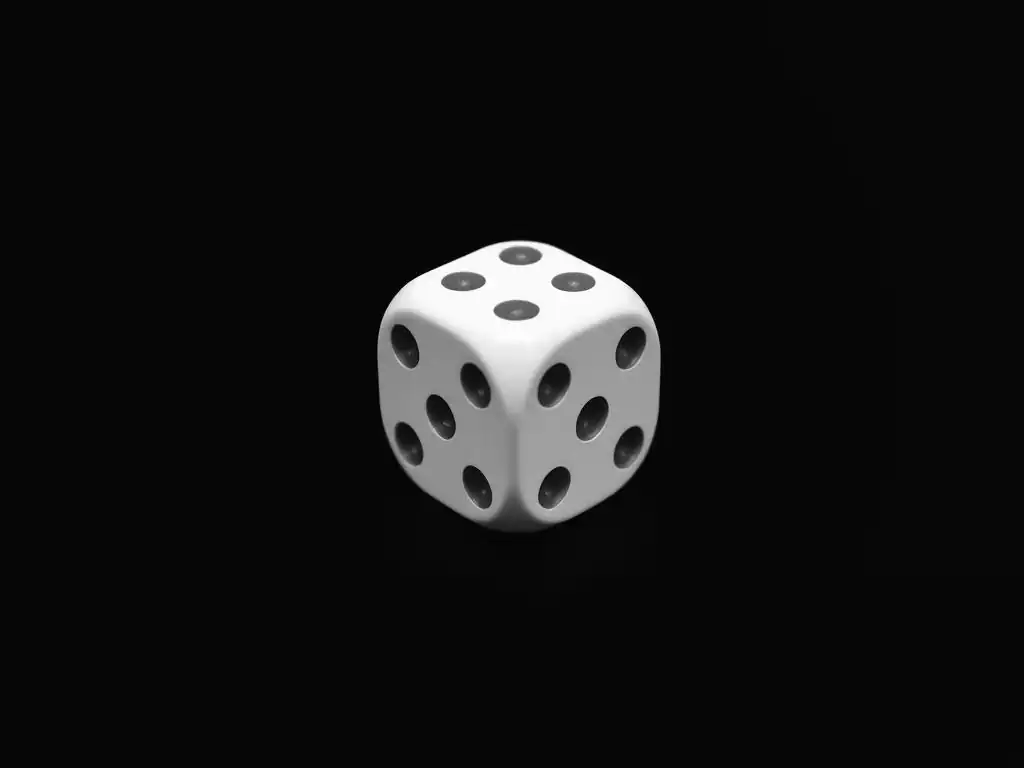
To illustrate, consider a fair six-sided die. The probability of rolling a six is 1/6 on any given roll. If you roll the die five times and get a one each time, the probability of rolling a six on the sixth roll remains 1/6. Past results do not change the inherent probabilities of future events.
This understanding requires a shift from focusing on perceived patterns to grasping the statistical concept of independent events. Learning basic statistical concepts, such as calculating probabilities and understanding expected values, empowers you to challenge your intuition and make more rational decisions. This fundamental knowledge provides a strong foundation for overcoming the gambler's fallacy in various contexts.
Challenging Your Intuition: Recognizing Patterns vs. Randomness
Our brains are wired to seek patterns, even where none exist. This inherent tendency contributes significantly to the gambler's fallacy. We perceive order and predictability in random sequences, leading us to believe that past events somehow influence future ones. This is particularly evident in games of chance, where the seemingly random outcomes can be misinterpreted as following a predictable pattern.
Consider a sequence of coin tosses: HTHTHT. While this sequence might appear to exhibit a pattern (alternating heads and tails), it's just as likely as any other sequence of equal length. True randomness often appears non-random to our perception. To overcome this bias, actively practice distinguishing between actual patterns and perceived patterns in random sequences.
This involves consciously acknowledging the limitations of our intuition in perceiving randomness and relying on statistical analysis instead. Practicing with random number generators and analyzing different data sets can help you develop this crucial skill. Understanding that apparent patterns in random data are often illusory is a critical step toward overcoming the gambler's fallacy.
Developing Critical Thinking Skills: Questioning Your Assumptions
Overcoming the gambler's fallacy necessitates a strong foundation in critical thinking. This involves actively questioning your assumptions, identifying potential biases, and seeking objective evidence before making decisions. Instead of relying on gut feelings or perceived patterns, consciously evaluate the situation based on factual data and probabilities.
For example, before making a bet in a casino, consider the actual odds of winning, instead of letting past wins or losses influence your decision. Similarly, in investing, avoid basing decisions solely on recent market trends, as these can be influenced by various factors unrelated to future performance. Developing critical thinking skills requires a conscious effort to examine information objectively, identify underlying assumptions, and challenge your own biases.
This process encourages a more rational approach, reducing the influence of the gambler's fallacy and promoting more informed decision-making. This systematic approach to decision making, grounded in critical thinking, is key to mitigating the impact of cognitive biases like the gambler's fallacy. By consistently questioning your assumptions and seeking objective evidence, you can significantly improve your ability to make sound judgments.
The Gambler's Fallacy in Different Contexts
The gambler's fallacy, a prime example of a cognitive bias, demonstrates how our brains often misinterpret randomness. We tend to believe that past events influence future independent events, even when statistical probability dictates otherwise. This misconception isn't limited to casinos; it permeates various aspects of life, leading to flawed decision-making. Understanding its diverse manifestations is crucial for making rational choices and avoiding costly mistakes.
The core of the gambler's fallacy psychology explained lies in the mistaken belief that independent events are somehow connected. For example, believing that because a roulette wheel landed on red five times in a row, the next spin is more likely to be black is a classic example. The probability remains 50/50 (assuming a fair wheel) regardless of previous outcomes. This misunderstanding stems from our innate human desire for patterns and predictability in a world that is often inherently chaotic.
The "hot hand" fallacy, frequently observed in sports, is closely related to the gambler's fallacy. It's the belief that a player who has just made several successful shots is more likely to make their next shot. This is often seen in basketball, where commentators and fans alike may claim a player is "on fire" or has a "hot hand." However, statistical analyses of basketball games have repeatedly shown that the probability of a successful shot is largely independent of previous shots. 1 While short streaks of success might occur purely by chance, attributing them to a sustained "hot hand" is a cognitive error. This bias can lead to flawed coaching decisions, such as over-relying on a player perceived to be "hot," even if other players might be statistically more likely to succeed. Teams and individual players who fall prey to the hot hand fallacy may miss opportunities to optimize their performance through strategic substitutions and shot selection. The prevalence of this fallacy highlights how deeply ingrained the gambler's fallacy is in our intuitive understanding of probability.
1 Further research is needed to provide specific data points on the frequency of the hot hand fallacy and its impact on game outcomes.
The Gambler's Fallacy and Investment Decisions: Managing Risk
The gambler's fallacy also significantly impacts financial decisions, particularly in investment strategies. Investors sometimes make poor choices based on recent market trends, believing that a period of market growth is less likely to continue, or that a downturn is more likely to persist. This can lead to premature selling during periods of growth, missing out on potential profits, or conversely, holding onto losing investments for too long, hoping for a reversal of fortune.
This is particularly relevant for investors in volatile markets like cryptocurrencies. The belief that a cryptocurrency's price is “due” for a correction after a period of rapid growth is a direct manifestation of the gambler's fallacy. Rational investment strategies, however, emphasize diversifying investments and making decisions based on long-term projections and risk assessment, rather than on short-term fluctuations driven by the gambler's fallacy.
Ignoring the gambler's fallacy in investment decisions can lead to significant financial losses. Effective risk management requires understanding and actively mitigating these cognitive biases. A balanced approach, informed by data-driven analysis, is essential for making sound investment choices.
Frequently Asked Questions
What is the Gambler's Fallacy?
The Gambler's Fallacy is the mistaken belief that past random events influence the probability of future random events. For example, believing that after a series of heads, a coin flip is more likely to land on tails. This is incorrect; each flip is independent.
How does the Gambler's Fallacy relate to probability?
It demonstrates a misunderstanding of independent events. The fallacy ignores the fact that the probability of each event remains constant, regardless of previous outcomes. Past results do not predict future ones.
Why do people fall prey to the Gambler's Fallacy?
People often fall victim due to the heuristics and biases our brains use to simplify decision-making. We seek patterns even where none exist, leading to inaccurate predictions about random events. It's a cognitive shortcut that often misleads us.
What are some real-world examples of the Gambler's Fallacy?
Examples include believing a winning lottery ticket is less likely after several winners, or assuming a basketball player is "due" for a basket after several misses. These are instances where randomness is misinterpreted.
How can I avoid the Gambler's Fallacy?
Understanding the concept of independent events is crucial. Learn to recognize patterns where none exist and actively challenge your assumptions about probabilities. Remember that past events do not influence future probabilities in truly random situations.
Final Reflection: Unraveling the Illusion of Control
The gambler's fallacy, a cognitive bias deeply ingrained in human nature, continues to exert a powerful influence on our decisions, from financial investments to everyday choices. Understanding this fallacy isn't just an academic exercise; it's crucial for navigating the complexities of life and making rational, informed choices in the face of uncertainty. Ignoring its pervasive effects can lead to significant financial losses and emotional distress.
The gambler's fallacy's impact extends far beyond the casino floor; it subtly shapes our perceptions of risk and probability in countless areas of life. We see its influence in the tendency to believe that a "lucky streak" is somehow deserved, or conversely, that a period of misfortune necessitates a future turnaround. This ingrained belief system often clouds our judgment, leading to poor decision-making. The human mind is a powerful machine for generating illusions.
This quote aptly captures the way the gambler's fallacy distorts our understanding of independent events.
Now, consider your own experiences. Have you ever fallen prey to this cognitive bias? Perhaps you've continued to play a slot machine after a string of losses, believing a win is "due," or made an investment based on past performance without considering the inherent randomness of the market. Take a moment to reflect on these instances. By recognizing the gambler's fallacy for what it is—an illusion of control—you can begin to make more objective and rational choices, freeing yourself from the shackles of this pervasive cognitive bias and embracing the inherent uncertainty of life.
Transform Your Thinking: Break Free from the Gambler's Fallacy!
Thank you for exploring the Gambler's Fallacy with us! Understanding how past experiences can skew our decision-making is a crucial step toward clearer thinking and better judgment.
Now, let's put this knowledge into practice to empower your choices. Here's how:
- Reflect on Your Choices: Consider a recent decision where your past experiences influenced your choice. Analyze how those experiences shaped your decision and how you might approach similar situations differently in the future. This self-reflection is key to breaking free from the gambler's fallacy.
- Challenge Your Assumptions: Identify a situation where you anticipate letting past events dictate your future actions. Talking it through with a friend or journaling about it can help untangle your thought process and reveal any underlying biases.
- Share and Engage: Discuss the Gambler's Fallacy with someone you trust. Sharing the insights you've gained can lead to deeper conversations about decision-making and cognitive biases, reinforcing your understanding and helping you apply this knowledge in real-world scenarios.
How can you ensure your future decisions are guided by logic, not outdated beliefs? By consciously examining your assumptions and actively challenging the influence of past events on your current choices, you can cultivate a more rational and effective approach to decision-making.