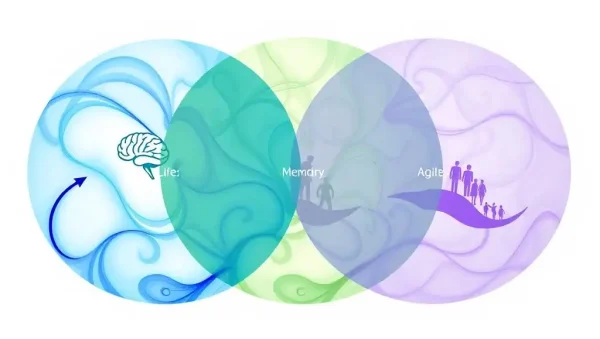
Understanding Longitudinal Studies in Psychology
Longitudinal studies are a cornerstone of developmental and clinical psychology, tracking the same individuals or groups over extended periods—months, years, or even decades. Unlike cross-sectional snapshots, they reveal how behaviors, cognition, and mental health evolve across the lifespan. For students and curious readers at Psychology Basics, this subcategory unpacks the methodology, strengths, and practical challenges of longitudinal research, helping you grasp why these studies are essential for establishing cause-and-effect relationships and developmental trajectories. Below, we explore key facets you’ll encounter when diving into this research design.
🔍 Core Design and Types of Longitudinal Studies
Longitudinal designs include cohort studies, panel studies, and retrospective longitudinal approaches. A cohort study follows a group sharing a common event (e.g., birth year), while a panel study tracks diverse individuals on multiple variables simultaneously. Retrospective designs ask participants to recall past events, which can introduce memory bias but is cost-effective. In psychology, these designs are pivotal for mapping changes in personality, IQ, or depressive symptoms from childhood to adulthood. Expect to learn how researchers select time intervals (e.g., annual vs. every five years) and balance attrition—the dropout of participants—which threatens validity.
Practical applications range from studying the effects of early adversity on adult mental health to tracking cognitive decline in aging populations. By understanding design subtypes, you’ll be able to critique published studies more effectively, recognizing why some findings (e.g., the effects of screen time on teen anxiety) may differ across cohorts due to historical context. This foundational knowledge also prepares you for advanced topics like multilevel modeling used to analyze within-person change over time.
📊 Data Collection Methods and Time Points
Longitudinal studies employ surveys, interviews, physiological measures, and observational tasks repeatedly at each wave. For instance, in a 20-year study on childhood trauma, researchers might use self-report questionnaires at ages 10, 15, 20, and 30, but also collect cortisol samples to measure stress reactivity. The choice of interval spacing is critical: too frequent causes fatigue and attrition; too sparse misses rapid developmental shifts. You’ll discover how modern technology—smartphone apps, wearable sensors—enables passive data collection, reducing participant burden and improving compliance.
Another key point is handling missing data and practice effects, where repeated testing improves performance unrelated to real change. Researchers use statistical corrections like latent growth curve modeling to separate true change from measurement error. Expect to learn about mixed-methods approaches that combine quantitative trajectories with qualitative interviews, adding depth to statistical trends. This practical knowledge helps you design your own small-scale longitudinal project, even if it’s only a few months long, while maintaining scientific rigor.
🧠 Advantages Over Cross-Sectional Designs
Longitudinal studies uniquely capture individual-level change, not just group averages. For example, a cross-sectional study might show that age correlates with lower impulsivity, but it cannot tell you whether a specific person’s impulsivity actually declines with age. Longitudinal data allows researchers to identify trajectories: some individuals may improve linearly, others plateau, and a few worsen. This is vital for tailoring interventions—say, identifying which adolescents are at risk for chronic depression versus transient mood dips.
Furthermore, longitudinal designs help establish temporal precedence, a prerequisite for causal inference. If you measure maternal stress at age 5 and child anxiety at age 10, you can argue that stress preceded anxiety, even without manipulating variables. This is ethically impossible in experimental designs, making longitudinal studies indispensable for studying naturally occurring processes like bereavement, academic transitions, or addiction recovery. You’ll also see how they reveal critical periods—windows where certain experiences have lasting impacts, such as language acquisition before age 7.
⚠️ Common Challenges and How Researchers Overcome Them
Attrition is the biggest enemy: losing participants over time can bias results if dropouts differ from stayers. For instance, in a study on social anxiety, individuals who drop out may be more anxious, underestimating symptom trajectories. Researchers combat this via intensive follow-up, incentives, and statistical techniques like multiple imputation or inverse probability weighting. Another challenge is test effects—repeated exposure to the same measures can lead to learning or boredom, altering responses. Counterbalancing alternate forms of assessments helps mitigate this.
Practical hurdles include high costs and time commitment, both for researchers and participants. A 30-year study on intelligence requires continuous funding and staff. To address this, some use accelerated longitudinal designs, where overlapping cohorts (e.g., ages 5, 10, 15) are followed for five years each, then combined to approximate a full lifespan. You’ll also learn about cohort effects—the influence of historical events (like a pandemic) on a specific generation, which can limit generalizability to other eras. Recognizing these pitfalls helps you critically evaluate headlines claiming “this study proves X about your personality.”
💡 Real-World Applications and Ethical Considerations
Longitudinal findings directly shape public policy and clinical practice. For example, the Dunedin Multidisciplinary Health and Development Study has informed policies on early childhood interventions, showing that self-control at age 3 predicts adult health, wealth, and criminality. In psychology, these studies guide diagnosis and treatment timing—e.g., identifying early markers of schizophrenia for preemptive care. They also inform educational practices by tracking how reading skills evolve from kindergarten to high school, helping teachers tailor instruction.
Ethically, prolonged participation raises concerns about informed consent, especially when children are involved and their capacity to consent changes over time. Researchers must reassess consent at each wave, ensure confidentiality in an era of digital data, and avoid coercive retention incentives. Additionally, findings may stigmatize certain groups if misreported—e.g., linking poverty solely to low IQ without accounting for systemic factors. You’ll explore these dilemmas, learning how institutional review boards (IRBs) oversee long-term studies and how researchers communicate results responsibly to both academic and public audiences.
Frequently Asked Questions
What is the difference between a longitudinal and a cross-sectional study?
A cross-sectional study collects data at one single point in time, comparing different age groups to infer change, which risks cohort effects. A longitudinal study follows the same individuals over time, tracking actual change within each person. This allows for stronger causal inference and identification of individual trajectories, but it requires more time and resources.
How long does a typical longitudinal study in psychology last?
Durations vary widely: some last just 1–2 years (e.g., studying a school intervention), while classic studies span 20–40 years (e.g., the Terman Study of Gifted Children). The length depends on the research question—developmental changes may require decades, but short-term behavioral changes can be captured in a few years. Many studies use multiple waves, often measured annually or biennially.
Can longitudinal studies establish causation?
Yes, but with caveats. They establish temporal precedence (cause happens before effect), which is necessary for causation, but they cannot completely rule out third variables (confounds) like genetics or parenting. However, by controlling for baseline measures and using advanced statistical models, researchers strengthen causal claims. Experimental manipulation is often impossible ethically, making longitudinal designs the best alternative.
Why do participants drop out, and how does it affect the results?
Participants drop out for reasons like relocation, loss of interest, illness, or death. If dropouts systematically differ from those who stay—e.g., more depressed or lower socioeconomic status—the final sample becomes biased, underestimating true effects. Researchers check for this by comparing baseline characteristics of completers vs. dropouts and use statistical adjustments to minimize bias.
Are longitudinal studies more reliable than other research methods?
They are not inherently “more reliable,” but they offer unique reliability for tracking change over time. Their reliability depends on sample size, measurement consistency, and attrition control. When conducted rigorously, they provide high internal validity for developmental questions. However, they are resource-intensive and may have limited generalizability to different historical periods or cultures.